
As summer turns to fall, thousands of salmon heed the call to return to their home waters. Coho duck out of the Pacific Ocean for upstream journeys in Oregon’s Rogue River; Chinook muscle hundreds of miles up the Klamath from coastal California to Oregon’s high desert; chum navigate Hood Canal on Washington’s Olympic Peninsula to find Snow and Salmon Creeks; and in Southeast Alaska, coho flood into rivers like the Taku and Indian.
These journeys are repeated in countless other rivers and creeks across Salmon Nation. How well these fish fare—whether they find favorable habitat for spawning and set the next generation in motion—depends in large part on not just how well we care for the rivers in which they swim, but also the forests that surround those banks.
“Healthy salmon runs and healthy forests make healthy people, and we just can’t have one without the other,” says Mike Jones, president of the Organized Village of Kasaan, an Alaska Indigenous tribe of Haida people on Prince of Wales Island in Southeast Alaska. “Salmon are forest animals, even though they’re on the seafood menu. They are born in the forest and die in the forest.”
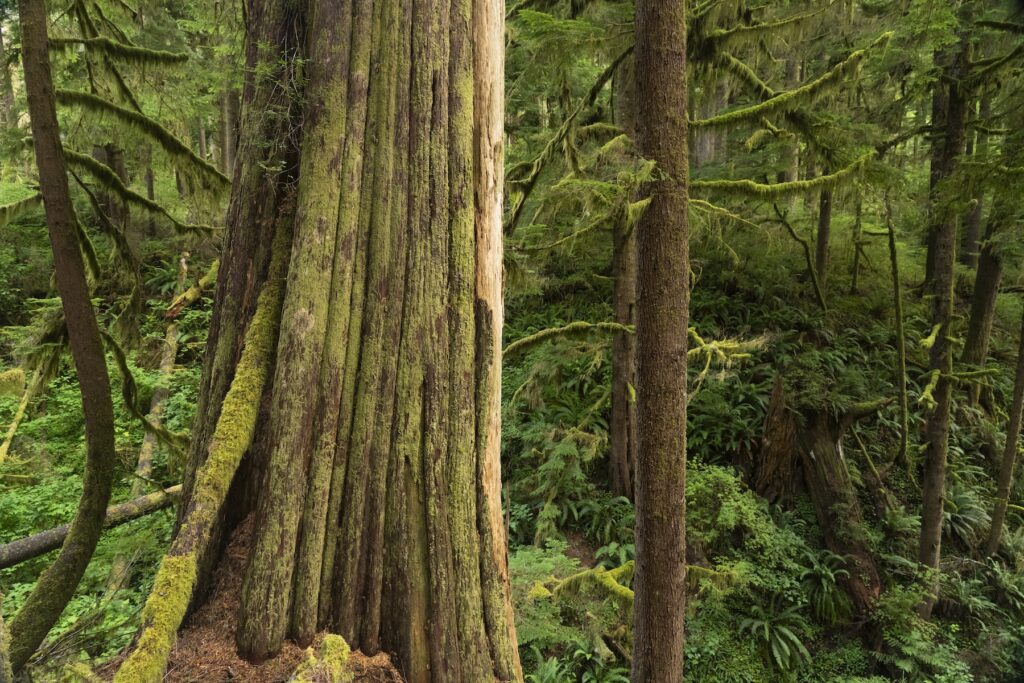
That’s why Jones, and many others, are raising the alarm about a plan from the Trump administration to rescind the Roadless Area Conservation Rule, which protects 45 million acres of forest under the U.S. Forest Service’s jurisdiction. The vast majority of those lands are in ten Western states, including 9.3 million acres within the Tongass National Forest in Southeast Alaska, which is also the homeland of the Tlingit, Haida, and Tsimshian people.
The rule prohibits road construction, timber harvesting, and most development, with some exceptions. While the rules for inventoried roadless areas are not as strict as designated wilderness areas, they provide more protections than other national forest lands and help to safeguard drinking water for 25 million people, protect habitat for hundreds of imperiled species, including endangered and threatened populations of salmon, and provide opportunities for recreation, hunting, and fishing, and access to cultural resources.
But that could soon change.
Forests for Sale
In 1997, when Michael Dombeck took the reins as Chief of the U.S. Forest Service during the Clinton administration, he inherited an agency in charge of managing 370,000 miles of roads—the largest road network in the world. And these roads, mostly all built to facilitate timber harvest, had accrued a backlogged maintenance bill of $8.6 billion. Timber sales didn’t come anywhere near meeting the amount of money needed to build and maintain the vast road system. To stave the bleeding, the Forest Service enacted a temporary moratorium on roadbuilding in national forests in 1999.
The Wyoming Timber Industry Association and the state of Idaho both staged initial legal challenges, but they were later dismissed. And while roadbuilding resumed eighteen months later on most national forest lands, an effort began in October 1999 to develop a more comprehensive plan for large tracts of largely undeveloped national forest lands that had been previously identified as “inventoried roadless areas.”
Over a period of eighteen months, six hundred nationwide public hearings were held about a proposed rule, including thirty in Alaska. After scientific inquiry and public involvement, the Roadless Area Conservation Rule was promulgated in 2001 to prevent further roadbuilding and logging in 43 million acres of wildlands that, left intact, provide significant ecological, economic, and cultural value. Five years later the Tongass National Forest was added to the plan, bringing the total roadless area up to 58.5 million acres.
“At the time, it was the largest public input in any federal rulemaking process in the history of the United States,” says Nathan Newcomer, a Tongass campaigner for the Southeast Alaska Conservation Council. “You had 1.6 million public comments submitted in 2001, and the vast majority of those were in favor of the Roadless Rule because it protects wildlife habitat, protects watersheds, protects recreational areas and outdoor economies.”
Over the last few decades, the Roadless Rule has survived a variety of legal challenges. In 2008 Idaho adopted its own state-specific Roadless Rule, and Colorado followed in 2012. But last year, the Trump administration announced its intent to rescind the rule in its entirety. The process officially kicked off on August 29, 2025, when the Forest Service published a “notice of intent” in the Federal Register and gave the public just twenty-one days to weigh in on the proposed rescission. Even with a narrow window, the Forest Service received more than 600,000 comments. A staggering 99 percent were against rescinding the rule.
Despite that, the administration pushed forward with its plan, releasing a draft environmental impact statement on August 18, 2026, and giving the public just thirty days to comment. The deadline was later amended to forty-five days, which extends the deadline until October 6 to submit comments.
The process includes a mere four public hearings, all in Alaska, which are required under the Alaska National Interest Lands Conservation Act to assess how the potential rule change could impact residents’ subsistence practices.
In the draft environmental impact statement, the agency states its main reason for rescinding the rule is to “reduce regulatory burden and return land management decision-making for inventoried roadless areas to local Forest Service officials.
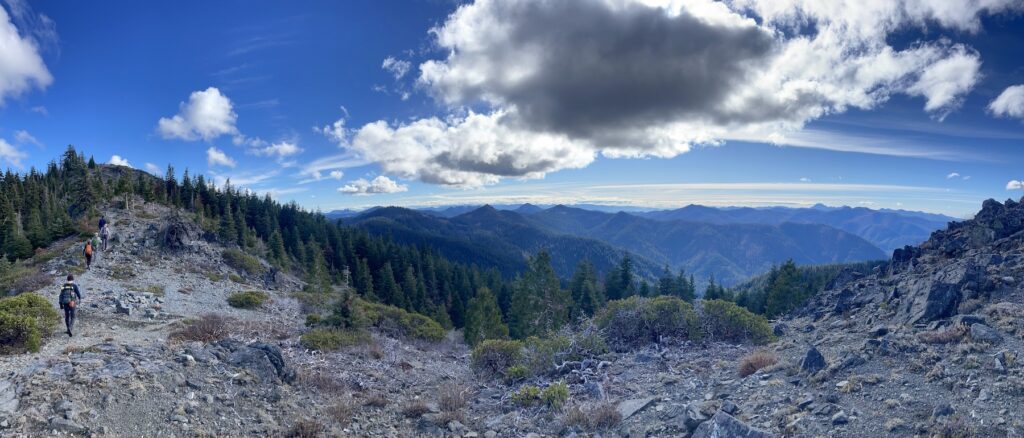
Protecting communities from wildfires is also one of the purported benefits of rescinding the rule, but researchers have found building roads into roadless areas is likely to yield more fires. Most wildfire ignitions happen by people and near roads; far fewer happen in undeveloped areas.
The draft environmental impact statement also details a host of other consequences that could arise as road construction and timber harvest would be expected to increase with rescission. That includes a “reduction in primitive or semi-primitive recreational settings; sedimentation and impacts to water quality; landscape fragmentation; adverse impacts to threatened, endangered, or sensitive wildlife and plants; loss of scenic character; impacts to tribally important resources; or economic losses related to recreation or non-commodity values of roadless areas.”
Dangers for Salmon
More roadbuilding and logging can harm a plethora of forest animals, from songbirds to salamanders to grizzlies. But it also has impacts for aquatic animals, too, including salmon that rely on cool, clean streams. When roads are cut into steep forested hillsides and those trees removed, it can create unstable slopes that increase the risk of landslides, especially in areas with heavy rain, like the Pacific Northwest.
“Inventoried roadless areas are often very steep and high elevation. They’re places that are really vulnerable to soil erosion,” says James Fraser, Oregon policy director for Trout Unlimited.
That’s bad for both people and fish.
Debris flows can jam culverts, blocking fish passage, or wash out roads, threatening public safety. As sediment careens off hillsides into rivers and streams, it can also bury salmon eggs, damage habitat, and impair water quality. Loss of tree canopy after logging can raise water temperatures, too, further threatening cold-water fish like salmon.
“When you look at the map of Oregon, roadless areas are high elevation, good water quality, good habitat—places that feed a lot of our systems,” says Fraser. That includes the John Day in the Columbia Basin, the Illinois and Rogue Rivers in southwest Oregon, and the Nestucca on the North Coast, he says.
And that’s just the start. Both Oregon and Washington each have about 2 million acres of inventoried roadless national forest lands. Roadless areas in Olympic National Forest, for example, protect headwater streams for salmon populations in Puget Sound. And California has more than 4 million acres of roadless areas, which protect salmon streams passing through Lassen National Forest, the Klamath National Forest, the Six Rivers National Forest, and many other areas.
New threats from logging and roadbuilding also threaten to undo decades of progress to recover imperiled fish, including removing dams, upgrading culverts, and restoring habitat. “Salmon, steelhead, lamprey, and trout in a lot of places are doing better today than they were before restoration projects in the past couple decades,” says Fraser. “That uplift is now allowing fish to use the habitat in places like roadless areas, and this is just a way of knocking them back again.”
Of particular concern is Alaska, where 9.3 million acres—more than half of the Tongass National Forest—are designated as inventoried roadless areas. The Tongass is the largest temperate rainforest in the world, and its rivers are home to all five species of Pacific salmon, which number about 50 million returning fish a year. Around a quarter of the salmon caught in Alaska’s commercial fishing industry hail from waters of the Tongass.
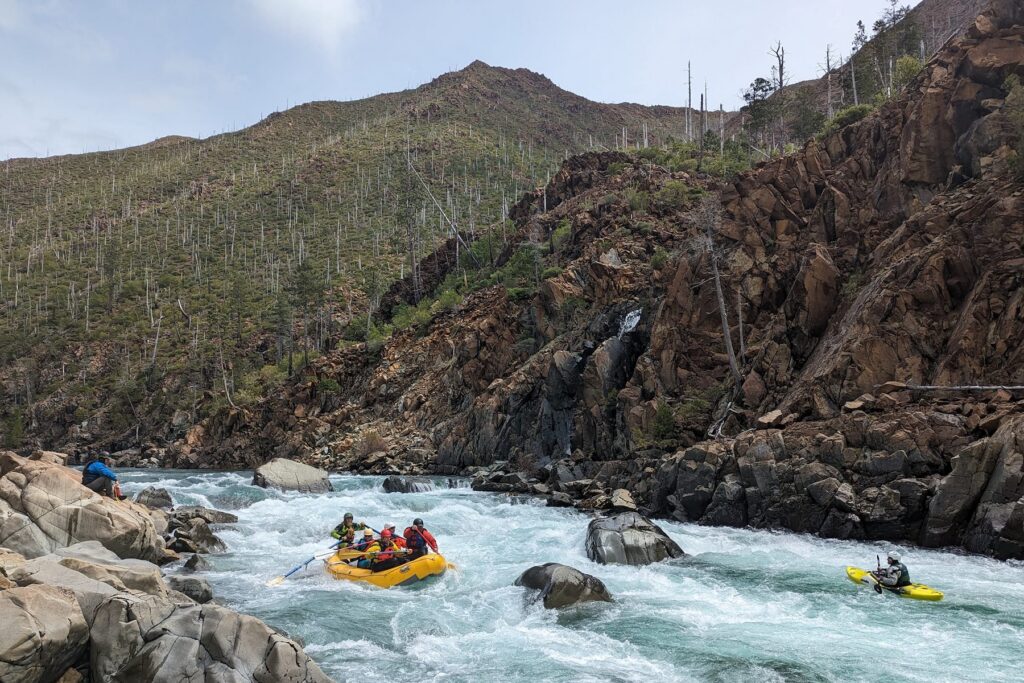
“The fishing industry is one of the largest economic drivers for the economy in Southeast Alaska. But it’s not just commercial fishing, it’s also subsistence,” says Newcomer. “This is a very rural part of the world, and people rely on nature, on the Tongass National Forest, to provide a grocery store for them.”
Subsistence and commercial harvests depend on healthy forests, but rescinding the Roadless Rule puts that at risk. “Under this administration, there would likely be more full-scale logging projects that are targeting old-growth forests,” says Newcomer.
The draft environmental impact statement outlines that, with the Roadless Rule removed, about 749,000 acres would be suitable for timber production in the Tongass, including 395,000 acres of old-growth forests.
“Salmon are born in headwaters deep in these old-growth forests,” he says. “They go out in the ocean, live their lives, and they come back. They feed the bears, they feed the eagles, they feed the people, and then when they spawn and decompose, they feed the forest again. If you break that cycle anywhere, you’re causing this irreparable harm.”
That harm extends from salmon to the people who live in and visit Southeast Alaska. The three biggest industries in the region are recreation, tourism, and fishing—all of which would take a hit if roadless forests are razed. And Haida people, like the Organized Village of Kasaan, are not just salmon people; their culture is intertwined with old-growth trees that are used for totem poles and canoe-making.
“It’s a very unique place, and we want to preserve it, not just for tribal reasons, but for global reasons,” says Jones. “It matters to the planet that we have beautiful old-growth forests.”
Money Matters
There’s also the issue of money.
The Forest Service is still sitting on billions in backlogged maintenance to its vast road network. The agency needs an estimated $1.6 billion a year to keep them in good working order, but Congress allocates less than 20 percent of that in most years and timber sales don’t make up the difference. But building more roads certainly won’t help fix the problem.
The draft environmental impact statement found that revenue generated by timber sales “would be used for some road-related system management but not be sufficient to cover the costs of constructing and maintaining all new roads related to a project.”
Research by Taxpayers for Common Sense also found deeper issues in the Tongass, where timber companies turn a profit even as logging has been a losing deal for taxpayers. Timber sales there since 1980 have cost the Forest Service $1.7 billion, or an average of about $44 million per year. The agency spends vastly more administering its timber sales—which includes selecting timber stands, doing thinning work when needed, advertising the sale and selected bids, and sometimes constructing or reconstructing roads—than the profits it recoups from the sales.
“The U.S. Forest Service could end up losing nearly $190 million in the Tongass over the next five years from planned sales, and more if currently roadless areas are opened to logging,” the nonpartisan group found.
A Thousand Cuts
Rescission of the Roadless Rule poses threats for wildlife and forest health, but the biggest danger may be the broader picture.
“The Roadless Rule is just one of a handful of these issues that we’re tracking that can harm salmon habitat, aquatic habitat, clean water, and also terrestrial habitat for things like Pacific fishers, spotted owls, red tree voles, and other species,” says Michael Dotson, executive director of the Klamath-Siskiyou Wildlands Center.
The administration is also looking to overhaul its Travel Management Rule that guides where motorized recreation can occur in national forests. At the same time it has sought to ramp up logging, drilling, and mining, and cleared the way for building data centers on public lands. And, in recent months, the Trump administration took steps to dramatically weaken the Endangered Species Act.
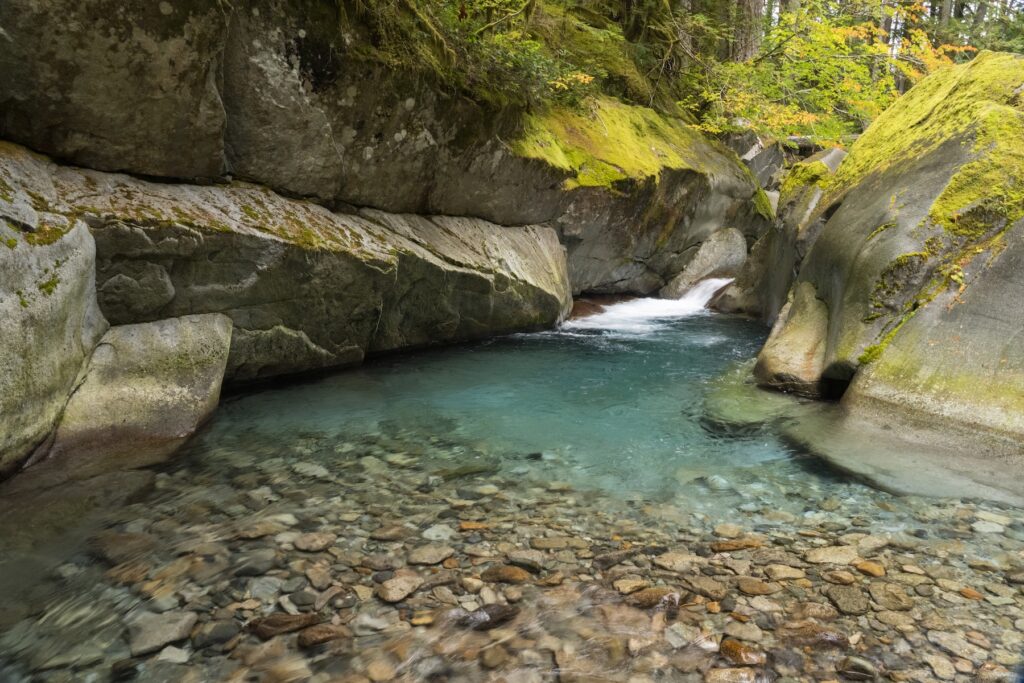
In July, the administration finalized a rule to remove habitat destruction from the definition of “harm” to endangered species, despite the fact that destruction of places where imperiled animals live will undoubtedly harm them. And in September, a Fish and Wildlife Service memo radically reinterpreted the definition of “take.” The agency directed that the incidental killing or injuring of an animal listed as threatened or endangered would no longer be deemed illegal. Instead, only purposeful action designed to kill or injure a listed animal would qualify. That means that actions like logging, building data centers or dams, or other development would get a free pass even if they harm endangered species.
All of this is “compounding what we see as really harmful approaches to forest management in these watersheds,” says Dotson.
Next Steps
After the public comment period closes on October 6, the Forest Service will conduct an additional analysis and release a final environmental impact statement in the coming months.
If the rule is rescinded, it wouldn’t immediately greenlight roadbuilding and logging. How much and where that happens would be at the discretion of national forest management plans, which are updated roughly every fifteen years. But conservation groups have expressed concern about how that could play out based on the first plan that’s being drafted with the Roadless Rule rescission in mind.
A draft plan was issued for the Blue Mountains in the Malheur, Wallowa-Whitman, and Umatilla National Forests in eastern Oregon and Washington—5 million acres that are home to coho, wolverine, elk, moose, great gray owls, and wolves. The plan outlines eliminating protections for more than 700,000 acres of existing roadless areas if the rule is rescinded, tripling commercial logging and scrapping protections for large trees. A revised Northwest Forest Plan is also expected soon for 19 million acres of national forest lands in western Washington, Oregon, and California.
Given all that’s at stake, conservation groups are urging people to weigh in.
“The thing we’re asking people to do is to submit a comment and share your perspectives,” says Fraser. “It doesn’t require the agency to make the most environmentally protected decision, but it does require them to listen to the public and account for, analyze, and fully disclose the effects of an action. Right now, the task is for people who care about water quality and salmon and backcountry recreation is to show up and tell the agency what you think, so that they can make that fully informed decision.”
Take Action:
- Submit a comment on the draft environmental impact statement for the Roadless Area Conservation Rule rescission by October 6.
- Check this interactive map to see if you live near or recreate in a roadless area.
- Read about what’s at stake if the Tongass National Forest, “America’s last climate sanctuary,” is opened to further logging.