
In 2024, construction crews removed the last of four hydroelectric dams from the Klamath River, completing the largest dam-removal project in American history. Within weeks, salmon reached stretches of the upper river that had been closed to them for more than a century. Their return fulfilled a vision that tribal nations and communities across the basin had fought for over decades.
The salmon’s return marks not the end of restoration, but the beginning of its next phase.
Salmon are more than travelers passing through Klamath homelands; they are relatives, teachers, and indicators of the health of an entire watershed. Their return brings renewed attention to the generational work of rebuilding food systems, stewardship enterprises, and local economies that regenerate land, water, and culture. Removing the dams reopened the river, and the work now is to rebuild the systems and relationships around it.
What is happening on the Klamath River is tangible; it can be seen with your own two eyes, but it’s also symbolic. The story of the Klamath has spread. Federal reviews are advancing on the removal of dams on the nearby Eel River, too. Across Northern California, communities are pushing for the recovery of rivers and working to build the conditions that allow land, water, and community to thrive together over the long term.
Salmon Returns, a bioregional financing organization cofounded by Cheryl Chen and Donna Morton, is working to meet this moment.
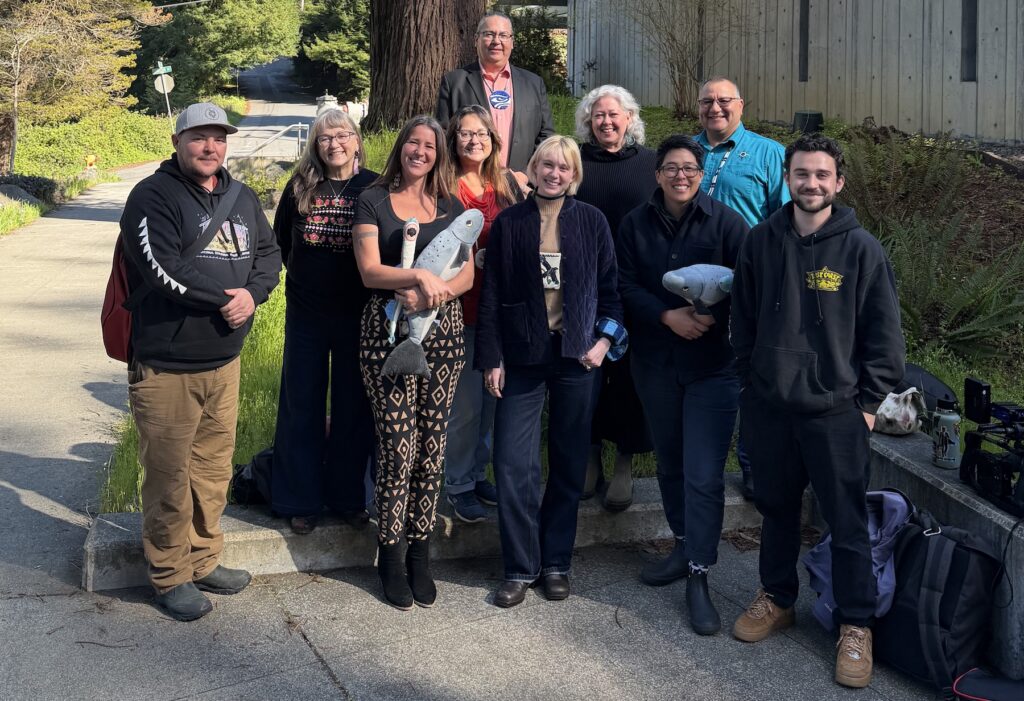
Last spring, Chen and Morton invited me to travel with them and representatives from three First Nations of British Columbia, Canada—Ktunaxa Nation, Secwépemc Nation, and Syilx Okanagan Nation—collaborating through the Bringing the Salmon Home initiative of the Upper Columbia River Basin.
We visited the Klamath and Six Rivers regions of Northern California to learn from a place where decades of organizing have brought salmon home. We went to listen, understand the region’s priorities, and begin mapping the financial pathways to support the work on community terms.
Salmon Returns works across the migratory corridor of Pacific salmon, from Northern California through British Columbia to Alaska. As a financial intermediary, it connects funders and investors with Indigenous- and community-led enterprises that conventional financing systems often overlook. It builds the relationships and financial structures needed to move capital across the longer timelines of ecological, cultural, and economic regeneration.
Like salmon carrying nutrients from the ocean inland, Salmon Returns helps resources move across systems that are deeply connected but rarely financed as a whole.
Salmon are more than travelers passing through Klamath homelands; they are relatives, teachers, and indicators of the health of an entire watershed. Their return brings renewed attention to the generational work of rebuilding food systems, stewardship enterprises, and local economies that regenerate land, water, and culture.
“We’re here to help communities shift their economies away from extraction,” says Chen. “After twenty years of working in this bioregion, what’s stuck isn’t communities knowing what they need, it’s the money system. We’re here to design the next generation of financial infrastructure that unlocks the ability for community-rooted enterprises to lead the path to the next economy.”
That mandate requires Salmon Returns to work outside the boundaries of conventional finance. The organization begins with relationships and trust, then builds financial structures around priorities communities have already defined.
What the Work Looks Like
Our journey through the Klamath and Six Rivers regions encompassed the Lower Klamath River and surrounding watersheds of the Smith, Trinity, Mad, Van Duzen, and Eel Rivers. Ancient redwood forests stand at the heart of this place, where to the Pacific, and salmon connect the health of the land and water with the cultures, communities, and economies woven throughout the region.
We spent a week with tribal leaders, food systems organizers, cultural fire practitioners, and land stewards whose work has been underway for decades, often with limited and inconsistent funding and support.
The region and its people do not lack vision, expertise, or proven approaches. They lack capital matched to the scale and duration of the work. Public funding may become available through a temporary initiative, while foundation support can shift as institutional priorities change. Communities must continually adapt to these funding opportunities to sustain work whose responsibilities and timelines extend across generations.
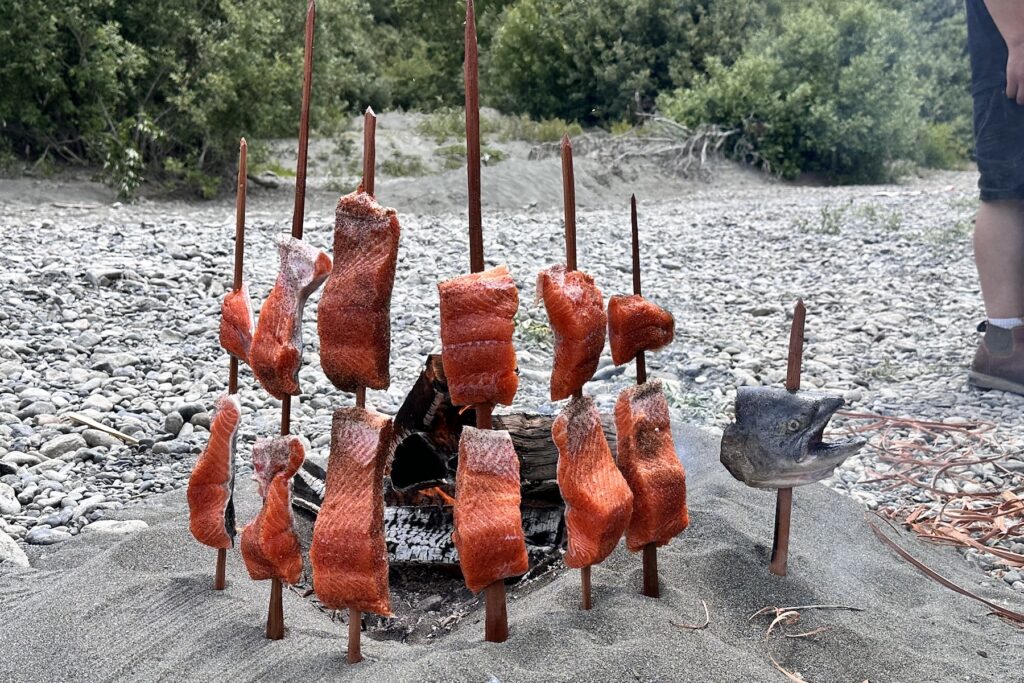
For example, Margo Robbins, a member of the Yurok Tribe and executive director of the Cultural Fire Management Council, has spent decades restoring a relationship among people, fire, and land that’s been disrupted for generations. Her work centers on Indigenous cultural burning, the careful use of fire to tend landscapes, reduce fuel loads, and maintain ecological balance. This stewardship requires continuity—preparing sites, carrying out burns, returning to tend the land, and passing knowledge between generations. Funding for a season of burns offers little assurance that support will remain available for the care that follows. The community’s responsibility to the land continues even when a public funding initiative ends or a foundation turns its attention elsewhere.
For more than a century, state and federal laws and policies have suppressed Indigenous burning, treating fire as a threat rather than as an innovative way of caring for the land, even as scientific research affirmed what Indigenous practitioners had long understood. In doing so, the state severed people from responsibilities they had upheld since time immemorial. In the years that followed, forests deprived of controlled fire grew increasingly dense and dangerous.
Cultural burning is not only about reducing wildfire risk; it is integral to watershed health. It helps soils retain moisture, supports the flow and quality of water, and creates conditions for native plants and foods to return and thrive—plants at the center of Indigenous cultural practices, that nourish communities and provide continuity between generations. Without fire, communities not only face more dangerous forests, but also watch the ecological health and cultural systems around them begin to unravel.
For Robbins, prohibition of cultural burning was not simply a regulatory barrier. It interrupted a communal responsibility to the land that Yurok people had carried across generations. Reclaiming that responsibility required years of organizing, advocacy, and building relationship.
“Investing in prescribed and cultural fire costs far less than fighting catastrophic wildfire, but finding consistent funding remains a challenge,” said Robbins. “Government funding is often restricted to specific places and activities, but more flexible support allows us to respond to what the land and our communities actually need.”
Salmon Returns is working to support this shift by building the financial infrastructure that allows communities to invite in, direct, and sustain capital on their own terms.
Farther upriver, inside the offices of the Klamath Trinity Resource Conservation District, we met with Allie Hostler, who is working with the community to rebuild the regional food economy.
Massive water diversions from the Trinity River, sent through a tunnel in the mountains, continue feeding industrial agriculture facilities hundreds of miles away. This diversion reduces water flows critical to salmon survival and reduces the amount of water available to local producers to grow food in their own region. Salmon used to make up a large portion of the diet, and without it, this land is a food desert. Food is inseparable from the land and from water sovereignty.
“That water is leaving our river to grow food that gets trucked back into our valley,” said Hostler. “We want to be food sovereign. We don’t want to depend on food that takes the water out of our own river.”
Every effort to re-localize food production within the region becomes, in turn, an effort to keep water in the river. Hostler’s work is systemic, though she might simply call it practical.
The Klamath Trinity Resource Conservation District strengthens both sides of the regional food economy. It connects farmers with schools, builds demand for healthy local food through education and storytelling, and helps small producers overcome barriers to production, distribution, and institutional purchasing. It also rebuilds pathways for Native foods by supporting the growing, gathering, processing, and distribution of traditional plants.
That same “whole-place” approach is taking shape elsewhere in the bioregion, too. At the Blue Lake Rancheria, Land Back efforts have expanded the tribe’s land base tenfold. Their ancestral territory includes the Eel River watershed, where potential dam removals are now being considered.
Reclaiming land is not the endpoint but a starting point for stewardship as both a sovereign responsibility and a foundation for economic renewal. That stewardship is taking shape through native plant nurseries, ecological restoration enterprises, and community-owned renewable energy systems under tribal governance.
By integrating land acquisition, stewardship, energy, and enterprise development, the tribe is building a model in which Land Back, supported by long-term stewardship financing, becomes a powerful foundation for regional regeneration.
The Sovereign Soils Program brings that model to life. Owned and developed by Blue Lake Rancheria, it is poised to become the region’s first tribally owned commercial native plant nursery. Salmon Returns is working to structure an investment that would help Sovereign Soils grow, positioning the tribe to participate in and help shape the region’s more than $100 million restoration economy.
The Financing Gap
Across these efforts, the greatest challenge is not a shortage of ideas or leadership, but a shortage of capital designed to support the work. Conventional financial systems often fail to recognize the value this work creates for communities, economies, and ecosystems.
Cultural fire stewardship, like the work led by Margo Robbins, provides essential services to watersheds, ecosystems, and communities, yet it is rarely financed as such. Land Back efforts eke out enough capital to procure the land, but often without clear pathways to finance stewardship over time. Food systems depend on sustained investment in logistics, trust, and coordination that extends well beyond a typical annual grant cycle. Change takes a great deal of time and requires capital that shares this patience and commitment to place.
Many funders and investors want to support precisely this kind of regeneration, and yet the enterprises building place-based economies are often too small, early, or unconventional to access traditional financing on their own.
But here’s the good news: The capital needed to support this work already exists.
As of 2026, an estimated $400 billion in philanthropic assets sits in donor-advised funds (DAFs) in the United States alone. This capital has received a tax write-off and is committed to the public good. Unlike other pools of capital, DAFs are capable of moving quickly and flexibly into community projects. They are held by individuals with no disbursement or growth requirements, and need not import typical risk and return constraints.
This pool of capital is structurally designed to meet the very scale and ambition of regenerative work. But this flexibility also means it often doesn’t move at all; much of DAF capital remains parked in index funds, largely disconnected from the communities and landscapes it has received a tax benefit to serve, financing the very companies who perpetuate the problems grant dollars intend to solve.
What’s missing? A pathway for that capital to reach communities—and for communities to direct its use.
Salmon Returns is developing one such pathway, using returns from its regional investments to incubate and seed a community-governed fund for small-scale food producers and entrepreneurs. Community members would collectively decide how the money is deployed, building their capacity to finance a shared vision of a secure and sovereign regional food system. As those investments generate returns, the proceeds could support additional local enterprises, keeping resources circulating within the region.
Building What Comes Next
What is emerging across the region is a different kind of economy, one shaped by community vision, cultural stewardship, food sovereignty, land governance, and long-term investment. It is built slowly, is rooted in place, and will be carried forward across generations.
Salmon Returns is working to support this shift by building the financial infrastructure that allows communities to invite in, direct, and sustain capital on their own terms.
Leaving the Klamath felt like moving beyond the range of a frequency I had only just learned to hear. Behind us, the river continues toward the sea while salmon push upstream into waters they had not reached for generations.
The dams on the Klamath came down because communities insisted on shaping the future of their river. The salmon are returning. Salmon in the Eel River may not be far behind. What happens next depends on whether capital can move in the manner of salmon, steadily along with the tremendous work that’s underway.