

This article runs in a section of The Tyee called “What Works: The Business of a Healthy Bioregion,” where you’ll find profiles of people creating the low-carbon, regenerative economy we need from Alaska to central California. This section is sponsored by Magic Canoe and the Salmon Nation Trust.
Brayden Rogers loves a second chance. In his studio, refrigerator drawers and shelves become soap dishes, drink tumblers, and planters. Food packaging transforms into bathroom counter accessories. Drinking straws become food trays. And recycled plastic turns into children’s toys.
Rogers is co-owner of the Rogerie, a self-described “recycling studio” in Kelowna, B.C. He works alongside his wife, Angela, the business’s creative director.
Brayden says there are plenty of misconceptions about what exactly goes on at the Rogerie. Some who walk by the downtown storefront know Brayden and Angela have 3D printers, leading to assumptions that they run a 3D printing company, “because that’s something they’ve heard of before,” Brayden said. Others may assume the couple run a recycling or bottle depot.

“Nobody’s really quite sure, because there’s not much of a reference for what we do,” said Brayden.
In a nutshell, the couple design and create home goods from recycled plastic. While there are plenty of 3D printing businesses these days, it’s rare to see one using recycled plastic to make consumer products.
Inspiration struck just before the pandemic. The couple moved in 2019 and struggled to find a way to dispose of all the plastic waste, which led to questions about how they might recycle it. But they soon found out that recycling in Canada is highly inefficient. Just 7 percent of the five million tonnes of plastic waste created in 2021 was recycled. (It’s a similar story south of the border, where a reported 5 percent of plastic waste is recycled.)
The couple then saw an opportunity to use their skills — Brayden has experience in robotic automation engineering, and Angela brings creative intuition — to tackle the problem.
Armed with “uninformed optimism,” they began 3D printing planters to sell at the local farmers market. Now they are selling their products online and at about two dozen retailers across North America.

Searching for ‘Good Plastic’
Finding plastic isn’t the problem — it’s finding plastic that can be given a second chance.
The Rogers have sourced plenty of plastic from a local Kelowna business that accepts used metal, such as appliances. They also look for suitable fridge parts to give a second life to.
Once they bring the parts home, they shred them and add them to an extruder where the plastic gets melted and mixed with color. The finished product is called filament. It’s a plastic cord that gets wrapped onto spools and finally used to 3D print with. (There are 16 3D printers at the Rogerie.)
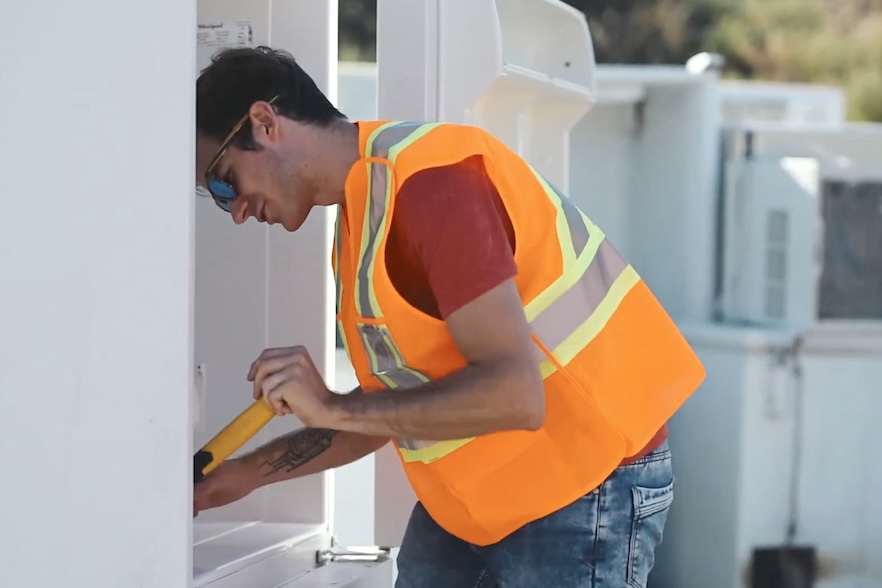
From the Rogers’ perspective, not all plastic is good plastic. To start, it needs to be commercial grade, meaning it’s designed for consumer items like food packaging. They discovered that fridge shelves and drawers work well for their reuse process.
Through a variety of experimenting, the Rogers also have found that PLA, or polylactic acid, which is commonly used to 3D print with and is derived from fermented plant starch like corn, isn’t a great material for them to use.
“It melts at a low temperature, it’s not as recyclable, it doesn’t last as long,” said Brayden.
Instead, they use a plastic called polystyrene, which he says is a bit harder to work with but can withstand higher temperatures, making it more useful for a wider range of applications. It can go in the dishwasher, for example, and while not food safe, it is food grade, so it can be used in contact with food. Plus, it’s recyclable.
The Rogers try to source plastic locally as much as possible, but the bulk of their materials comes from a supplier in Ontario. It’s labor-intensive to source plastic, and the stuff from Ontario comes prewashed and ready to use as pellets.
The work does take time, meaning it’s a tough business to scale. Their most popular product, a travel soap case, takes about four hours to print.
Brayden says that while 3D printing has exploded in popularity, there are only a few other companies in the world that make their own filament, and fewer that use recycled materials.
“Of those, I don’t believe any actually have a retail focus or consumer product focus,” he said.
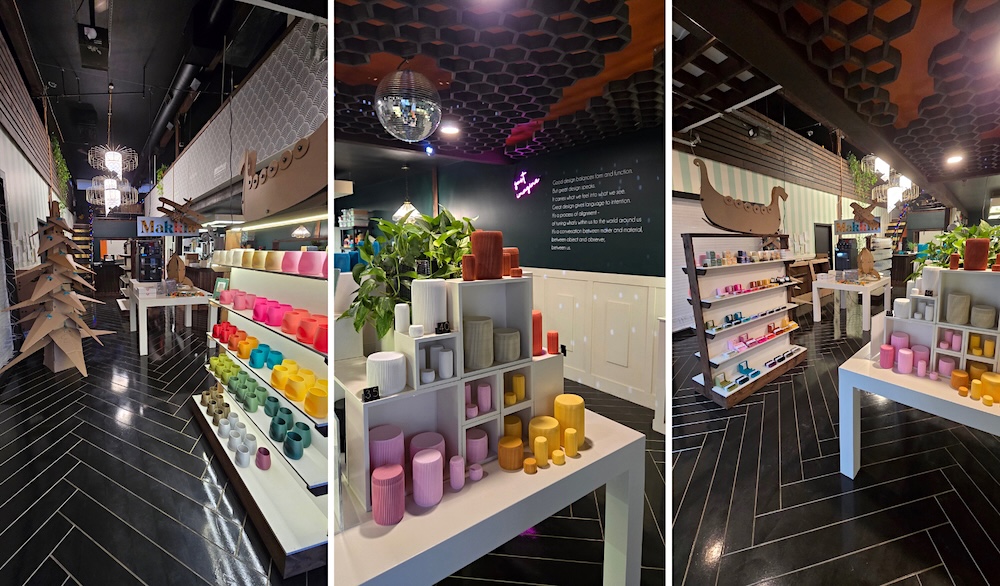
The Rogerie sells a variety of planters, soap dishes, toothbrush holders, coasters, and wine tumblers. There are dental floss containers, water-tight canisters, and shower shelves. The couple has invested a lot of time and work fine-tuning the design of their products and their chosen materials, and calibrating their printers for the work.
The Printers Are Lovin’ It
One of their small experiments began with one of the world’s largest fast-food chains.
In 2021, the Rogers were approached by a marketing firm for McDonald’s that told them the company was transitioning away from single-use plastics like straws and cutlery. The firm hoped the Rogers could help them turn the remaining stock of straws into something innovative.
The Rogers agreed to take on the challenge and received 140,000 plastic straws. First they had to efficiently take all those straws out of their paper wrappers, but how? They decided to fill their bathtub with water and toss in the straws, assuming the straws would eventually float while the paper wrappers sank. It took days, but it worked.
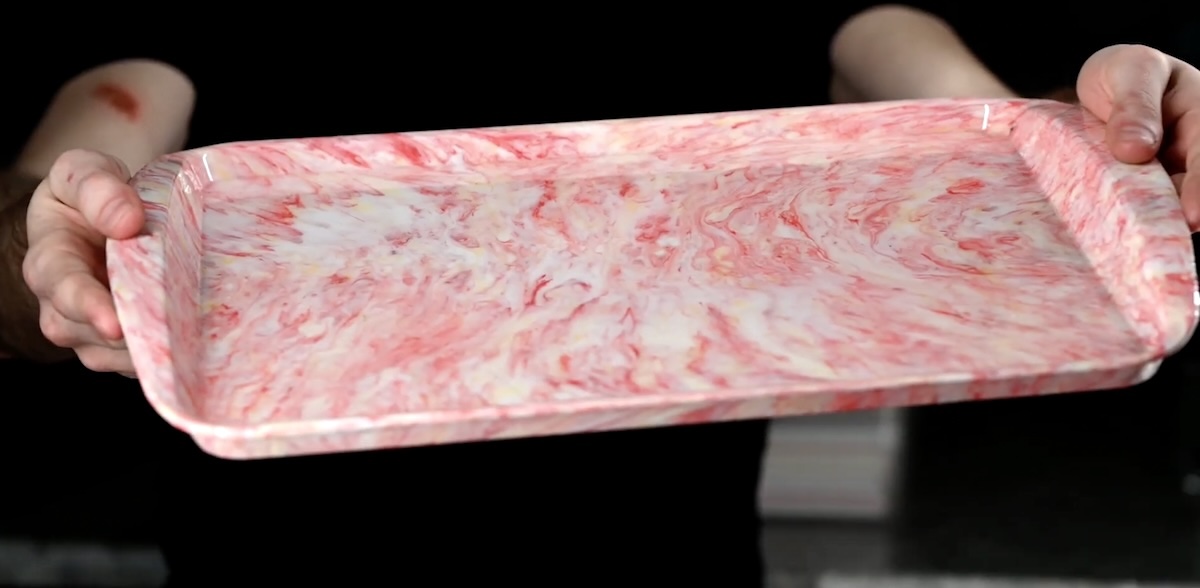
The Rogers next created an aluminum mold for a cafeteria tray. Then they melted the straws down in their oven and pressed them into shape using the mold.
“It turned out to be vastly more complicated than we thought,” said Brayden. “Pretty much ruined our oven.”
But the final result was pretty cool: 15 red, yellow, and white marbled cafeteria trays that were then used as canvases by artists to create works of art for Ronald McDonald House charities across the country.
The McDonald’s experiment led to more tinkering. Brayden tried using injection molding, a process in which molten plastic is injected into a mold, to create a shower comb. That allowed the couple to use different types of plastic. Soon, however, they returned to their bread and butter: 3D printing.
‘A Path to Plastic Sustainability’
Since starting their business in 2019, the couple have battled a lot of economic uncertainty. The COVID-19 pandemic rocked supply chains and altered consumer habits, forcing many businesses to adjust. Then came Donald Trump’s tariffs, blurring markets.
The Rogers reached a milestone when they shifted from attending farmers markets to moving into a retail space at Kelowna’s Orchard Park Shopping Centre in 2021. Last year came another big step. They moved into their own retail location in the cultural district of town that also has space for their studio.
As the business has grown, every year they’ve saved more plastic from the landfill. In 2025, Brayden estimates, about 13,000 pounds were diverted.
“It turned out to be vastly more complicated than we thought. Pretty much ruined our oven.”
After a tumultuous start, Brayden says he and Angela finally feel like they can breathe. They’re looking forward to slowing down a bit to be more intentional with their business.
That will include getting more stock on the shelves, finishing making their new retail location and studio feel more like home and setting up organizational systems to help their business function more efficiently. “They’re not flashy or exciting, but they make a better long-term business,” said Brayden.
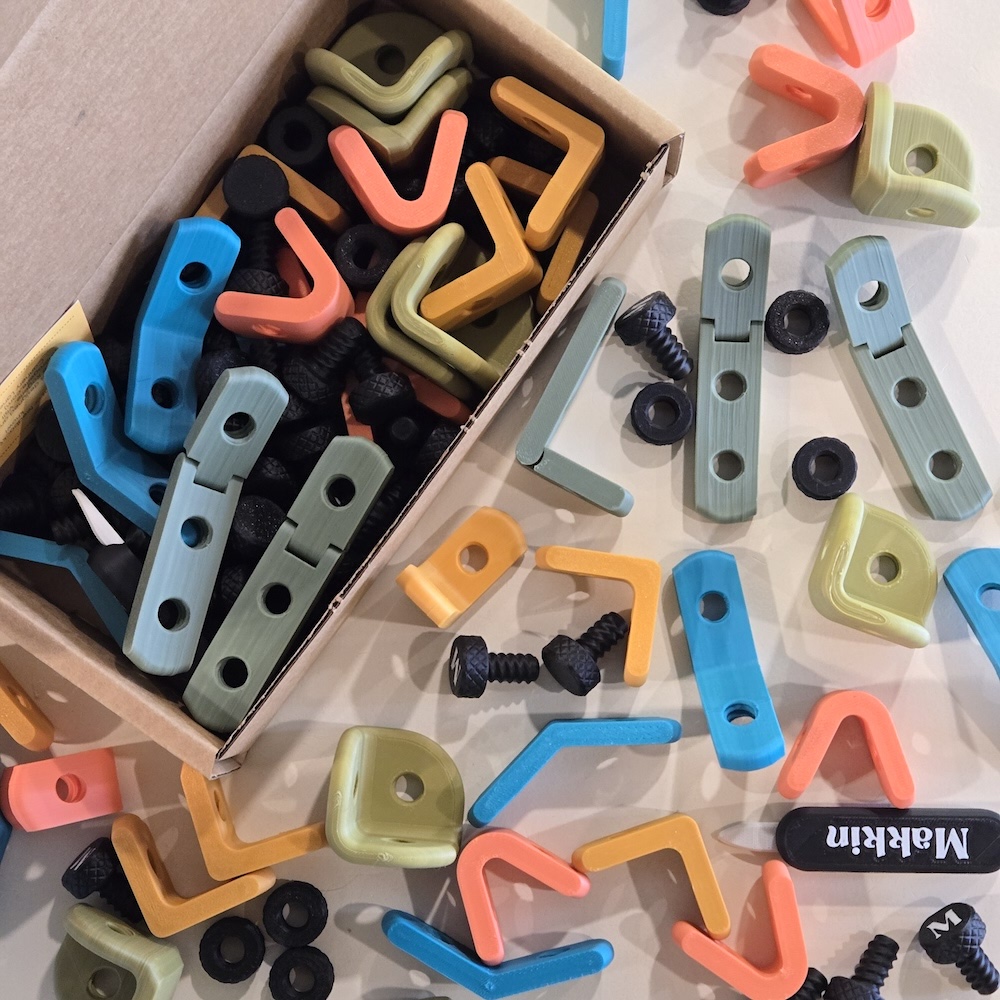
Not that the couple have lost their sense of joyful creativity. Before Christmas they released their first new product in a while: Makkin, a children’s toy that includes a set of bolts, nuts, hinges, and brackets. With the help of a bit of imagination, it can transform any old cardboard box into a little go-kart, airplane or boat.
The Rogers plan on releasing other products soon. Brayden promises “a lot coming down the pipe” this year.
So can we expect more recycling studios like The Rogerie, stocked with 3D printers and colorful goods creatively designed? The Rogers see no reason why not. As Brayden puts it, their business is demonstrating “a path to plastic sustainability where none exist.”