This article was originally published on Native News Online.
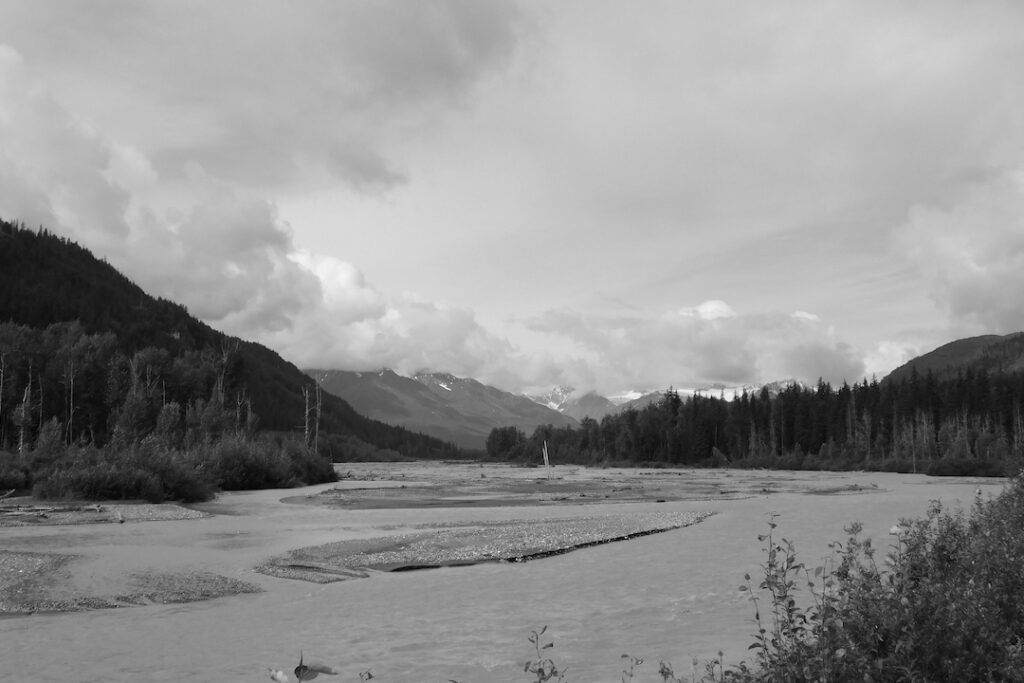
Last Tuesday, Chilkat Forever delivered a powerful message to the Haines Assembly: nearly 300 Chilkat Valley residents have signed letters opposing the proposed Palmer Project and calling for long-term protection of the Chilkat River. The letters urge the Assembly to “keep the Chilkat River free of acid-generating mines and full of fish – forever.”
The delivery marks a significant moment in the growing local resistance to the Palmer Project, a proposed mining operation in the upper reaches of the Chilkat watershed. For many residents, the issue is not only environmental but deeply cultural and economic. The Chilkat River supports world-renowned salmon runs, sustains subsistence harvests, and underpins tourism and commercial fishing industries that define life in the valley.
“I have asked Chilkat Valley residents to join Klukwan in our canoe, and to help us paddle — to help us defend the Chilkat River and the way of life and place we all love,” said Jones Hotch Jr., Chilkat Indian Village Vice-President. “It is heartening how many of our neighbors have heard our call and joined us in defending the place we all call home. To those of you that have already joined us: Gunalchéesh. To those who haven’t yet: we will welcome you in our canoe.”
Hotch’s remarks highlight the leadership role of Klukwan and the Chilkat Indian Village in organizing opposition. The canoe metaphor reflects a shared responsibility: protecting the river is a collective effort that depends on broad community participation. The Tlingit word “Gunalchéesh,” meaning thank you, underscores the cultural roots of the movement.
“I have asked Chilkat Valley residents to join Klukwan in our canoe, and to help us paddle — to help us defend the Chilkat River and the way of life and place we all love.”
Jones Hotch Jr., Chilkat Indian Village Vice-President
Community organizer Rose Fudge of Chilkat Forever emphasized the continuity of local connection to the land despite changes in corporate ownership of the project. “Last year the Palmer Project was owned by one Canadian mining corporation. This year it’s another. What’s constant is this place, and the way those of us who live here are connected to it,” Fudge said. “We call on the Haines Assembly to ensure our communities, economies, values, and way of life are protected and prioritized.”
For opponents, the transfer of ownership does little to ease concerns about potential acid mine drainage and long-term environmental impacts. The Chilkat watershed’s steep terrain and heavy rainfall make residents wary of any activity that could generate acid runoff into salmon-bearing streams.
Shawna Hotch, a Chilkat Indian Village council member, described the letter-writing campaign as a reflection of shared valley values. “One of the Chilkat Valley values I love most is that we hold each other up and work together,” she said. “It’s so powerful to see that happening here, with these letters. This is a call to action to everybody who is interested in preserving our way of life as we know it here in the Chilkat Valley to join us.”
The campaign against the Palmer Project has intensified in recent months. In January, Chilkat Forever launched its “No means go” campaign, urging Vizsla Copper Corporation to leave the Chilkat Valley. In response, Vizsla hired a British Columbia public relations firm at a reported cost of C$100,000 per month for six months and extended its lease of Alaska Mental Health Trust Lands in the valley through 2033.
As the debate continues, the nearly 300 letters signal sustained and organized local opposition. For many in the Chilkat Valley, the issue transcends politics or economics. At its core, they say, is a simple goal: ensuring the Chilkat River remains healthy, productive, and protected — forever.
Three Actions:
- Follow Chilkat Forever and sign up for updates.
- Learn more about the Chilkat Watershed.
- Watch and share this short film on the Palmer project.