

This article runs in a section of The Tyee called “What Works: The Business of a Healthy Bioregion,” where you’ll find profiles of people creating the low-carbon, regenerative economy we need from Alaska to central California. “What Works” is sponsored by Magic Canoe.
Inside a home garage, four friends had an idea to solve a growing problem.
Gurmesh Sidhu, Edward Chiang, Sumreen Rattan, and Gabriel Soares had learned enough about the industry to know that something had to be done with electrical vehicles once they reached their end of life.
Even after a decade on the road, the lithium-ion batteries that power EVs still hold up to 80 per cent of their original capacity.
That’s enough energy to power a storage system, said Sidhu, who studied mechatronics engineering at Simon Fraser University, where he met his co-founders.
Storage systems are modular units that look like mini-sheds and hold energy for a certain amount of time, allowing customers to use it when they need it. For consumers, the systems can serve as generators and cut energy use during peak hours when electricity costs are high, otherwise known as “peak shaving.”
But many batteries are not finding that second life.
Enter, the friends from college. All in their mid-20s, they quickly realized what others in the sector were talking about too: as EV adoption grows, so will the need to find a home for aging but still usable batteries. With many of the first-generation EVs nearing end of life, the four saw an opportunity for a business that could source, repackage, and sell old EV batteries.
The quartet previously co-founded SFU’s first electric racing team. Through that experience, they gained valuable business skills — fundraising, building, and selling electric race cars. The time together also gave them confidence they could work together and remain friends.
By 2019, they had founded Moment Energy from a garage in Surrey, working with “virtually every automaker in North America” to source EV batteries and make storage systems. Three years later, they moved into a warehouse in Coquitlam and started selling products both to municipalities and to private companies such as God’s Pocket, a rural resort on the northern tip of Vancouver Island that uses a storage system to reduce its reliance on a diesel generator.
The tech has caught the eyes of investors, with Moment securing millions to scale its work and develop “the world’s first second-life battery gigafactory in the U.S.”
Moment has completed nine projects since launching and is expecting to complete over 20 more in the next 12 months. Its revenue is expected to grow “into the millions,” according to Sidhu, suggesting the repurposing market is not slowing down any time soon.
“There Are No Rules” About EV Battery Recycling
More than a quarter of all cars sold across the world this year will be electric, following recent projections from the International Energy Agency. That number is expected to rise to 40 per cent within the next five years.
Across the Pacific Northwest, there are more than 400,000 registered EVs in B.C., Washington, and Oregon combined.
But even with all that growth, there is no framework for processing lithium-ion batteries when they hit the end of the road.
Yes, there are a few different options to keep the hazardous waste inside those batteries out of landfills. One way is through pyrometallurgy, a process that uses high temperatures to source valuable metals. But it recovers only about half of the materials inside the batteries and causes greenhouse gas emissions.
Batteries can also be shredded into black mass — a “cake-like” substance that contains minerals like cobalt and nickel. Those metals can then be reused to make new products and reduce the need to mine for new minerals.
But what happens after you produce black mass? In North America, nobody knows, according to Mark Winfield, a professor in York University’s faculty of environmental and urban change.
“There are no rules,” he said, adding that it’s concerning since batteries can be flammable and contain a range of materials that are classified as toxic under the Canadian Environmental Protection Act. It’s a stark contrast to how it’s done in both the European Union and China, where there are standards and rules that measure the efficiency of recyclers and support the recovery of critical minerals.
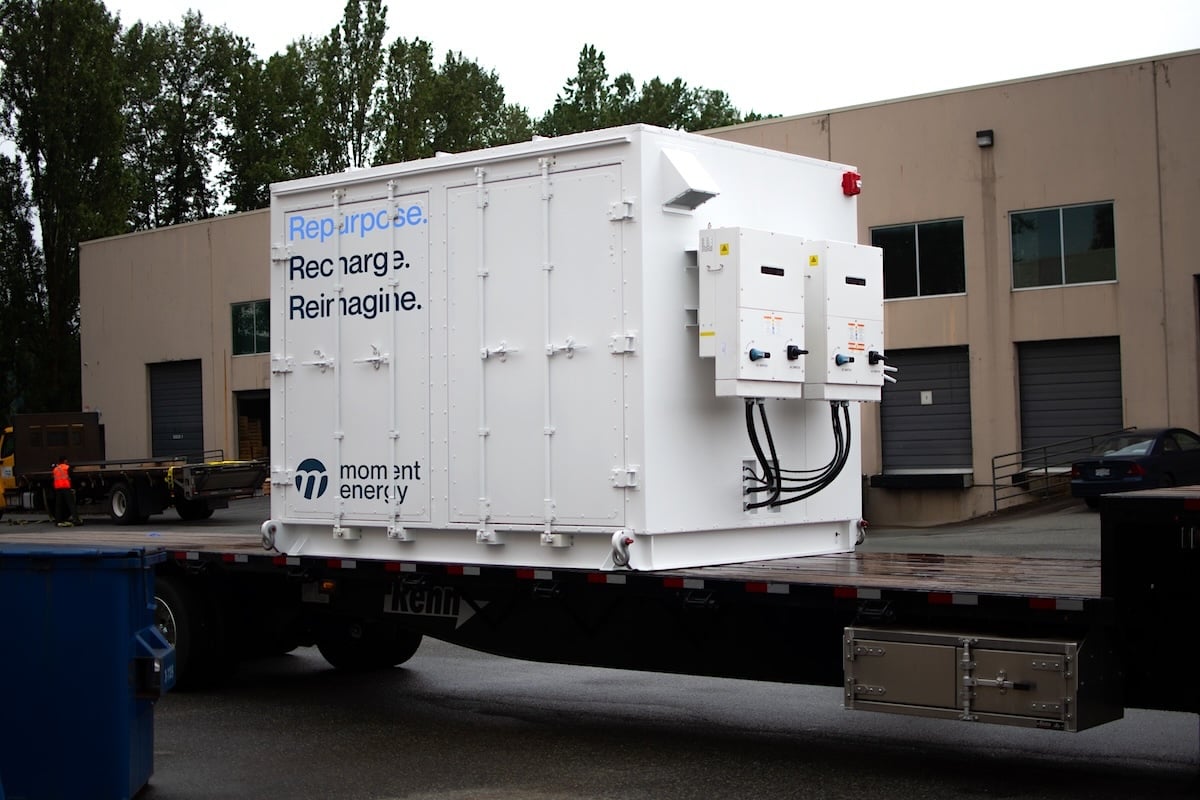
Moment aims to fill the gap in North America, preventing batteries from ending up in landfills or being recycled in ways that harm the environment.
“What we can do is make it so that you don’t need to recycle [EV batteries] for another 10 years,” Sidhu said. “By that time, we believe recycling technologies will be a lot cleaner and better.”
Maria Kelleher, founder of a Toronto-based consulting firm that specializes in energy and batteries, said Moment’s reuse plan is beneficial for the environment, since “you don’t have to take stuff out of the ground to make a new battery.”
The company’s biggest initial hurdle may be finding enough batteries to build inventory, Kelleher added. EV batteries can last up to 15 years, and recent reporting out of Stanford University suggests that existing EV batteries could last for “about a third” longer than researchers originally predicted. Balancing supply and demand will be tricky until the market matures some more, Kelleher said.
“You don’t have to take stuff out of the ground to make a new battery.”
Still, Winfield said there is a lot of potential for a company like Moment. With thousands of EV batteries expected to be recycled in the coming years, there may soon be plenty of inventory to choose from.
The company currently retails a storage system called the Luna BESS, which uses about “four to five vehicles’ worth” of used batteries, Sidhu said. It comes in two sizes — 400 kilowatt hours and one megawatt hour — and can charge EVs and serve as a backup power generator, among other duties. Moment estimates the Luna BESS systems will have a decade-long lifespan.
“This is a way of extending the useful life of the battery and conserving the investments of energy resources that went into making them,” Winfield said.
Finding a Fit in US and Rural Communities
That said, Winfield doesn’t see a seamless fit for the repurposed storage systems in existing Canadian infrastructure. Energy providers like BC Hydro may not be able to use the devices for widespread grid adoption, he said.
There may be potential for the devices in places like California, which has adopted batteries in its electricity system, he added. The state’s goal was to store more wind and solar power in the devices. But the battery-powered tech has also ignited unintended consequences, sparking major fires at a couple of spots in the state. (Moment’s Luna BESS has passed safety inspections by third-party testers.)
Winfield also sees value for Moment’s product in urban settings, especially where there are homes that rely on solar power. “These kinds of assets could be hugely useful,” he said.
One market Moment has found success in is rural communities where camps or resorts have, in the past, relied on diesel generators. Moment has installed storage systems in Suffield, Alberta, and on Quadra Island and northern Vancouver Island in B.C.
When paired with solar or wind, the battery-powered storage system can ensure that a remote camp or resort can operate “off-grid with zero need for additional diesel generators,” Sidhu said.
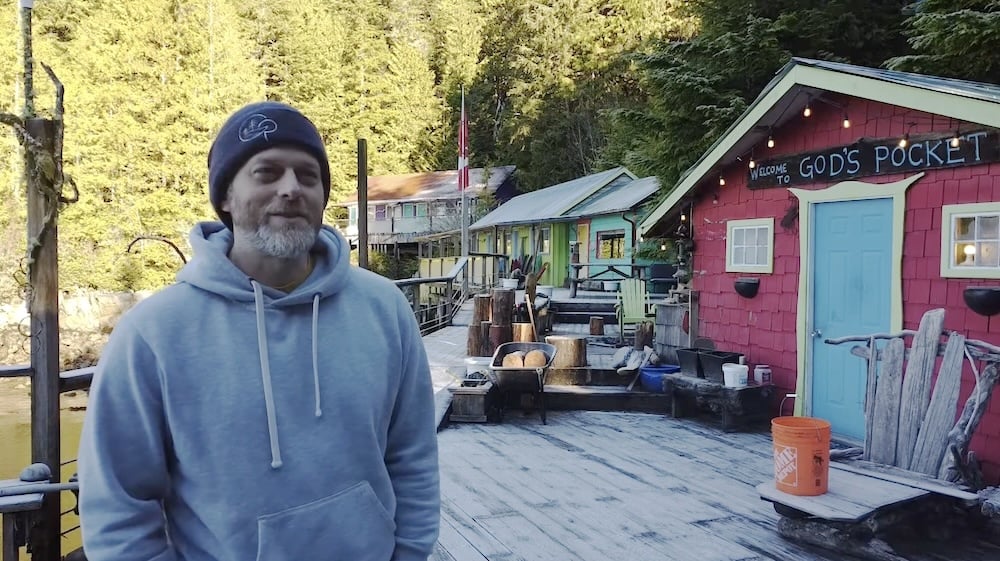
At God’s Pocket, an off-grid scuba diving resort outside Port Hardy that runs on a battery bank charged by generators, wind, and solar power, using a storage system has reduced generator run time by about 75 per cent and led to a 30 per cent reduction in diesel fuel usage.
The resort now runs its generators for about three hours per day during diving season, when they use the most energy. The generators run at 80 per cent capacity, which is the optimal load for fuel efficiency and emissions. The resort’s diving season lasts for about 24 weeks.
“It’s an incredible way to store and distribute power,” Claus Eckbo, owner of God’s Pocket, told The Tyee.
Next Steps
One question Winfield raised with The Tyee was what would happen with Moment’s storage systems once they reach end of life.
“Are they going to be taking responsibility? Is someone else going to be taking responsibility?” he asked.
In an email to The Tyee, Moment said its storage systems will be decommissioned and recycled at end of life. Specific recyclers will be determined when the systems are decommissioned.
Ultimately, Moment wants to ensure all EV batteries are being repurposed and provide clean and affordable power to people across the world. Their goal is to have 100 per cent take-up by 2030.
“Are they going to be taking responsibility? Is someone else going to be taking responsibility?”
To get there, the company is eyeing expansion to the United States, with plans to develop a large factory that will repurpose EV batteries.
Moment isn’t the only company with similar sky-high plans.
The sector already has multiple players, including Connected Energy and the German startup Voltfang.
With EV usage expected to grow, Sidhu thinks there’s enough space for everyone.
The goal, he said, is to make the transition from gas- or diesel-powered cars environmentally friendly not just during an EV’s time on the road, but also “once they’re no longer useful on the road.”