

This article runs in a section of The Tyee called “What Works: The Business of a Healthy Bioregion,” where you’ll find profiles of people creating the low-carbon, regenerative economy we need from Alaska to central California. This section is sponsored by Magic Canoe and the Salmon Nation Trust.
While traveling for work a few years ago, Jacqueline Jennings noticed a powerful plant everywhere she looked. Fireweed grows from the Arctic Circle to well below the U.S. border. In Canada, it sprouts from Vancouver Island to the Maritimes and is used in medicine and art in many Indigenous communities.
As an Indigenous business strategist and one of the few Indigenous women to work in venture capital in North America, Jennings says the plant stood out to her because of its remarkable ability to spring up wherever fire has ripped through, bringing nourishment to the soil and life.
With that as a guiding principle, Jennings, who has also worked with brands like Aritzia and Lululemon, and was a professor at Simon Fraser University’s Beedie School of Business, picked fireweed as the namesake for a non-profit that helps Indigenous entrepreneurs grow their businesses.
Jennings gained experience while working with Raven Indigenous Capital Partners, where, her website says, she helped raise $125 million and flow capital into Indigenous ventures. Three years ago, she and co-founder Candice Day started the Fireweed Institute, whose team is spread across B.C. and as far away as Quebec.
Previously, Jennings and Day, through Raven Indigenous Impact Foundation, had piloted a project called the Fireweed Fellowship, which coached 21 Indigenous entrepreneurs. That helped inform an accelerator program the institute is rolling out this February.
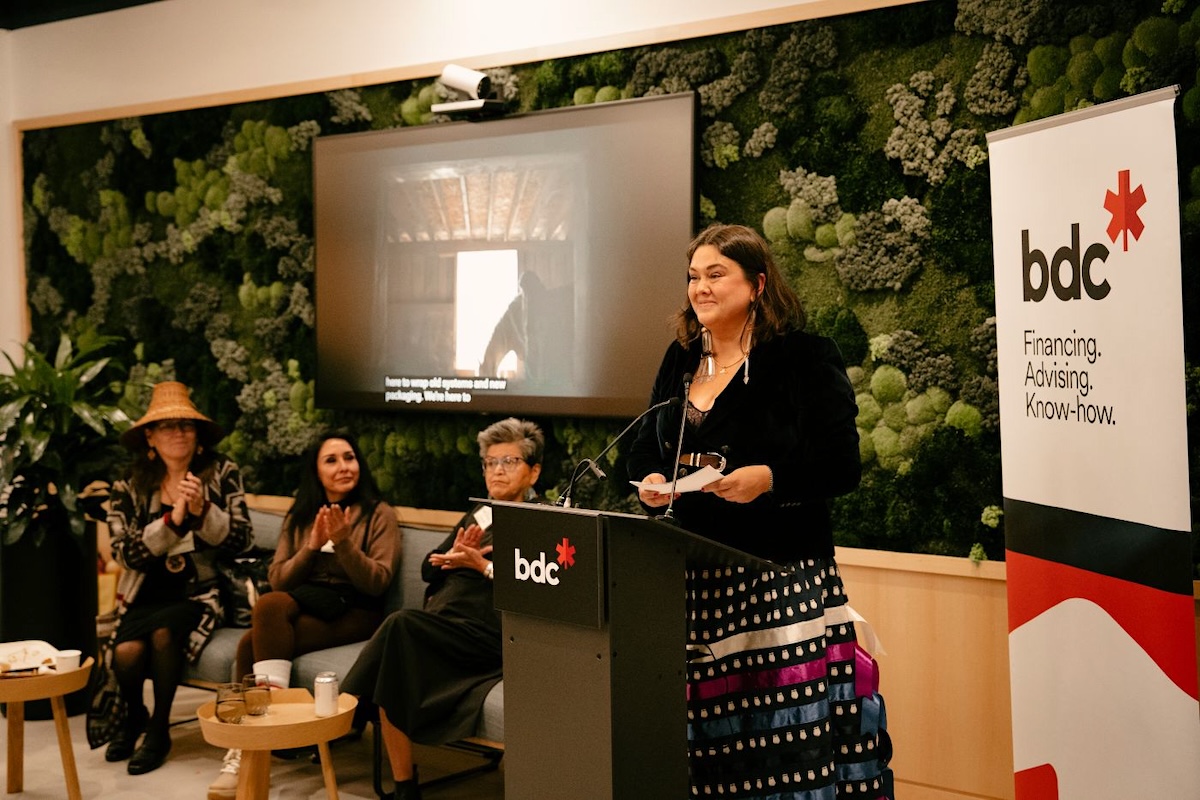
Jennings’ work is attempting to undo impacts from colonization.
Although Indigenous Peoples contributed nearly $50 billion to Canada’s economy in 2020, Indigenous entrepreneurs may experience discrimination and not have the resources needed to grow their businesses. In fact, they face multiple barriers, including internet costs and a lack of digital training and mentorship opportunities.
The disruptions from colonization were detrimental to Indigenous trade routes, commerce, and traditional forms of currency and wealth — and the harm was intentional, said Jennings. The Fireweed Institute addresses those injustices by helping to regenerate the land, the ecosystem, and Indigenous commerce and trade for Indigenous people to thrive again, she said.
Another important piece of the puzzle, to be included in the accelerator program, is teaching about the “Trauma of Money,” an approach that aims to unpack any beliefs about money that may be hindering a person, and the ways they may be managing or mismanaging money, or even selling themselves short when it comes to being paid for their talent. Such struggles are often rooted in trauma, including intergenerational trauma, as well as discrimination, racism, and colonial trauma.
Jennings spoke with The Tyee from her home on the Sunshine Coast, where she is “raising her family, riding horses and reclaiming traditional skills as part of her leadership practice.” We spoke about the Fireweed Institute, supporting Indigenous entrepreneurs and her goals, which include launching a land-based campus where gatherings can be held throughout the year.
This interview has been edited for clarity and length.
The Tyee: How did Fireweed get started?
Jacqueline Jennings: We ran a pilot cohort project in 2019 and 2020. And there was a lot of dreaming that went into in-person gatherings and on the land gatherings. And then at the 11th hour we went into the COVID-19 lockdown, and we had to very quickly adapt to an entirely online program delivery, which now is more the norm but at the time we were like, “How are we going to do this?”
When I left Raven, I took the idea and the name and the brand with me, and Candice and I sat down and thought, “OK, if we’re going to stand this up as an independent Indigenous institution, we can dream even bigger.”
You’ve mentioned that a ‘for us, by us approach’ is essential when supporting Indigenous people in business.
As we were running this accelerator pilot program, we realized that there’s a lot of research about Indigenous entrepreneurship that was being done in non-Indigenous institutions that didn’t have that relationship in the ecosystem. So, there was this sort of extractive lens. And we knew that a lot of the storytelling about Indigenous entrepreneurs was also being led by non-Indigenous organizations.
I noticed you use the word ‘village’ a lot. What’s the significance?
Sometimes when you’re part of a really close-knit group, people will call you a family, and that’s a red flag for us, because… you know, your family can’t kick you out or fire you. If you’re working in an organization and if your boss is like, “We’re family”… well, your family can’t fire you. But in a village, we gotta live next door to each other. So we don’t need an inappropriate level of intimacy or conflated level of intimacy. But we are a village. We’re living in an ecosystem where our networks are all interwoven.
The other piece I’ll say about the village is that in a healthy village you have folks who are good neighbors. We’re taking care of the water that runs behind our house…. You’re hopefully not burning garbage and smoking out your neighbor…. You’re taking care of the sidewalk…. You’re helping your elderly neighbor get their groceries into their house. That’s one of the ways we view our entrepreneurship ecosystem, and particularly within the cohort we’re building (for the accelerator program).
I also wanted to ask you a little bit about your own story up to now. How did you get into business in the first place, and what are some barriers you have experienced and overcome?
Yeah, absolutely. So, I was raised in unceded Squamish Nation territory, and my parents, in the 1980s, we just called them small-business owners. I don’t think anybody used the word “entrepreneur” until the ’90s, but that’s what they were. My dad was a carpenter, and my mom raised us but was also a part-time aerobics instructor. So I spent my childhood getting paid dimes to help do job site cleanup. I pushed a lot of brooms around and spent some time doing babysitting in church basements, while my mom was teaching a Jazzercise class. I had that early exposure to entrepreneurship, but I didn’t have the language for it.
We also had a very close family friend — an Indigenous woman — who ran an interior design business. And that was also really significant for me because she showed me a pride in Indigenous aesthetics and an aspect of our culture that was luxurious and beautiful. At that time, that wasn’t the norm. There were the cheap gas station trinkets, and then there was really old things in museums, but she really made this contemporary Indigenous-influenced design thing that I could admire.
And you know, I struggled with undiagnosed neurodivergence and learning differences in school. I was in the foster care system. I didn’t graduate from high school. There was a lot of obstacles in my way that are impacts of colonization. I’m the second generation in my family to be in the foster care system. Our family is impacted by forced displacement, and dispossession of land and disconnection from language.
Those challenges are no different than so many people face, but when I went out into the world on my own, and I didn’t see a post-secondary pathway easily accessible to me, I went to work for small-business owners. I worked in an Italian deli owned by a family. I went to work in family-owned restaurants and retail shops, and I built up a lot of skills that, looking back, were from working in really close proximity to entrepreneurs. And I have that entrepreneurial spirit within myself.
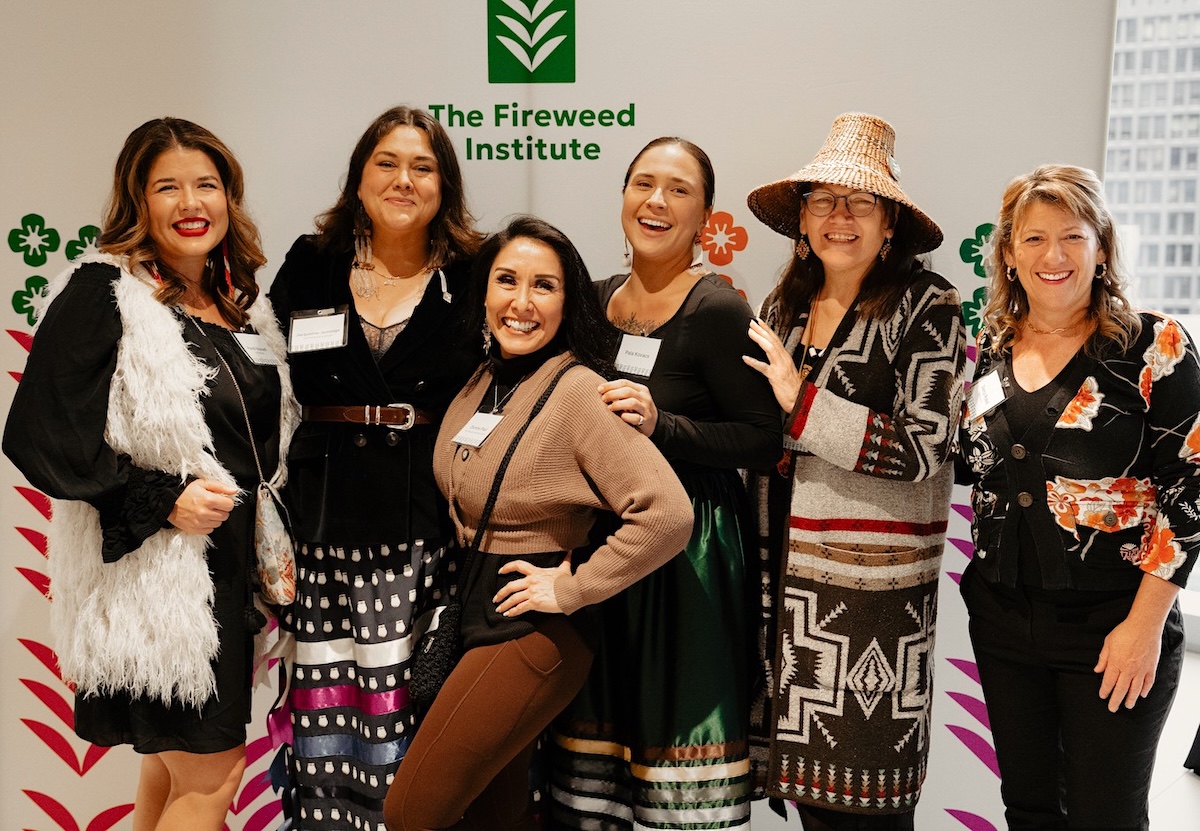
I’m also coming full circle and wanting to come back into alignment with my values as an Indigenous woman, and as a Cree and Red River Métis woman. I’ve reconnected to the lineage in our family, in particular. I’m descended from long-distance traders, and buffalo hunters, and generations who were involved in the fur trade. And there’s something about that blood memory, and that lineage of trade and commerce that really grounds me. It feels like a responsibility, and with Fireweed we have an opportunity to create pathways to wealth building and success that are in alignment with Indigenous individuals’ and communities’ cultural values.
You asked me about challenges and barriers, and I would just also want to add that starting an Indigenous-led institution is not easy. There are the establishment organizations that have been around 50 years that are involved in Indigenous commerce and business, and then there are the non-Indigenous organizations like universities and such that have an Indigenous department or a program that’s focused on Indigenous spaces. But I’m really encouraged to see the rise of our friends and colleagues like Carol Anne Hilton with the Indigenomics Institute, and then Fireweed, and some of our colleagues south of the border.
We need to reclaim these Indigenous institutions and have that autonomy and sovereignty to design solutions for our community by our communities.
I noticed the accelerator program starts with land and ceremony, and you’re also talking about helping people heal so they can ‘thrive from stability and not survival.’ And you spoke earlier of trauma — colonial trauma and the impact of that on Indigenous folks in business. So I was wondering about that. Why is it important to help people heal, and what would you be helping them heal from in your program?
The main focus is to help folks scale their businesses. But what we know is that when we’re in safe spaces that are designed with Indigenous people in mind, there’s an added benefit. I can’t say for sure it will “heal this specific thing” but we’ve heard from participants that healing has resulted in our pilot and some of the other work we’ve done.
Our current economic system and a lot of programs were not designed with Indigenous people in mind, and in fact sometimes they were actually designed for Indigenous people to be excluded or fail.
An Indigenous person — a First Nations, Métis or Inuit person — interacting with the current economic system innately can bring up trauma, whether it’s like loss of land or exclusion from commercial fisheries. Indigenous people couldn’t hire a lawyer until 1950, and also couldn’t fundraise (for legal claims). Those are things that in my job if I couldn’t do, I would be unemployed. Those are innate harms that a lot of us carry to a greater or lesser degree.
You talk about ‘working with money from stability and not just survival.’ The survival part stood out to me. Is that because of colonial trauma?
I want to make a few distinctions that I think are important. If you actually look up the definition of economics, it’s like the management of scarcity, and what incentivizes people. Any community that has experienced the impacts of colonization, but especially Indigenous communities, we’ve been forced to be in management of legislated poverty.
It was intentional. We were legislated into poverty. Our land, which is the wealth of any nation, was taken away.
For hundreds of years, we’ve been forced to manage scarcity and poverty, whether that was being, like, intentionally starved onto reservations or if it was, like, our ancestors dealing with the extinction of the buffalo. I mean, that is one of the most pointed examples of legislated poverty.
I guess the other piece I’ll add is we feel really clear that by and large Indigenous entrepreneurs, when they succeed, they bring their family, their extended family and their community along with them. So, I really see how one successful Indigenous entrepreneur may pull dozens of people out of poverty. It may provide a significant amount of successful jobs. Their representation or their visibility can inspire youth. There are ways in which their operating their business may even heal the land.
So when you ran your fellowship program a few years ago, what were some of the entrepreneurs’ businesses that you worked with then, and do you know where any of them are now?
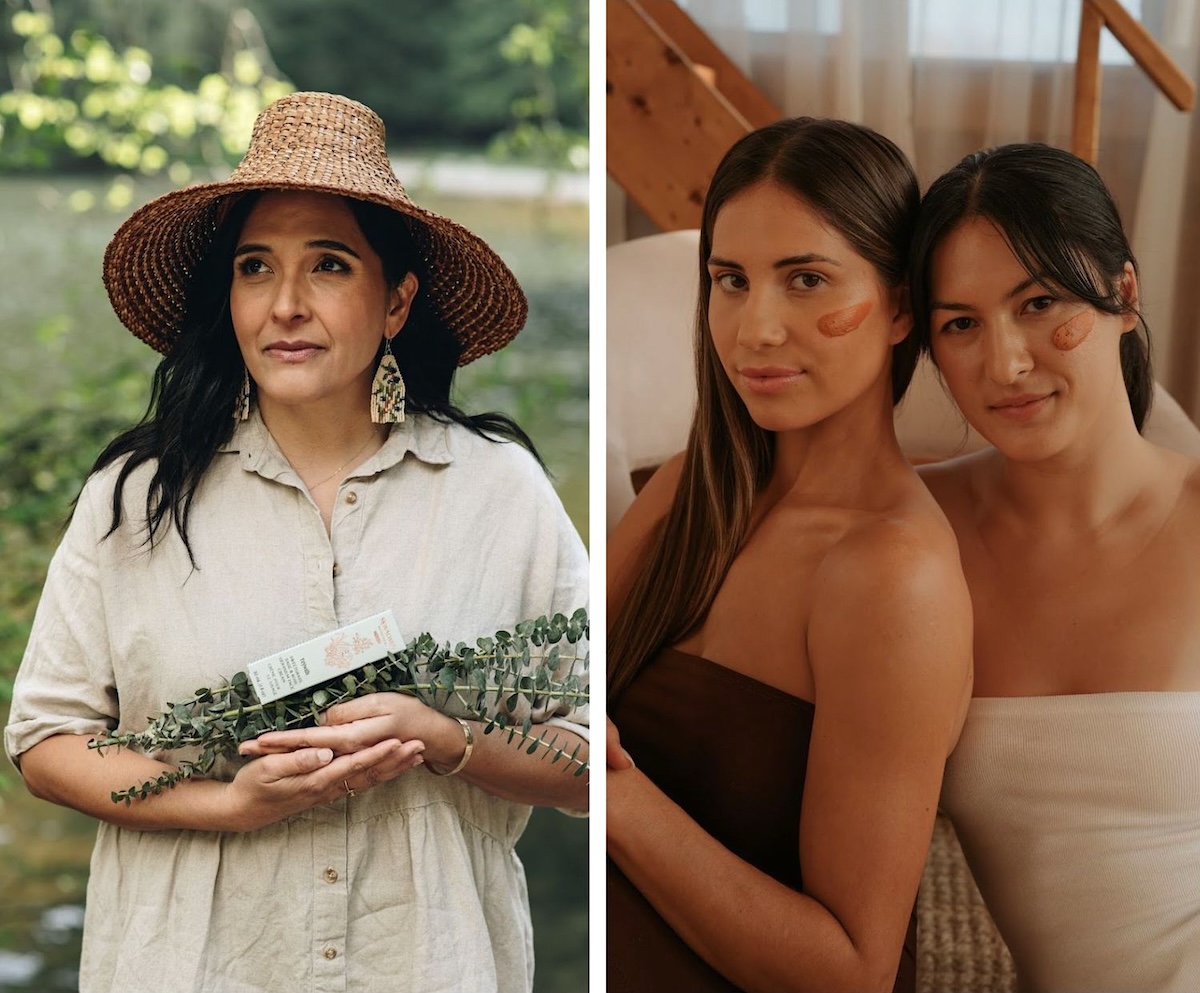
I get really excited to talk about them. So, Sḵwálwen Botanicals. Dr. Leigh Joseph, she wasn’t a doctor then. She was just Leigh Joseph. She was running her business, I believe, out of her basement. She was in sort of like a product testing phase. I think she’d be OK with me sharing that she hadn’t worked out some of the kinks of the packaging, so then an order went out and the temperature dropped and all these things were freezing in people’s mailboxes and leaking.
I think that’s the iterative “oops.” The redesign phase is a critical part of the entrepreneurial journey. And now her product is so elevated. Sales have really expanded, and she has a much wider product range. It can be purchased on BC Ferries, for example.
She also teaches ethnobotany and is involved in educating the next generation. She’s still young, but educating the next generation of culture bearers and plant medicine people.
So that’s one we love. We love all of our alumni, but that’s a great one.
[Jennings also mentions Yukon Soaps, founded by Kim Wheatley, an Anishinaabe Elder and traditional healer who is in the process of developing a retreat centre, as another example of an entrepreneur’s business that’s taken off since participating in the Fireweed Fellowship.]
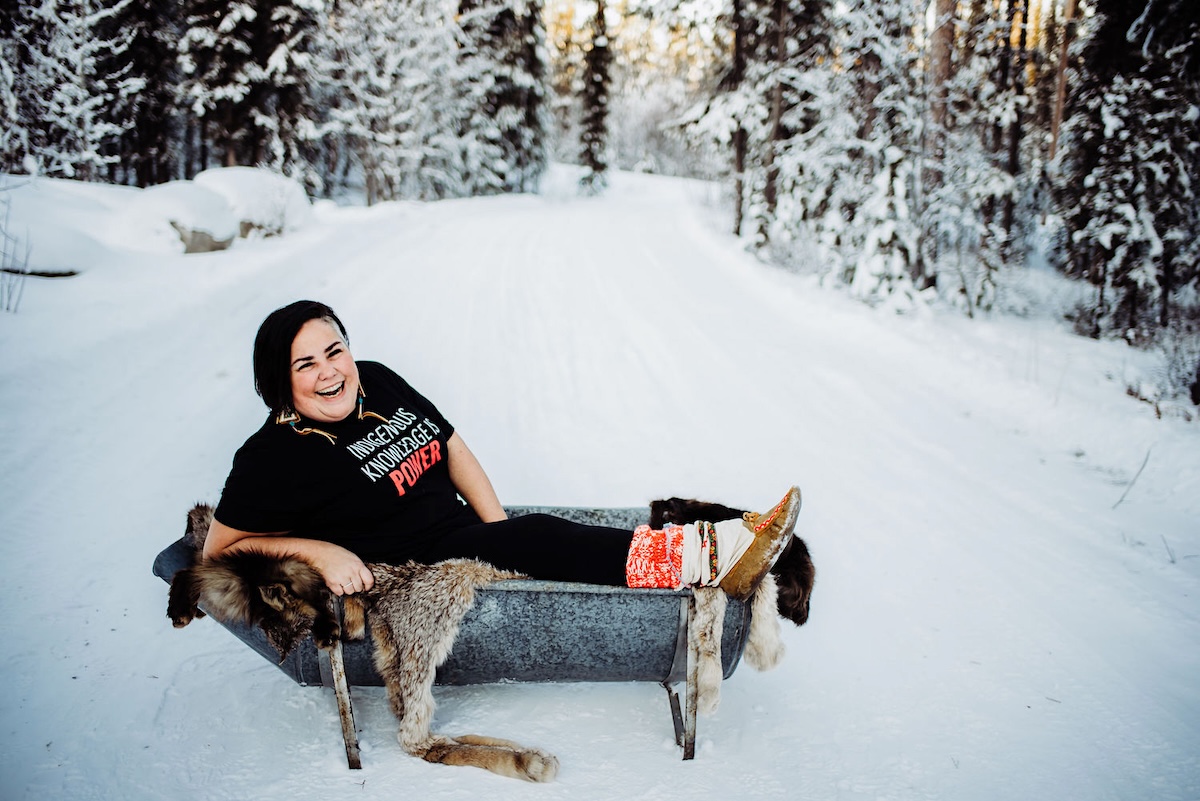
I noticed in one of your videos you talked about the importance of land-based healing, and that you see that as an important part of Fireweed’s future…
The land is a teacher, it’s a healer, it’s our wealth, it’s our health. It’s really vital that these programs are connected. And we just find in general that people learn better when it’s in connection with the land as opposed to in an air-conditioned hotel conference room.
And probably that’s everybody. Not just Indigenous people. Everyone.