
This feature is part of a six-month series from Magic Canoe’s Contributing Writers. Four writers were selected to each cover Salmon, New Economies, Environment, or Indigenous Leadership. This is the fourth story for the New Economies Desk. Major support for the Contributing Writers Series is made possible by a gift from Priscilla Bernard Wieden, in loving memory of Dan Wieden.
When Riley Soboleff was growing up in Juneau, Alaska, locally harvested shellfish were common at family dinners and community celebrations. “I would always see clams being passed around,” said Soboleff, a member of Southeast Alaska’s Tlingit and Haida Tribes. “I don’t even see that anymore, but I know people still eat them.”
The eighteen-year-old high school senior hopes her part-time job as an environmental monitor for the Knik Tribe will make it possible for coastal residents of Alaska to once again safely eat butter clams, blue mussels, cockles, scallops, and other bivalves they harvest from regional beaches.
The weekly monitoring Soboleff conducts involves collecting shellfish samples from a local beach that are then analyzed for evidence of biotoxins. If levels are too high in contaminated shellfish, consuming it could cause paralytic shellfish poisoning, or PSP—a potentially fatal condition.
As ocean temperatures warm with climate change, the biotoxins that cause PSP are becoming more widespread in Alaska, causing an increasing public health threat. Even when not deadly, PSP often causes dizziness, vomiting, seizures, and temporary paralysis.
The Knik Tribe that contracts with Soboleff is one of several in Alaska that have pursued grants and hired a workforce in recent years to conduct PSP surveillance and to communicate the risks to residents. The tribes are located not only in Southeast Alaska, but also in the Aleutian and Pribilof Islands, the Alaska Peninsula, and the Kodiak region. Many also test levels of ocean acidification, which makes it harder for calcifying marine organisms, like clams or mussels, to build shells. But PSP is the more immediate threat.
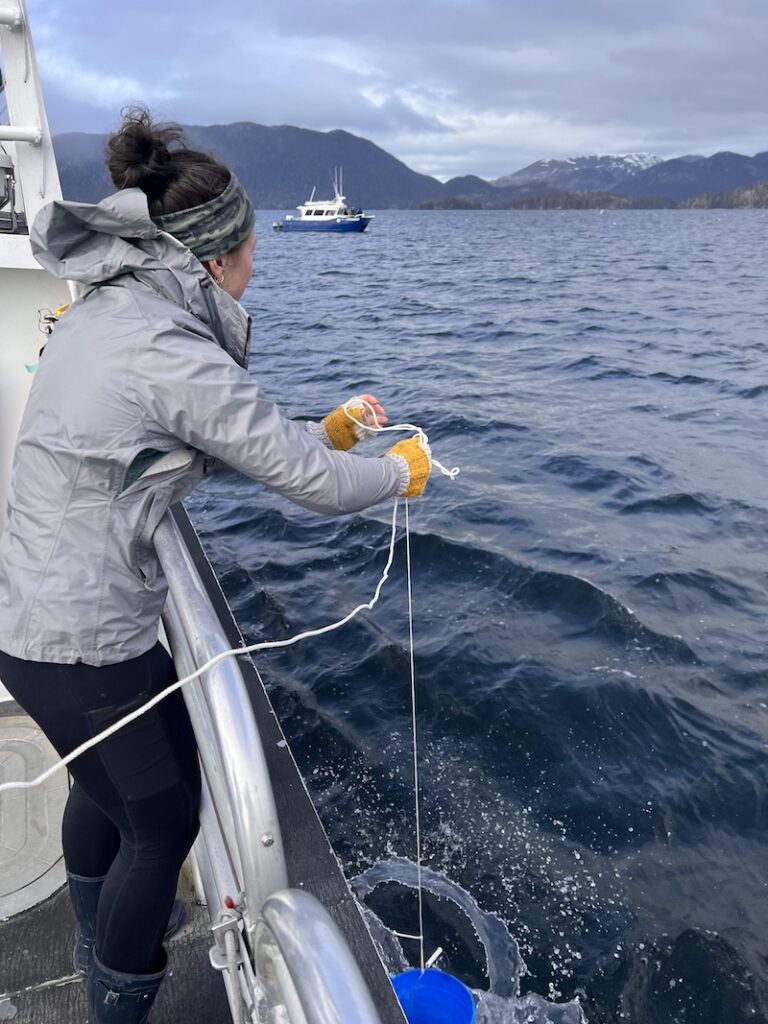
Between 1993 and 2021, five people have died in Alaska from eating shellfish contaminated by PSP—that’s out of seventy-nine confirmed cases, state epidemiologists reported. Since 1973, the total number of fatalities is at least fifteen, with scores of other people sickened, according to the Alaska Center for Climate Assessment and Preparedness.
Not just humans face threats from PSP. Peer-reviewed research published in the journal Marine Mammal Science in May 2025 also linked the deaths of ten fur seals and hundreds of species including flounder, sole, cod, and halibut in the southeast Bering Sea with saxitoxin, a neurotoxin that marine animals absorb when it accumulates in harmful algal blooms.
Butter clams are most frequently the cause of PSP, followed by blue mussels and cockles. All PSP cases confirmed so far have stemmed from shellfish harvested for subsistence or recreation, not for commercial sale in stores or restaurants.
The State of Alaska requires shellfish sold at retail outlets be certified as safe after being tested in a state lab. There’s no such requirement for citizens who harvest shellfish for themselves or their families. In fact, Alaska, with its nearly 34,000-mile-long shoreline, is the only coastal state in the nation without a state-sponsored toxin-testing program for shellfish harvested recreationally or for subsistence.
With warming ocean temperatures moving farther north in the Arctic, the growing presence of PSP and harmful algal blooms is of particular importance to Indigenous groups. Research has found that Alaska Natives are disproportionately affected by PSP, with 53 percent of cases falling within this demographic group, according to state epidemiologists. Alaska Natives comprise about 16 percent of the state’s population.
For this reason, seventeen Southeast Alaska tribes are participating in a testing network to grapple with the public health risks associated with PSP. Because the state doesn’t require testing for subsistence or recreationally harvested shellfish, tribal leaders say the network helps to fill a gap in protecting public health and sustaining a culturally important practice.
The idea for the testing network, called Southeast Alaska Tribal Ocean Research (SEATOR), originated in Sitka, a small fishing community on the outer coast of the Alexander Archipelago. The Sitka Tribe of Alaska (STA) contacted other regional tribes to gauge interest in combining resources to test for PSP, harmful algal blooms, ocean acidification, and other changes to the marine ecosystem.
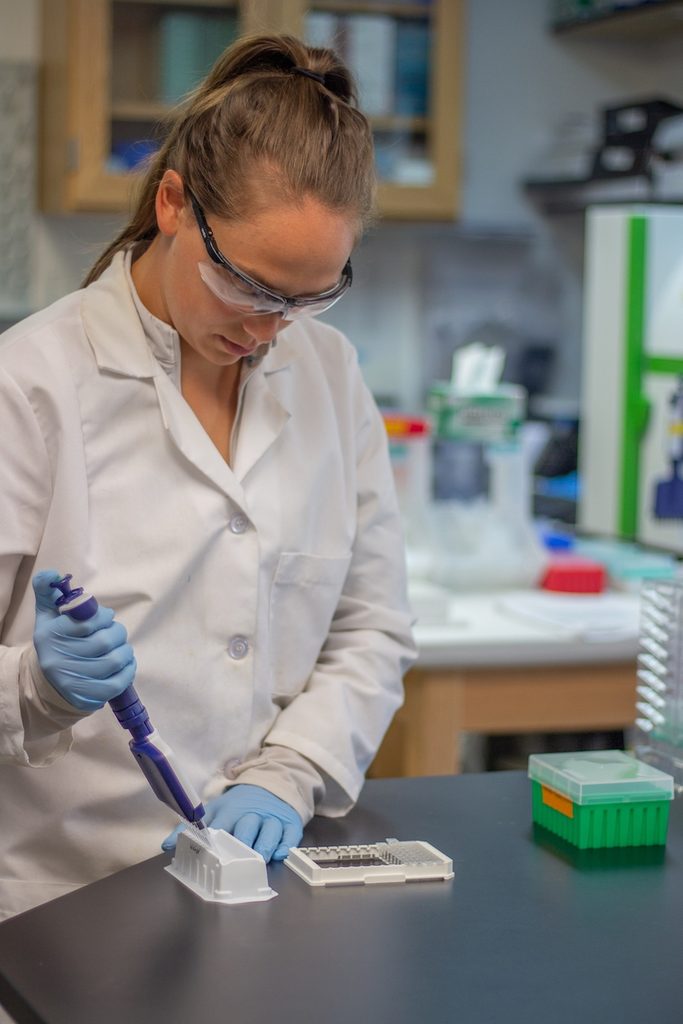
With expressed interest strong, in 2016 STA set up an environmental research lab that serves as a testing hub for samples sent in from various regional communities. In addition to posting results and advisories, the lab also offers tribal youth opportunities to learn about science education. The Harvard Kennedy School of Government granted the lab a 2021 Honoring Nations Award, recognizing it for outstanding tribal governance.
The Case for Being Cautious
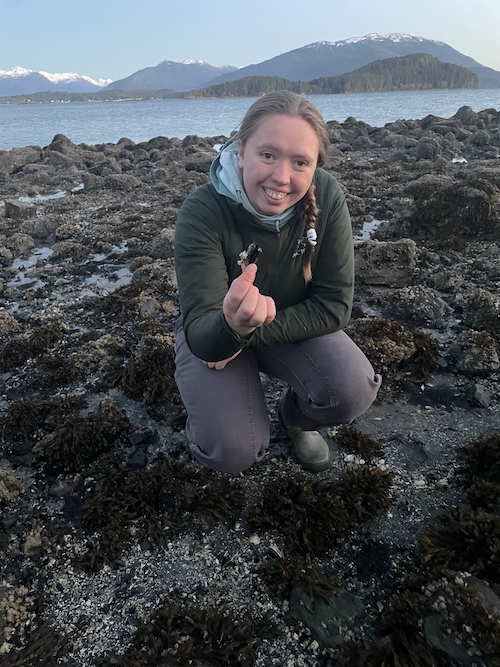
On Sundays, Soboleff takes her dogs to Point Louisa, a peninsula on the outskirts of Juneau, Alaska’s capital. With the Chilkat Mountains in the background, Soboleff collects shellfish samplesat low tideand places them in a cooler as her dogs scamper on the beach.
After she’s collected enough, the teen takes her samples to her family’s home, shucks the shellfish, and freezes the meat. She packs the samples with ice and ships them on Alaska Air Cargo to Anchorage the next day.
From there, a worker with the Knik Tribe, made up of Dena’ina citizens from Southcentral Alaska, collects the cooler and takes the samples to the Alaska Department of Environmental Conservation’s environmental health lab for testing.
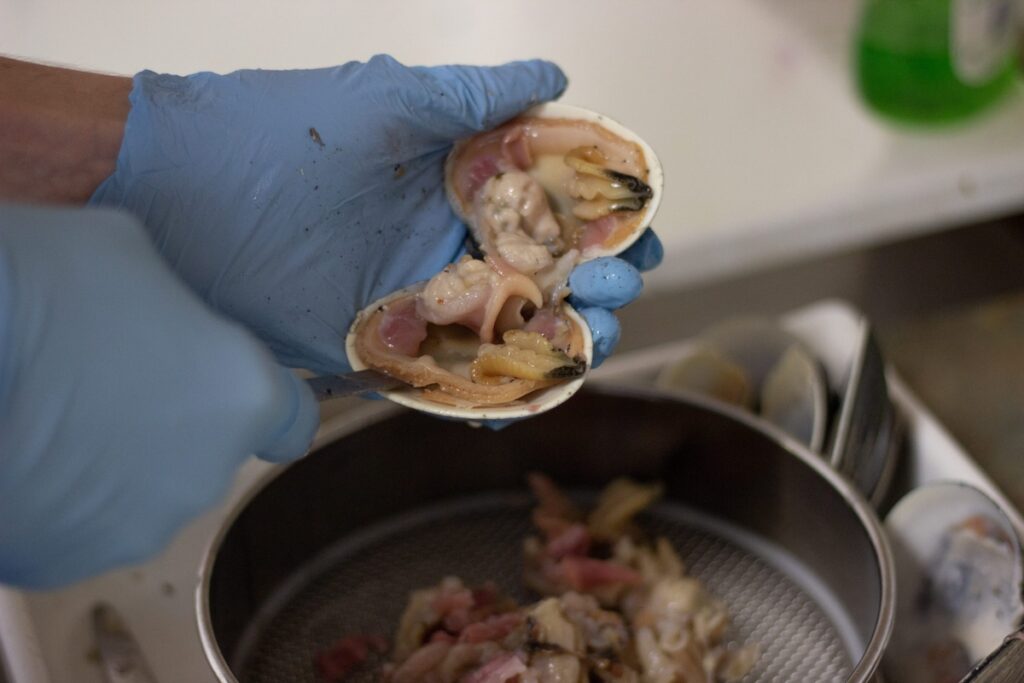
The lab uses a mouse bioassay protocol, where mice are injected with toxins from the shellfish tissue to measure the lethal potency of the sample. If the calculated toxicity reaches or exceeds eighty micrograms per a hundred grams of shellfish meat—the Food and Drug Administration safety limit for shellfish biotoxins—the Knik Tribe alerts the public through a community-based monitoring and warning network.
Bruce Wright, the tribe’s senior scientist and Soboleff’s grandfather, employs people to monitor in Juneau, Old Harbor, and the city of Kodiak on Kodiak Island, Chignik Lagoon and King Cove on the Alaska Peninsula, Sand Point on Popof Island, and on Unalaska in the Aleutian island chain.
“We found the locations where basically the most people have died from PSP, or where levels are the most severe, where consistently they have [harmful algal] blooms in the summertime,” Wright said.
He pays them $25 an hour each for about eight hours of work per week. The funding comes from the Bureau of Indian Affairs’ Tribal Community Resilience program, Wright said.
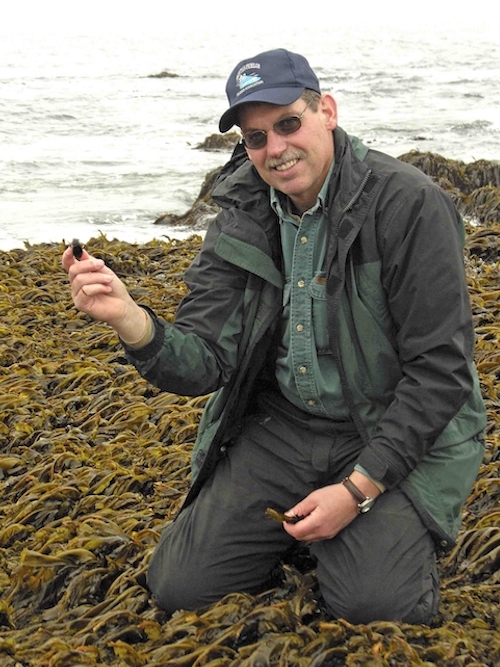
Wright recalled a trip to Chignik Bay to inspect the sampling when he ran into some women catching octopuses at low tide. “They came up and introduced themselves. I introduced myself and asked if I could have the guts of the octopuses because I wanted to test them for PSP. One of the ladies goes, “‘So you’re the guy who tests for PSP? And I go, ‘Yeah.’ She goes, ‘I hate you. I can’t eat my clams anymore.’”
The woman was only half-serious. He assured the women that he would work with the Alaska Department of Environmental Conservation to come up with a protocol so the Knik tribal scientist could test subsistence food for safety, Wright said.
The general advice Wright offers the public is to “not gobble down a whole bunch. Be cautious until you know you’re not getting symptoms.” If the shellfish is more than eighty micrograms, Wright will tell people that it exceeds the FDA limit and that it’s risky to eat.
“If it’s 300, I’ll say, ‘Throw them away.’”
Real-Time Data
The Sitka Tribe of Alaska runs a large environmental monitoring program that relies on traditional ecological knowledge as well as Western science. In addition to PSP testing for its members and several other tribes in Southeast Alaska, STA conducts research on salmon stocks, ocean acidification, salinity, temperature, and several other marine metrics. Every aspect of the research focuses on understanding changes to the ocean environment driven by climate change.
“Researchers love it because they can look at multiple different variables or environmental parameters and run analyses on it to see what the impacts are,” said Jeff Feldpausch, the tribe’s resource protection director.
Given the cultural and nutritional importance of shellfish, safety is priority number one, he said. “Our goal is to get the data back to harvesters as quickly as we can so that it’s real-time and provides safe access to the shellfish,” Feldpausch said. Usually that’s within forty-eight hours of his lab receiving a sample.
“Being able to see that you can conduct research in your community and make a difference is pretty cool.”
Riley Soboleff
Once the results are in, the tribe publishes them online and conveys the information directly to the harvester.
“We tell the harvester . . . here’s where your test results landed. You make the decision. We’re not making that for you,” he said.
Feldpausch employs a lab manager, two analysts, a technician, and an environmental program manager.
The Sitka Tribe of Alaska has one of six Centers for Oceans and Human Health across the country, funded by the National Science Foundation and the National Institute of Environmental Health Sciences. The centers form a network of interdisciplinary researchers who study the nexus between marine environments, climate change, and pollution impacts on human health.
“We’re the first tribe in the nation to take the lead on one of these grants,” Feldpausch said.
As Soboleff prepares to graduate high school next spring, she’s looking ahead to pursuing a science major in college. She’s not sure yet if she wants to go the pre-med route or focus her studies toward Arctic Indigenous health.
What is certain, Soboleff said, is that her part-time job with the Knik Tribe has instilled a love for citizen science. “Being able to see that you can conduct research in your community and make a difference is pretty cool.”