
A footbridge built of wood and concrete spans the Sammamish River to connect two portions of the former Wayne Golf Course near downtown Bothell, Washington, sixteen miles northeast of downtown Seattle. Beside the bridge sits a fenced plot a few yards wide speckled with fresh-planted saplings and native shrubs. Brambles of invasive Himalayan blackberries knot the opposite bank.
On a recent overcast day, Whitney Neugebauer stood with me atop that bridge. There, she recalled the campaign she joined more than a decade ago that pushed the city to purchase the property and preserve it for Bothell’s people and the river’s salmon.
“People showed up with paper salmon on sticks and waved them at council meetings,” Neugebauer told me. “People were saying, ‘Buy it for the fish!’”
It took nearly two years, but by December 2016, the City of Bothell in partnership with King County, the resident-led group OneBothell, and the land conservation nonprofit Forterra managed to purchase the property.
The former golf course is now the largest park in the city: eighty-nine acres of woods, foothills, creeks, open grass, and forty-five hundred feet of riverfront along the main stem of the Sammamish River. It represents some of the last undeveloped land in the area where the stream-side shade and riparian habitat can be restored to protect the watershed’s struggling salmon.
And that’s where Neugebauer came in.
In 2013, she founded Whale Scout, a conservation organization that’s been tearing out invasive blackberries along the banks since 2021. In their place, Neugebauer, her staff, and volunteers sow native trees and plants that will one day mature into the riparian forests long ago torn out after Euro-American settlers transformed the Sammamish from a winding, swampish waterway into a tidy, navigable channel.
The river was once a thirty-mile network of interconnected streams, curves, oxbows, and ponds dense with trees, bushes, and aquatic plants, crawling from Lake Sammamish to Lake Washington through a knotted marshland rich with life. Salmon swam in droves through the channels to reach their spawning grounds in the river’s branching veins. Beavers, bears, and other mammals prowled the land as eagles, osprey, and owls darted overhead. Glacier-flattened fields near the river edge carried rich soil—a wealth of nutrients deposited from centuries of flooding.
Local Coast Salish tribes made seasonal camps in the area for thousands of years before establishing permanent settlements at the confluence of the river and lake two and a half millennia ago. As it went for much of the continent, the original character of the river valley was lost a few generations after settlers arrived in the 1850s, many of whom decided to farm in the floodplains. Spring high waters drowned fields in the Sammamish Valley year after year when it was first settled, frustrating farmers and damaging their harvests. Before long, fed-up homesteaders petitioned the fledgling State of Washington to act.
In 1895, the legislature granted counties the authority to create tax-funded drainage districts. King County, with support from the Army Corps of Engineers, would spend the next seventy years reshaping the river to subdue annual flooding.
Throughout the process, riverside parcels were bought up for agriculture, industry, residences, and even recreation—including one family’s purchase in 1931, to build the Wayne Golf Course. The county’s earliest aerial survey from 1936 shows its oblong footprint scything through surrounding tree stands. The golf course has remained largely unchanged since, except for the growth of tree line that divides two fairways.
Between the efforts of Whale Scout and the City of Bothell, both aimed to ensure that, in another ninety years, the former golf course will appear from the air as little more than a faint silhouette outlining a park lush with groves, wetlands, and a rejuvenated creek. But the transformation of that land almost followed an opposite track.
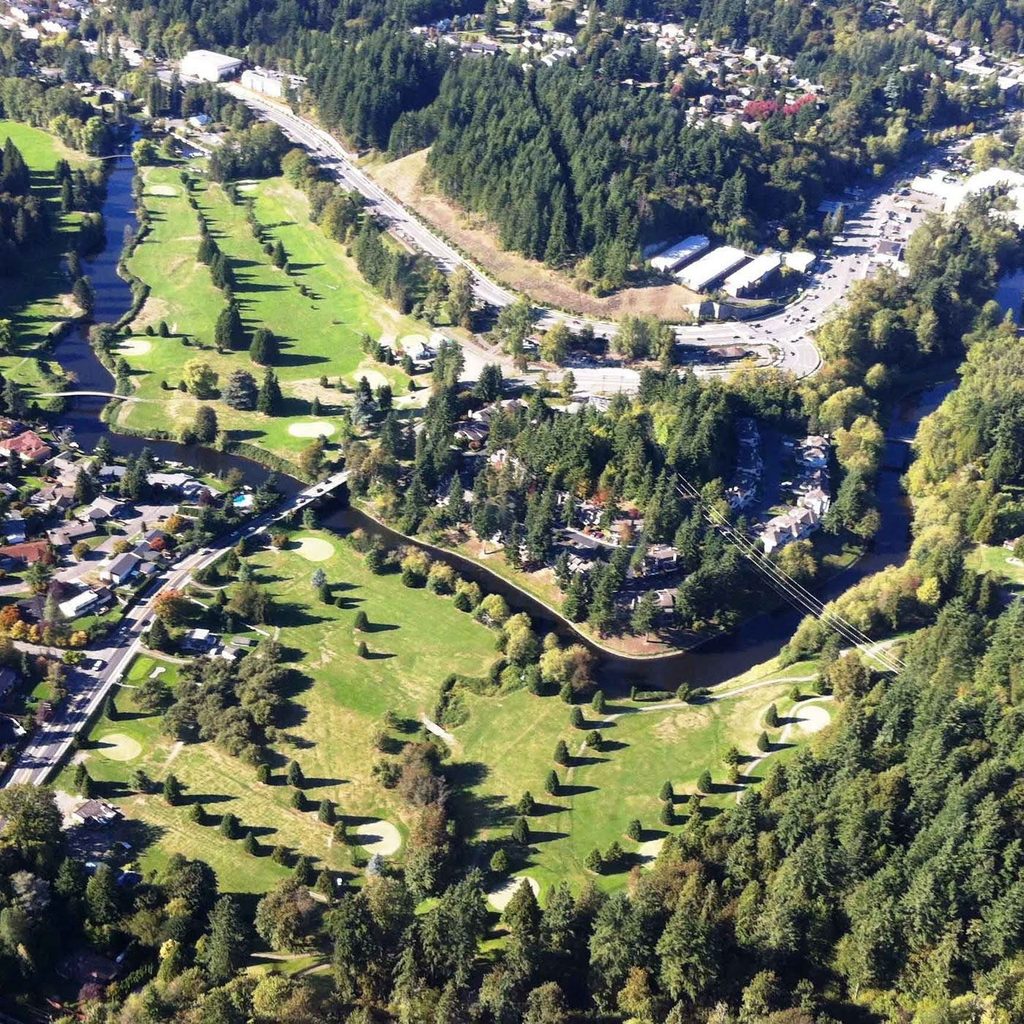
In 1996, the City of Bothell paid the golf course’s then-owners $890,000 in “conservation future funding” to establish an easement on more than half of the property (forty-six acres) to safeguard it from development. The remaining forty-three acres were nearly plowed, paved, and turned into luxury homes. Bothell residents objected to the proposal, in part because Joshua Freed, the mayor at the time, intended to buy the property and build a few dozen homes atop it.
Per the 1996 agreement, the city had the opportunity to purchase the golf course as a whole when the former owners sought to sell it. The offer to do so came in December 2013, but the city council declined it, citing a strained city budget, without presenting the idea to the public. After that, former Mayor Freed entered negotiations on private terms, so his development group could buy the back half of the course. When word reached residents of the mayor’s dealings, they mobilized against him and coordinated with elected officials to raise the funds and purchase the property for the city. In December 2016, the finances were secured and the deal struck.
Wayne Golf Course now belonged to Bothell.
The municipal procedures that followed have been far from expedient, Neugebauer lamented, as she continued to reminisce during our cloudy stroll through the park touring her restoration sites scattered across the property.
“I sometimes get frustrated by how slow these whole processes are,” she said. “I’d love for it to go faster because there’s a sense of urgency that drives us at Whale Scout. Our mission says: Whales are endangered, salmon are endangered; come on, we’ve got to move.”
She remembers being told by a colleague in nearby Mountlake Terrace—which also purchased a golf course—that it would take around fifteen years just to develop a master plan for the property, and that plan wouldn’t mean funding was secured for the outlined projects. It would only be a guiding document for future efforts. She couldn’t believe it at the time, but now, in 2026, she’s realized how right they were.
Following community surveys and two open houses at City Hall earlier this year, Bothell’s Parks and Recreation Department is one year away from finally completing their action plan for the park.
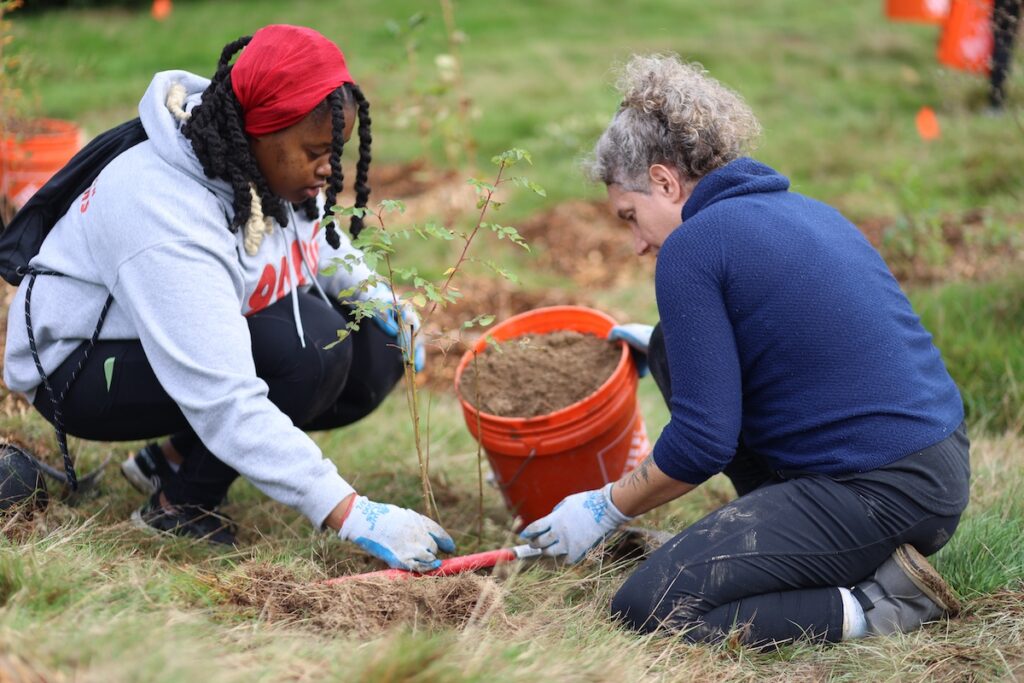
Luckily, Neugebauer’s crew has still been able to make progress. Whale Scout hosted bimonthly volunteer events to advance the restoration work, and it planted its first batch of riparian plants in 2022 once the organization had proved to the city its ability to steward the restoration.
Though the city doesn’t fund any of Whale Scout’s efforts, they do offer them storage space, occasional equipment access, and letters of support. Other than that, the organization has been on its own, attracting both funds and thousands of volunteers to help plant and steward a dozen restoration areas up and down the banks of the Sammamish River, in the “front nine” of the golf course.
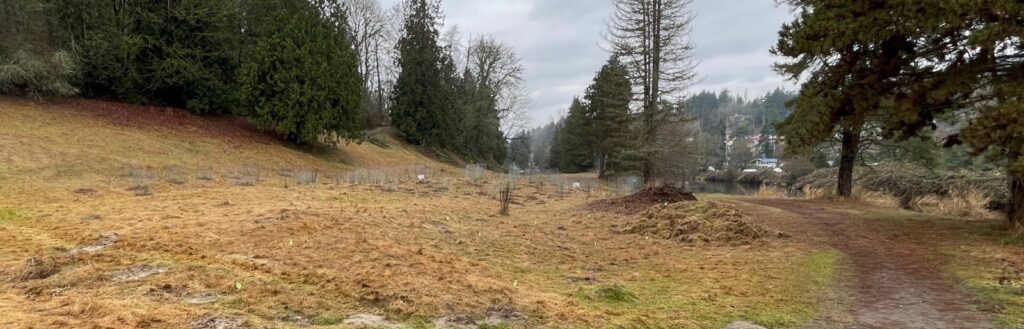
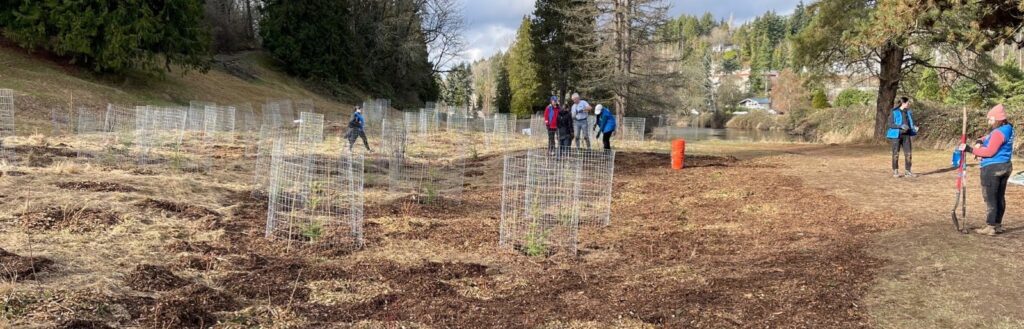
To Jeffrey Jensen, a salmon-focused fish biologist at the University of Washington’s Bothell campus and OneBothell board member, the collaboration between city governments and conservation groups is critical to the success of these kinds of projects.
“It’s a big job to try to restore these habitats,” Jensen said. “Cities don’t have a lot of money for the size of the things they need to do, so it’s important for citizens to get really excited about this kind of stuff.” That’s why, he added, the national environmental nonprofit Trout Unlimited recently adopted a new slogan: Every river needs a champion.
By championing this stretch of the Sammamish, Whale Scout is helping to address one of the biggest threats to the salmon that migrate the river: a lack of rest areas and pit stops where fish can feed and linger in shaded, cool water.
“I sometimes get frustrated by how slow these whole processes are. I’d love for it to go faster because there’s a sense of urgency that drives us at Whale Scout. Our mission says: Whales are endangered, salmon are endangered; come on, we’ve got to move.”
Whitney Neugebauer
“[When] the trees come up, they shade the river, and that’s good for salmon,” said Neugebauer. “But the plants are also home to insects that will eventually fall into the water and provide prey for juvenile salmon as they’re going out to sea.”
The golf course’s transformation will benefit salmon through more than just riparian restoration. Although the full master plan has yet to be finalized for the future of the entire park, the rewilding of the “back nine,” an area that can only be accessed through the adjacent Blyth Park, officially began in early September.
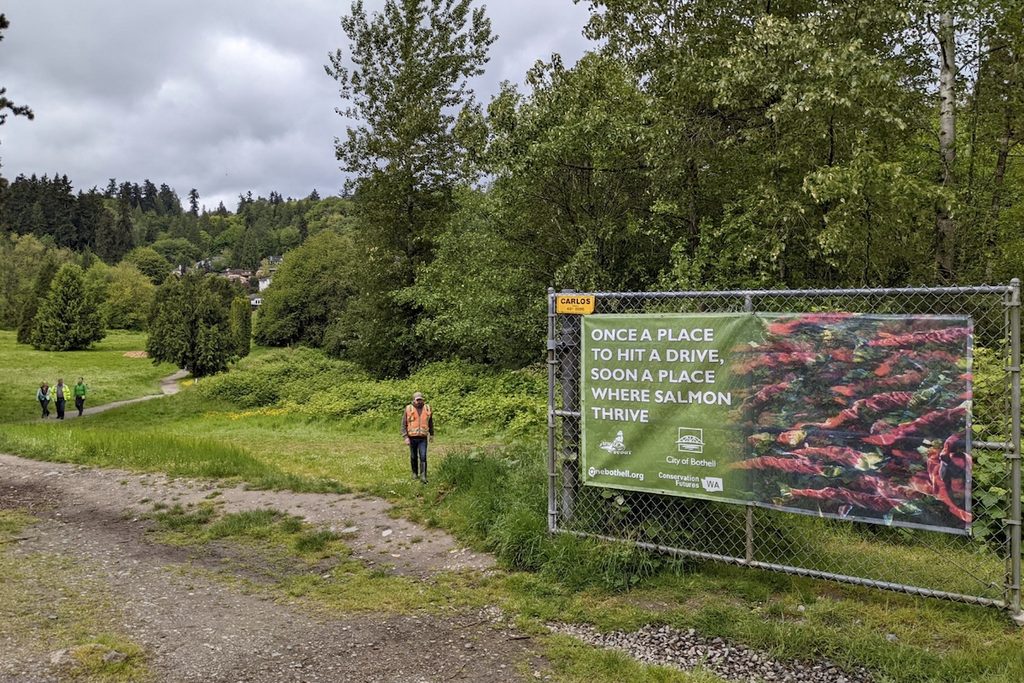
In a July vote, the Bothell City Council unanimously approved a nearly eight-million-dollar construction project that will rewild the stream running through the back half of the property.
Waynita Creek, as it’s known, was once a channel where kokanee salmon spawned, but when the golf course diked the creek and diverted its headwaters into underground pipes, water levels were too low and the flows too fast for the fish. Once construction wraps up in early 2028, the creek will be rewidened and its feedwaters restored, so that the stream can once again support salmon as they spawn, grow, and migrate.
“You need people to really get out there, grab on to it, and say, this place really needs help, and we’re going to do what needs to be done to make it happen.”
Jeffrey Jensen
All of this work—the riparian restoration on the old course’s front half and rewilding its back half—will require significant ongoing support for its continued success. Conservation workers like Mackenzie Dolstad have learned the particular importance of this while stewarding similar projects.
Dolstad has worked with the Mountains to Sound Greenway Trust, a regional conservation group, for sixteen years, including on their ongoing restoration of the Lower Issaquah Creek, which drains into Lake Sammamish. Dolstad has witnessed projects, firsthand, “make that transition from a field of blackberry to fifteen-foot-tall tree cover.”
But even when that early canopy establishes itself, the work isn’t done. “Restoration isn’t some linear, check-the-box, move-to-the-next-step process,” said Dolstad. Plants will establish themselves and start to grow, but it’s all too easy for something to upset that progress and allow new weeds to encroach. That means the funding and support for ongoing maintenance are essential to the long-term success of these projects.
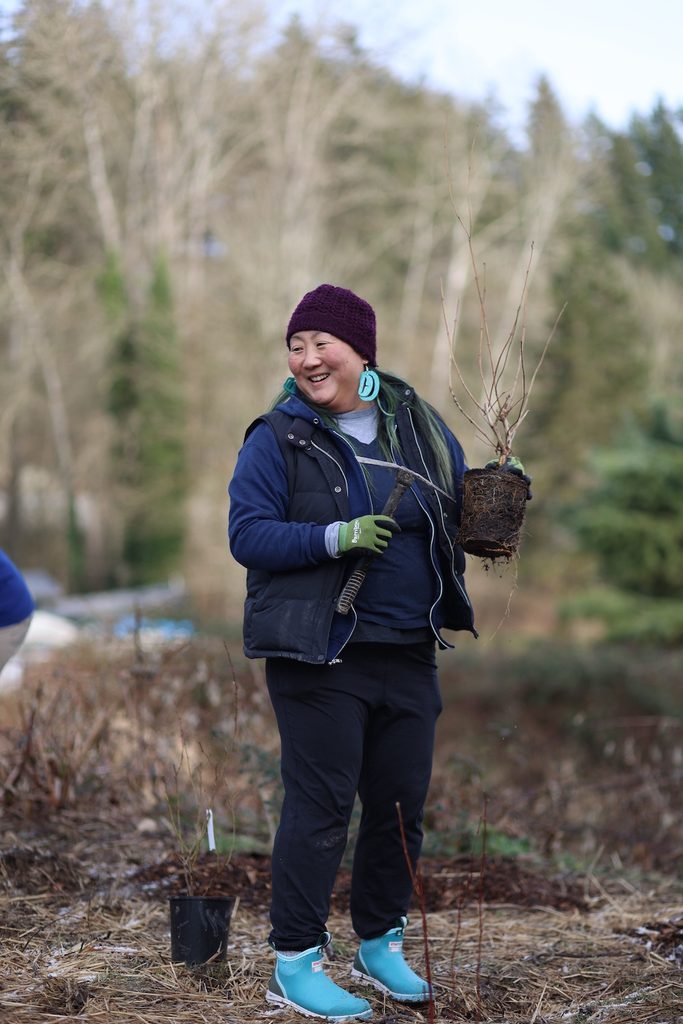
Jensen emphasized that public buy-in is critical for continued support to pour in, so restoration can be free to play the long game. “You need people to really get out there, grab on to it, and say, this place really needs help, and we’re going to do what needs to be done to make it happen,” he said.
Neugebauer and her team have spent years building that exact kind of support. Not only do they host public volunteer work parties twice a month and private volunteer events with local businesses, they also host “paint-in-the-park” art events and walking tours to deepen people’s attachment to the space. Whale Scout even began to put out signage and educational materials beside their restoration plots for visitors to learn more about what they’re doing and why it matters.
Ultimately, Neugebauer’s main message is simple: “This is important for salmon, but it’s just as important for people, too. It’s a once-in-a-lifetime opportunity that we’ll never get again.”
Take Action:
- Learn more about the salmon that spawn in and around Bothell.
- Volunteer on salmon and ecosystem restoration projects (Whale Scout, Mountains to Sound Greenway Trust or a waterkeeper organization near you.)
- Read more about golf course rewildings around the world.