
This feature is part of a six-month series from Magic Canoe’s Contributing Writers. Four writers were selected to each cover Salmon, New Economies, Environment, or Indigenous Leadership. This is the fourth story for the Environment Desk. Major support for the Contributing Writers Series is made possible by a gift from Priscilla Bernard Wieden, in loving memory of Dan Wieden.
Conservation groups call it “the biggest, wildest place you’ve never heard of.” The Kaska Nation calls it Dene Kʼéh Kusān, which translates to “always will be there,” a name in line with their vision for protecting more than 7.4 million acres of towering mountains and dense, forested valleys in the heart of their ancestral territory.
Located just south of where the 1,387-mile-long Alaska Highway crosses the British Columbia-Yukon border near the town of Watson Lake, it’s British Columbia’s largest intact wilderness area. And, if things go to plan, it could become one of the most expansive new protected areas in North America.
“It’s a reflection of Kaska’s belief that the lands have sustained our people for generations,” said Michelle Miller, a member of the Kaska Nation and director of culture and land stewardship with the Dena Kayeh Institute. “We want to keep those lands intact and healthy for future generations, not just for Kaska people, but for everyone to enjoy.”
The northern tip of the proposed protected area is the Kaska community of D’aelyu’. Also known as Lower Post, it lies just south of the Yukon-British Columbia border, near the confluence of the Dease and Liard Rivers. From there, the protected area expands south over nearly 100,000 square miles, with the Kechika River running right through its heart. That’s bigger than Denali National Park and Preserve and nearly four times the size of Yellowstone.
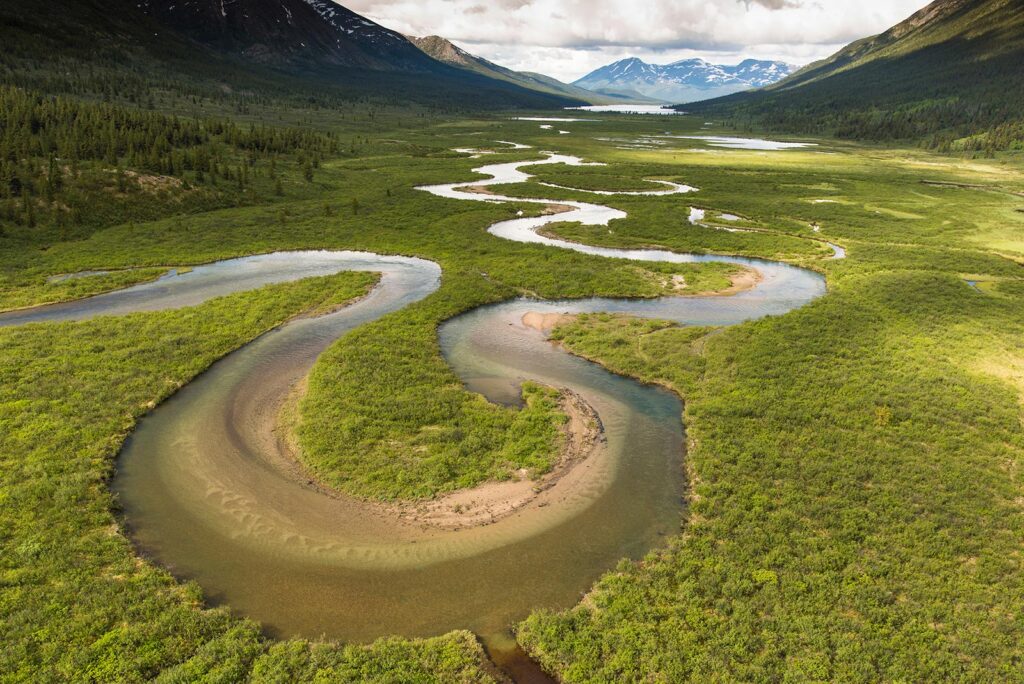
“Dene Kʼéh Kusān is one of the last remaining intact ecosystems in B.C.,” Miller said. “We have almost no road access into it, so protecting such a beautiful, pristine, intact ecosystem, that’s important.”
Dene Kʼéh Kusān isn’t like other parks. It’s been proposed as an Indigenous protected and conserved area (IPCA) a relatively new form of modern conservation that was defined in 2018 by the Indigenous Circle of Experts as “lands and waters where Indigenous governments have the primary role in protecting and conserving ecosystems through Indigenous laws, governance and knowledge systems.”
But securing protections like this isn’t always straightforward. The Kaska started this effort in 2019, and it’s taken seven years for Dene Kʼéh Kusān to build momentum. As Miller explains, it’s been hard work, a lot of time, and a lot of collaboration. The result is something that wouldn’t just expand protections for one ecosystem but also serve as an example of how Indigenous-led conservation is transforming land and water protection across Salmon Nation.
Economy Versus Ecology: A False Dichotomy
For Valérie Courtois, a member of the Innu community of Mashteuiatsh and the executive director of the Indigenous Leadership Initiative, mainstreaming Indigenous-led conservation has been a long time coming.
“The concept of Indigenous-led conservation and stewardship is not new,” she said. Not only have Nations stewarded their territories for generations, but “every single assertion of land rights in this country, for the most part, has revolved around a conservation issue, so there’s always been a desire for an Indigenous-led instrument for designating places that are special.”
Since then, nearly 200,000 square miles of Indigenous protected areas have been proposed in North America, mostly in western and northern Canada. Courtois said that these proposals are “the number one way” for governments to meet conservation goals, like the “30 by 30” targets that governments adopted after the 2022 United Nations Biodiversity Conference. The goal, as the name implies, is to protect 30 percent of a region’s lands and waters by 2030.
Canada has adopted the target. But while the United States initially signed on, it rescinded its support in early 2025. Since then, ten states have signed on: California, Hawaii, Maine, Maryland, Massachusetts, New Jersey, Nevada, New Mexico, New York, and Vermont. Oregon has set its own metric to increase land and water protections by 10 percent, and conservation groups in Washington State have endorsed the goal, but neither has formally signed on to the target. Alaska has not endorsed the target either.
“It’s really been the ambition of Indigenous Nations in pushing proposals forward that have offered the real opportunity to achieve that target,” Courtois explained. But that ambition hasn’t always been matched by government action. Although nearly 200,000 square miles of protected areas have been proposed, only a fraction of that has actually been recognized and supported.
“Dene Kʼéh Kusān is one of the last remaining intact ecosystems in B.C. We have almost no road access into it, so protecting such a beautiful, pristine, intact ecosystem, that’s important.”
Michelle Miller
“What’s difficult is finding out that it’s not necessarily the level of ambition [but] how [. . .] we embed these efforts within local economies,” said Courtois. “How do we make sure that we don’t play into this false dichotomy of the economy versus environment? And how do we show that better cared-for landscapes are good for everyone, whether that’s an industry actor, a municipality, or a First Nation?”
A Different Way to Think About Protected Land
One of the first hurdles that Indigenous conservation efforts have to clear is the relationship between conservation and colonization. Born out of early conservation and environmental movements, parks and protected areas are built on the foundational idea that wilderness is separate from people.
America’s Wilderness Act, for example, defines it as a place “untrammeled by man, where man himself is a visitor who does not remain.” It’s a definition that erases Indigenous peoples and their generations of stewardship from the landscape. In some cases, like in Yosemite and Banff National Parks, the idea of wilderness as being a place without people was used as a premise for clearing people from lands that governments wanted to turn into protected areas.
When it comes to formalizing Indigenous protected areas, it also means that today, most governments don’t have clear legislative tools or pathways to recognize or create protected areas that are actually managed by Indigenous Nations. Even if they did, it’s not clear that Nations and tribes, who view these projects not just as parks but as assertions of their rights, title, and sovereignty, would trust them.
“Governments want to govern, and this is a new way of thinking about that governance, so it’s still a journey,” Courtois explained. Additionally, Indigenous nations are not a monolith, and each nation, and thus each protected area proposal, can have visions and goals specific to their situation.
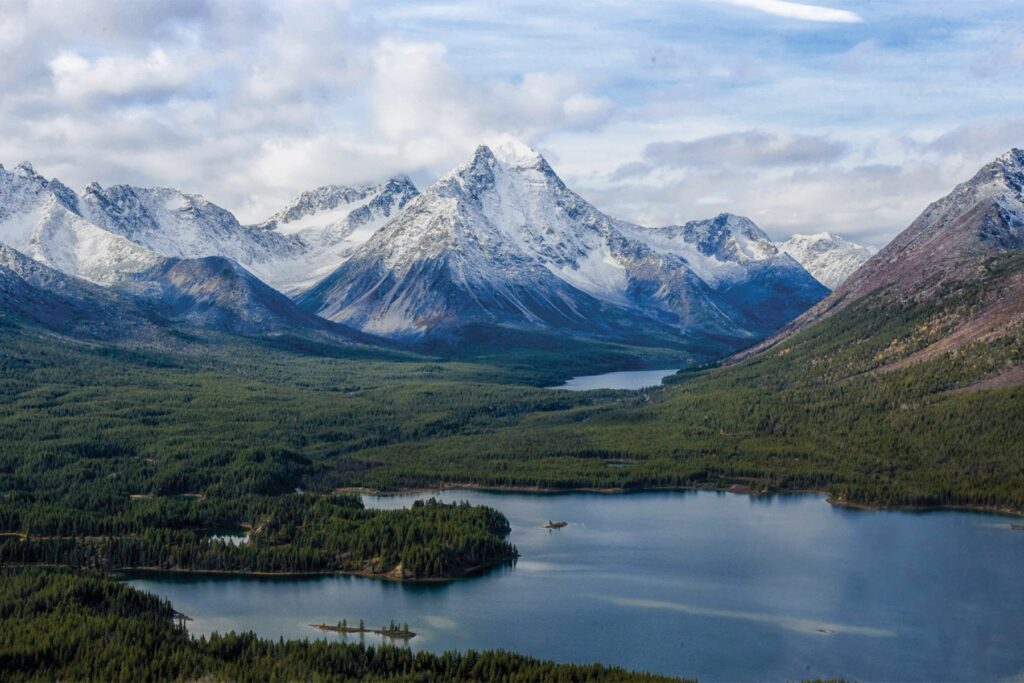
“It’s a way of increasing [Indigenous] decision-making and participation in the determination of the future of those landscapes,” said Courtois.
For the Kaska Nation, figuring this out with Dene Kʼéh Kusān has been a process. As Michelle Miller explained, they had to answer some important questions like, “How do we do this together? What does comanagement and shared decision-making look like?”
Earlier this year, they took their first big public step to answering that. In July, working alongside the province, they released a draft Kaska-B.C. Land Use Planning Project. According to Miller, it’s the result of years of work with the province, neighboring Nations, and local communities.
“They’re sitting at the table with us, and we’re having these conversations [that] allow us to weave together the Indigenous piece and the more scientific piece,” she said. “It’s about weaving those two together so that we can determine what joint decision-making would look like on the land.”
How Allied Groups Can Support IPCAs
Even once an Indigenous protected area clears the political and conceptual hurdles, other challenges remain. Like money.
It’s something that the Tla-o-qui-aht Nation has been dealing with since they declared their first tribal park on Meares Island in 1984. Tla-o-qui-aht’s ancestral territory covers a wide swath of what’s known as Clayoquot Sound, one of the most popular tourist destinations on the west coast of Vancouver Island. It includes Tofino, arguably the most famous surf town in Canada, and Pacific Rim National Park Reserve, but also stretches to the islands north of town and inland to the coastal rainforest.
Today, their tribal parks, working with neighboring Nations, have protected more than 1.8 million acres of lands and waters. To fund that work, they’ve created a unique solution called Tribal Park Allies, in which local businesses support the work by adding a one percent surcharge to their products or services. The money then goes to the Nation to support further conservation work while the business is certified as a “park ally.”
“We have 167 local businesses and organizations participating in the program,” explained Julian Hockin-Grant, the program’s creator and co-owner of Allies Certifications. “We’ve raised over $2 million since we launched.”
But this program didn’t come easy. When Hockin-Grant initially pitched the idea to the Nation, he said they had been “trying to establish an ecosystem service fee, getting something legislated through the province, but there was no political buy-in.”
“The province was just stringing them along, and the district and Chamber of Commerce were not interested in participating in that legislative model,” he explained. “I proposed that we just create a certification under the authority of Tla-o-qui-aht, continue their strong tradition of asserting their rights and title, of not going through treaties and not going through bad faith negotiations. Just demonstrating strong governance.”
Tla-o-qui-aht and Hockin-Grant secured a grant for the program in the fall of 2018. Slowly, they started recruiting local businesses. And although there has been some resistance to the program, Hockin-Grant said that the response has been overwhelmingly positive. Because not only did it address a long-standing equity issue, where tourism businesses were benefiting from the Nation’s lands and waters without compensation, it also helped clarify how businesses can be in good relationship with the Nation.
“People are frightened to talk about Indigenous issues because they don’t want to accidentally say something stupid that makes them look ignorant or racist,” Hockin-Grant said. When it comes to companies, this also means there can be a hesitance to put their brand at risk by engaging in the same way.
Through the Tribal Park Allies program, he added, they’ve created a clear process for companies to support the local Nation. For the Nation, it provides a steady source of revenue to pay for the everyday costs of park operations, like salaries for park Guardians programs, equipment for trail work, ecosystem restoration, and community programs.
The result is a model where local communities and businesses can help fund Indigenous-led conservation efforts. Hockin-Grant is already working with four other Nations to grow the reach into other areas of British Columbia.
“I want to make sure that Nations identify their own certification standards and assert their own laws and protocols for businesses operating in their territory,” he said. “We want this to be localized, Indigenous-led, and regionally specific.”
Building a “Conservation Economy” in Dene Kʼéh Kusān
The economics of Dene Kʼéh Kusān are also important for Kaska. Michelle Miller sees the project as part of a “long-term vision of how we create sustainable jobs and sustainable opportunities within Dene Kʼéh Kusān for Kaska and for everyone.” She described their vision for ecotourism and sustainable land use as a “conservation economy” that is “way more sustainable in the long run than boom-and-bust industries” like forestry and mining. For Dene Kʼéh Kusān, to have such an economy will require Indigenous Guardians funding.
“Guardians will play a key role in the management of Dene Kʼéh Kusān,” she said. “Having our people as Guardians out there and being stewards of the land and doing that according to our culture, our traditions, our laws.”
Valérie Courtois explained that Guardians are akin to Indigenous park rangers, and they exist at the heart of Indigenous-led conservation projects. “These areas come most alive when there is active stewardship on them.”
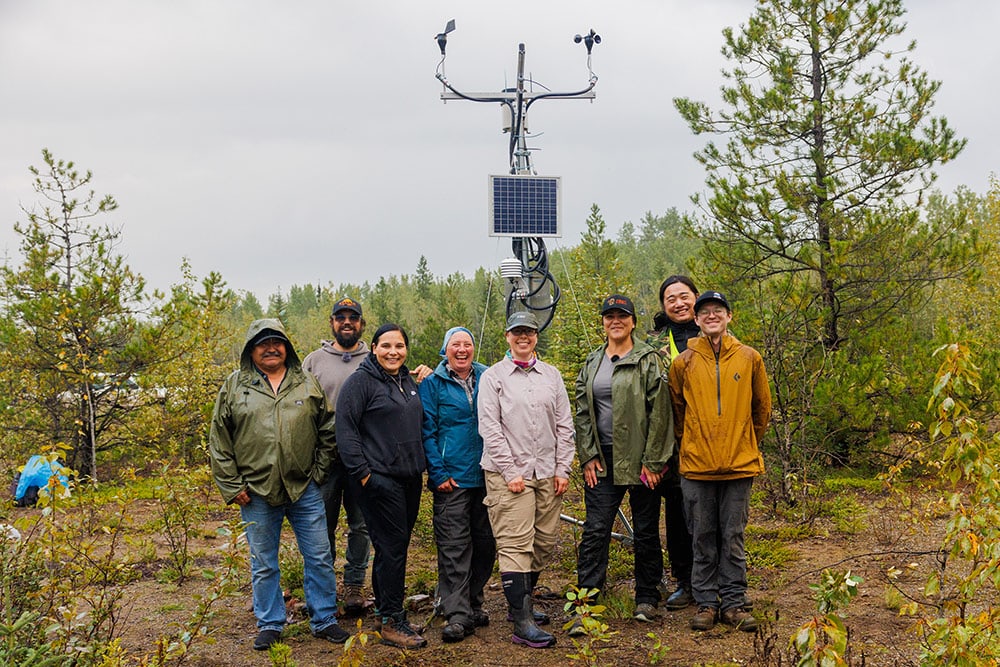
But Indigenous Guardians programs also bring big returns for communities. According to a new report from the Indigenous Leadership Initiative, such programs produce a twelve-to-one annual return on investment for the Nations that run them. But the impact isn’t just economic. The study found that the programs improved governance, decision-making, and individual health outcomes.
“It’s a nine-to-one return [on things like] improving mental health, improving physical health, sense of pride, purpose, role in the community, all of those things,” she added. “These are not just good-to-do things; they’re genuinely good investments that, in many ways, blow government-led programs out of the water.”
And studies have shown that the presence of Indigenous Guardians programs on the land also increases conservation outcomes. “The patrol frequency, scope, and scale of Guardians vastly outweigh what is possible by provincial teams,” Courtois said. “Plus, they bring to the table centuries of knowledge that isn’t easily accessed by conservation officers or other agencies.”
Despite these benefits, some people still oppose Indigenous-led conservation projects like Dene Kʼéh Kusān. In British Columbia, much of that opposition comes from the timber, mining, and mineral exploration industries, which see these expansions of protection as cutting off their access to land and resources. Miller disagrees.
“Guardians will play a key role in the management of Dene Kʼéh Kusān. Having our people as Guardians out there and being stewards of the land and doing that according to our culture, our traditions, our laws.”
Michelle Miller
“For Kaska, it’s always been about balance,” she said. “We’re not saying no to development; we’re just saying that within Dene Kʼéh Kusān, this is an area that we want protected. Outside of Dene Kʼéh Kusān, we have land use planning happening, and that’s where development can happen, in collaboration with the Kaska.”
For now, Miller’s focus is on getting Dene Kʼéh Kusān officially recognized. She’s working hard with her team to submit a final recommendation on the area to Kaska leadership. Once they sign off, it would go to the province for a decision as early as this December.
At that time of year, much of Dene Kʼéh Kusān will be covered in snow and ice. Grizzlies and black bears will have bedded down for the winter, and migratory birds will have long passed through on their journeys south.
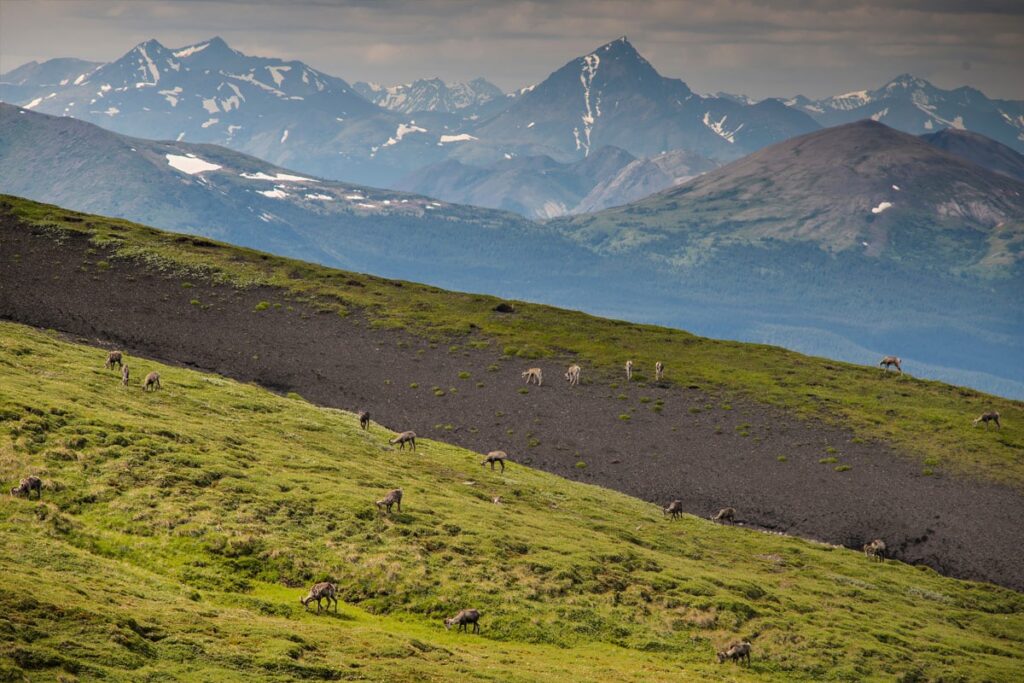
But the land won’t be quiet. Dene Kʼéh Kusān is one of the last strongholds for the endangered northern mountain caribou, and seven different herds have their winter range within the bounds of the protected area. This land is where the caribou, their pale white and brown coats blended into the valley bottom forests, gather to survive on lichen and other hardy plants through the frozen months.
Biologists have argued that the only chance these caribou might have is through creating a protected area like Dene Kʼéh Kusān. For Michelle Miller, it’s just one part of a much larger understanding of what protecting the land really means.
“The land and our people cannot be separated,” she said. “Healthy land is healthy wildlife is healthy communities. There’s an interconnectedness between all of those.”