
This feature is part of a six-month series from Magic Canoe’s Contributing Writers. Four writers were selected to each cover Salmon, New Economies, Environment, or Indigenous Leadership. This is the fifth story for the Environment Desk. Major support for the Contributing Writers Series is made possible by a gift from Priscilla Bernard Wieden, in loving memory of Dan Wieden.
Visit the site of a wildfire in Salmon Nation a year after it burns and you might experience iridescent fields of pink. Scientists call it Chamerion angustifolium, or fireweed, one of the first plants to move in after the flames recede.
Regeneration starts quickly. Seeds blow in across the landscape. Within ten days, they start to germinate. A few weeks later, they’re already forming new shoots in the ashy soil. Fireweed roots help prepare the ground for what comes next: grasses, wildflowers, sedges, and berries, sometimes called “pioneer species” because they’re among the first to return to a postfire landscape.
To Dr. Jennifer Grenz, a Nlaka’pamux ecologist, author, and professor with the University of British Columbia’s Indigenous Ecology Lab, these plants are more than just a sign of recovery; they’re a chance to better understand the relationship between people, land, and fire.
“I’ve come out to [postfire landscapes] where we’ve been out picking berries, filling buckets, and the elders are crying out there because it’s just amazing,” she explained. “It’s like their childhood again.”
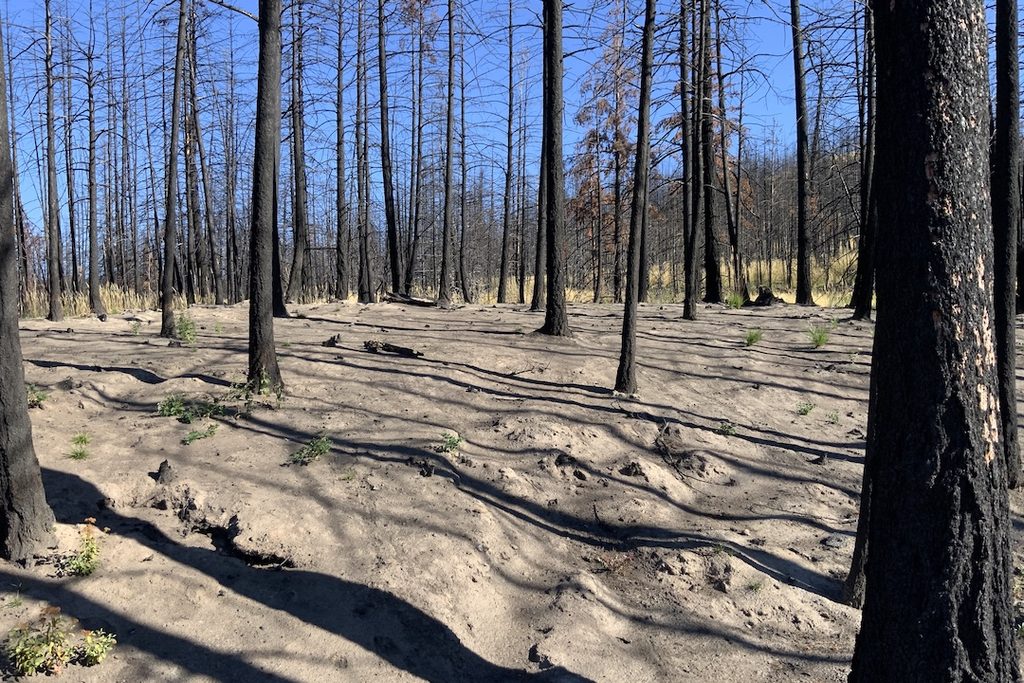
Dr. Grenz spent the past few years studying the McKay Creek Fire, an aggressive wildfire that burned more than 100,000 acres north of Lillooet, British Columbia, in the summer of 2021.
Instead of the usual postfire recovery efforts—things like salvage logging and tree planting—Dr. Grenz experimented with leaving the land to recover on its own. The result, she said, has been “letting the land show us what happens when there isn’t intervention right away.”
The land responded. Instead of dense tree plantations, native trees and grasses that had been pushed out started to return. The landscape began to look like it had before settlers and forestry companies arrived in that part of British Columbia more than a century ago.
According to a study Dr. Grenz and her colleagues published in the journal Fire Ecology last spring, native shrubs and trees have been slowly returning to the higher-elevation lands burned by the McKay Creek Fire. “That land is healthier than it was before the fire.” At lower elevations, they saw more invasive grasses colonizing the burn scars.
The Problem With Just Planting Trees
Forests across Salmon Nation, especially in British Columbia, have long been viewed primarily as timber resources. This began when the first settlers arrived in the Pacific Northwest and felled timber to replace their sailing ships’ masts. As the fur trade and gold rushes declined in the mid-1800s, timber became the bioregion’s main industry. Timber companies systematically cut down old-growth and primary forests. Conservation groups have calculated that only 3 percent of British Columbia’s productive old-growth forests remain today.
In the 1930s, the province started planting trees to replace the cut timber. By 1987, replanting cut trees became legally required for the forestry sector. In 2024, the province celebrated crossing the 10 billion-tree mark.
But as anyone who has visited a tree plantation can tell you, there is a big difference between mature, old-growth timber and second- and third-growth forests. The plantations are often monocrops, planted so close together that the trees grow like matchsticks.
In old growth, said Sarafina Henderson, an ecologist turned advocate who works as a forest campaigner with the Wilderness Committee, “you look up and you see a patchy canopy with openings and uneven tree heights that limit fire transfer from above.”
“In the understory there are plants that prevent evaporation and large dead wood that acts like a sponge for water,” she added. “When you compare that to monocrops, they’re planted way too closely together, where fire transfer between trees is much more likely to occur. And they’re all the same species and often the same age, and that makes them more susceptible to outbreaks like the pine beetle, which increases fire risk.”
For Dr. Grenz, this ground-level view of forest ecology has changed how she, too, looks at the entire landscape. “I used to look at an unburned area and think, Beautiful British Columbia,” she said. “Now I look at them in horror because it’s all gonna burn down.”
The solution, she argues, is a more grounded approach that connects dots between forestry, fires, and a warming climate. It’s an approach that relies not on logging companies or governments, but on traditional knowledge from Indigenous communities who have lived with fire for generations.
“I used to look at an unburned area and think, Beautiful British Columbia,” she said. “Now I look at them in horror because it’s all gonna burn down.”
Dr. Jennifer Grenz
Colonization in a Tree Ring
One of this past summer’s largest wildfires was the Brunswick Fire complex, a conflagration of multiple fires that burned nearly 150,000 acres of land in the Fraser Canyon region of British Columbia.
A three-hour drive east of Vancouver, the canyon divides the Coast and Cascade Ranges. Its burned sections marked a transition zone between the wet coastal region and the province’s drier interior. Historically, it was a fire-dependent landscape dotted with resilient ponderosa pines and other fire-tolerant species.
Dr. Grenz calls them “dry forests,” and has seen tree rings from old ponderosa pines that show “a regime of fires every seven to fifteen years, right up until around 1880.”
At that time, forests in the Fraser Canyon were sparse and open. Timber companies replaced most of what was there with tree plantations, often swapping species better adapted to dry, fire-prone climates like ponderosas for faster-growing Douglas firs. “You can literally see colonization in the tree ring,” she said.
The result is a landscape covered with prime wildfire fuel that, when combined with hotter and drier weather driven by climate change, makes fires not only more common, but larger and more destructive. But climate change only tells one part of the story. By blaming all of our wildfire problems on climate alone, Dr. Grenz thinks we’re missing the whole picture.
“It’s all climate, climate, climate. But climate change didn’t make the fuel [and] climate didn’t light the match,” she explained. “If there wasn’t fuel, the picture would be very different. Yelling ‘climate’ can make everyone apathetic and think we can’t do anything about it, instead of asking how forestry plays a central role in all this.”
Dr. Grenz’s research in McKay Creek points to another pathway, one where the landscape is allowed to recover to its natural, dry forest state. “Yes, there are areas that need interventions, but the memory is held in the land.” It’s an approach that requires a change not just in practice, but in mind-set, away from looking at forest productivity through the narrow lens of industry and, instead, taking a broader view of what a productive landscape means.
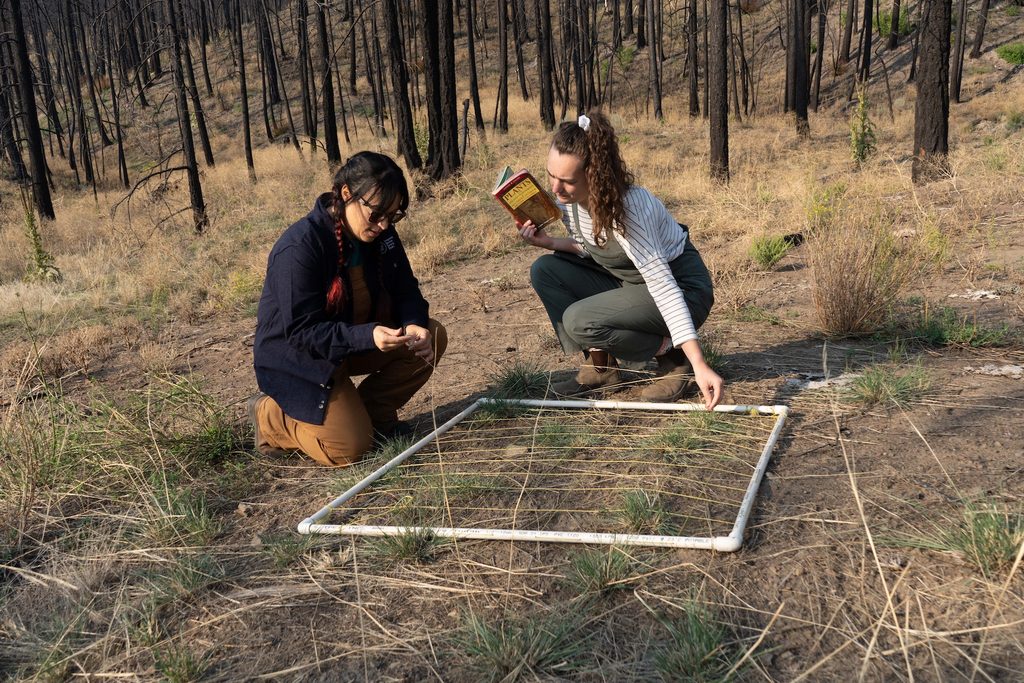
In McKay Creek, Dr. Grenz saw berry patches recolonize areas that were previously super dense tree plantations. “Now there are six different species of berries all around.” Though berries will never become a commodity like timber, they’re important for wildlife, people, and culture in the region.
That’s part of why she sees fires like this as a chance to reset. “Maybe these fires are a reckoning,” she said. “We all inherited this problem, Indigenous and non-Indigenous. Even the people in government inherited this legacy of colonialism.”
But while fires are both dangerous and devastating, they’re also like shaking the Etch A Sketch for the land. “The seed banks and root banks have withstood a couple generations of forestry,” Dr. Grenz said. “The fire went so deep, it removed all that coarse woody debris and forest to expose what was there for thousands of years before.”
The problem is that, in most cases, landscapes aren’t allowed to recover the way McKay Creek did. The province usually moves quickly, contracting with forestry companies to plant trees in burn scars as an accelerated form of recovery.
Dr. Grenz isn’t anti-forestry, but she thinks that the model needs to change. Instead of planting trees everywhere, she advocates for an approach rooted in the historic ecology of a landscape. In places like the Fraser Canyon, for example, she advocates for a “tree plantation model where we’re not trying to make a forest everywhere.” But making that shift is harder than you might think.
This past summer, The Tyee reporter Ben Parfitt broke news that British Columbia would be implementing a “Working Forest Model.” The plan would split forests into three zones.
The focus in forests designated as part of the Working Forest Zone would be logging. The Conservation and Protection Zone would “identify landscapes where conserving biodiversity and protecting ecological integrity are the primary management objectives.” And somewhere between the two would be a third type of forest the province calls the Multiple-Use Zone. Wildfire risk reduction is only mentioned as a priority in Multiple-Use Zone forests. And so far, communities are divided on what this model would actually mean.
In September, the province announced a pilot program near Campbell River, a town located on the eastern shores of Vancouver Island. The project is being supported by four local First Nations: the Tlowitsis, We Wai Kai, Wei Wai Kum, and K’ómoks. But closer to the Fraser Canyon, the Syilx Okanagan Nation questioned the entire approach.
“A forest cannot be defined only by the timber that can be taken from it,” Jordan Coble, chair of the Okanagan Nation Alliance’s Natural Resources Committee, said in a press release. “Our forests hold water, provide habitat, sustain our foods and medicines, and carry generations of Syilx knowledge and responsibility.”
Coble, like Dr. Grenz, argued that “decisions about how these lands will be managed must begin with the health of the land and the involvement of the title holders whose territories are being affected.”
They’re not the only ones on board with the idea of using Indigenous knowledge to better manage wildfire risk. While governments have been reluctant to change course, the public seem open to it.
The Public Wants More Indigenous Fire Management
In September, the Indigenous Leadership Initiative (ILI) released a poll showing resounding support for Indigenous-led fire stewardship across Canada. Eighty-two percent of the public, the poll found, support federal funding for Indigenous-led wildfire management. And when asked whether Indigenous knowledge improves wildfire management, 90 percent of the public agreed.
“What stands out isn’t just how high support is, but how broad it is,” Matt Smith, executive vice president at Pollara Strategic Insights, explained in a press release published with the ILI poll. “Once Indigenous fire stewardship was described, at least seven in ten supported federal funding for it in every region of the country. People see it as a practical, solutions-oriented idea with a real impact and benefit for everyone. That’s the kind of idea people get behind.”
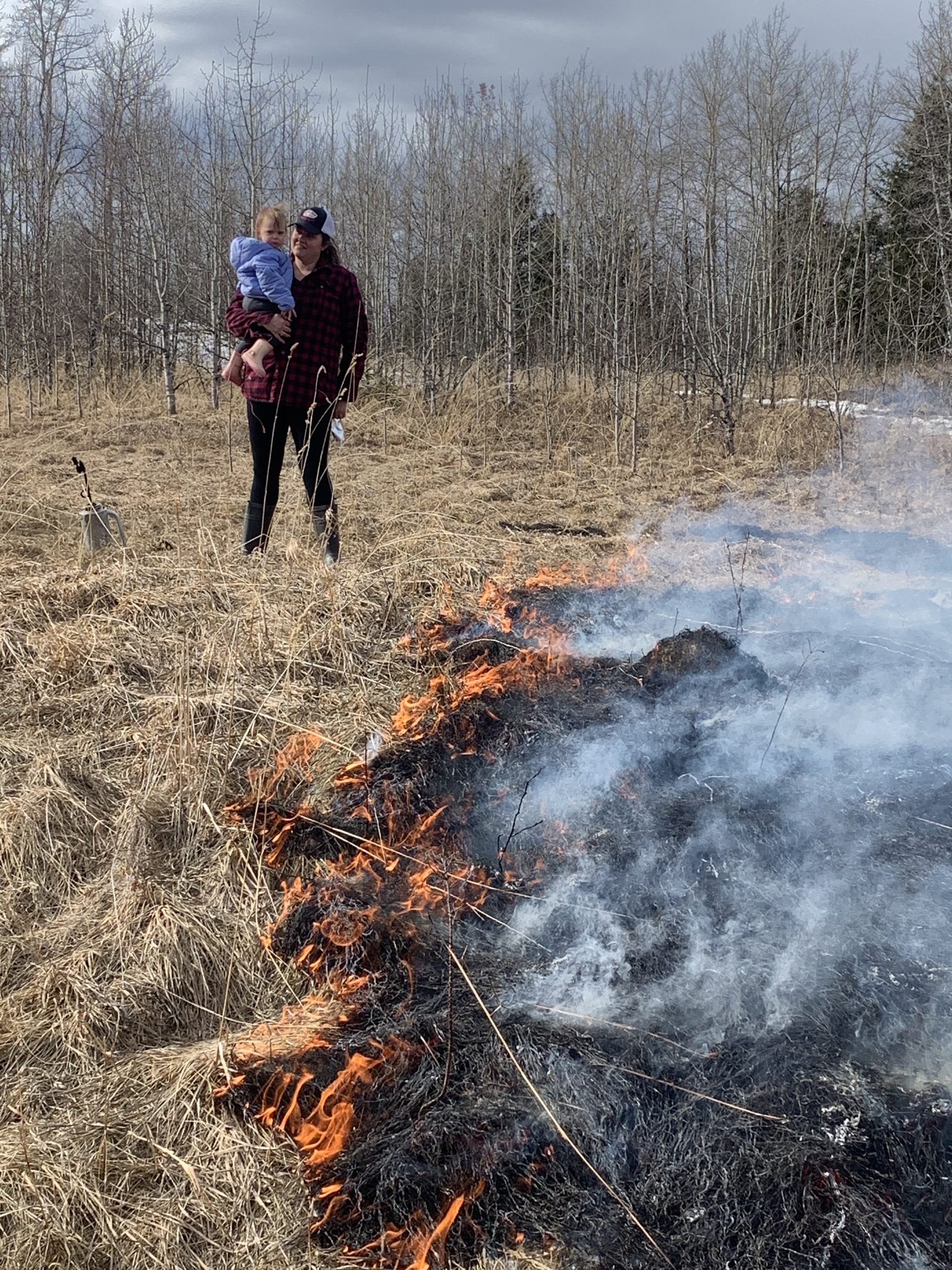
For Dr. Amy Cardinal Christianson, director of fire stewardship for ILI, the poll validated her years of work. Like Dr. Grenz, she’s been urging people to think about fire in a different light, to understand that some fire is good fire.
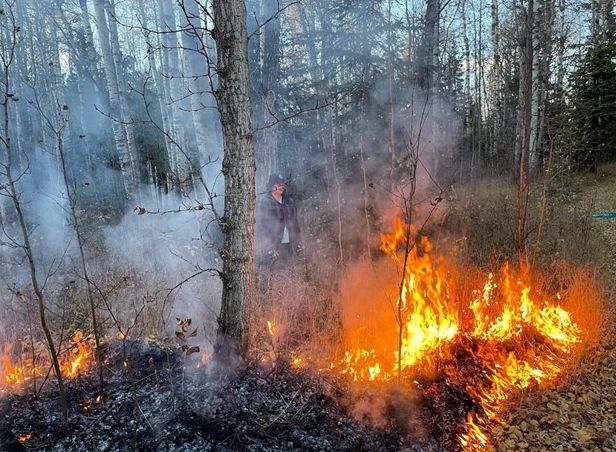
“Good fire for me is beneficial to the land, but also beneficial to people,” she explained, pointing to the kinds of smaller fires that, for generations, played a role in renewing the landscape and clearing out the fuel buildup that’s driving many of the larger megafires we see today.
“We seem to be able to fund wildfire agencies in perpetuity, but we can’t fund Indigenous people to do important landscape work. We’ll just keep advocating until we get there.”
Dr. Amy Cardinal Christianson
It’s also why Dr. Christianson is an advocate for prescribed and cultural burns, “the low-intensity fires that Indigenous people do in their territories to achieve different cultural objectives, and as a side benefit, reduce wildfire risk by removing dead, dry vegetation.” In other words, using fire to fight fire.
But cultural burns are only part of the equation. Dr. Christianson is also an advocate for Fire Guardians, groups she describes as “people employed on their land year-round, looking at issues that matter to the community.”
“The concept of Fire Guardians is where people are working in their community year-round, specifically on fire,” she explained. “So it’s not only in that response mode, but that more holistic idea.”
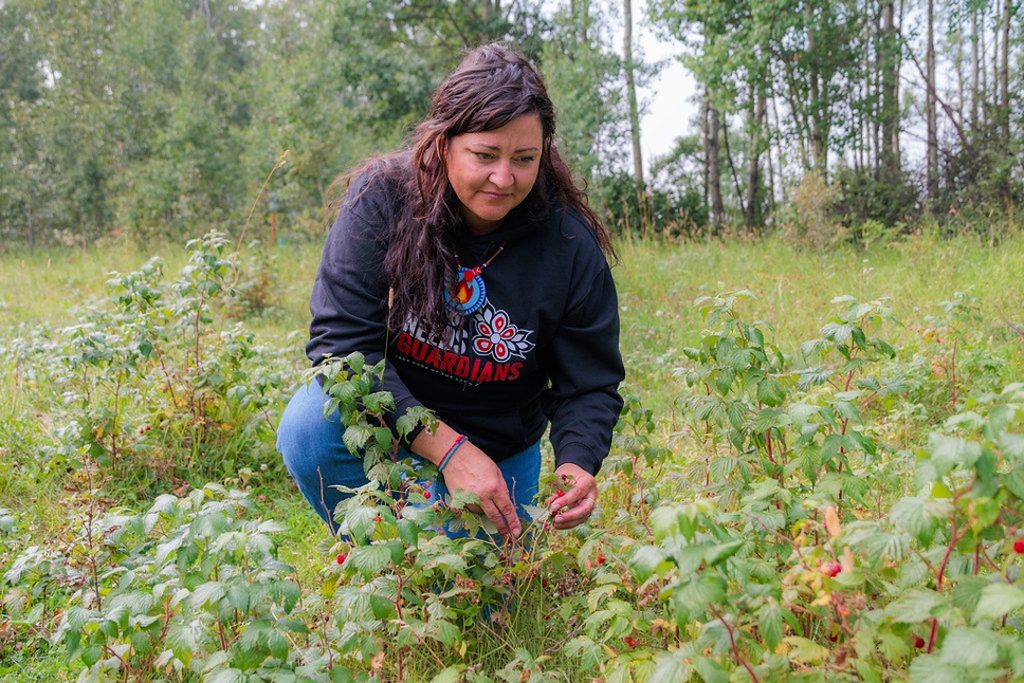
That shift to a more holistic understanding of fire is at the core of what both Dr. Christianson and Dr. Grenz argue is critical to deal with the growing wildfire problem across not just the Pacific Northwest, but all of Canada and the United States.
“We seem to be able to fund wildfire agencies in perpetuity, but we can’t fund Indigenous people to do important landscape work,” Dr. Christianson explained. “We’ll just keep advocating until we get there.”
Dr. Grenz worries about the gap between words and action. Changing how British Columbia approached forests, she explained, requires something akin to hitting a “giant red button to stop all of the processes that have been designed to perpetuate the system.”
In that pause, government and industry would have to “learn the historical ecology, the deep time of this place that they’re trying to fix, and then have a conversation about how we plan the future with intention.” And that, she explained, might be the hardest part, not because the solutions are challenging, but because it requires changing how people have thought about forests for more than a century. It requires turning around an industry that, right now, Dr. Grenz described as “just a big wheel designed to keep turning.”
Go Deeper:
- Listen to the Good Fire podcast, co-hosted by Dr. Christianson.
- Check out the Indigenous Ecology Lab to learn more about Dr. Grenz’s work
- Read Dr. Grenz’s book, Medicine Wheel for the Planet.