

When Scott Hamlin was a top-level pole vaulter and decathlete at the University of Oregon in the early 1990s, he searched high and low for a shoe that might fit his Olympic ambitions. It would have to provide him an edge for jumping but also running at high speeds. Sprint spikes were too flexible, and long-distance shoes had too much cushion.
With the help of local cobblers, Hamlin came up with his own solution. He crafted a stiffer sprint-like spike with cushion and a rocker, a curve that propels you forward.
“Those things worked really well for being able to go zero to sixty,” Hamlin said.
Despite hanging up the spikes because of an injury, Hamlin kept his creative spirit. After graduation, he worked for Adidas, Jockey, and Royal Robbins, specializing in brand marketing and advertising. But he felt growing unease about the amount of emissions and waste caused by manufacturing outdoor gear. His research told him that anywhere from 15 to 30 percent of the materials made in the sector don’t reach the shelves.
About 15 percent of fabric is wasted in conventional cut-and-sew garments.
“I said, ‘We’re making all these products to go outdoors, but the making of these products actually ruins the environment.’”
That realization caused Hamlin to experience an “existential crisis.”
Hamlin was determined to make the outdoor gear sector cleaner. Which led him to founding, in 2009, Looptworks. In its first, successful phase, the company upcycled leftover textiles from companies like Southwest Airlines and the National Basketball Association into shirts, purses, and luggage, among other items. In the process, says Hamlin, Looptworks kept about 5.6 million pounds of materials out of landfills.
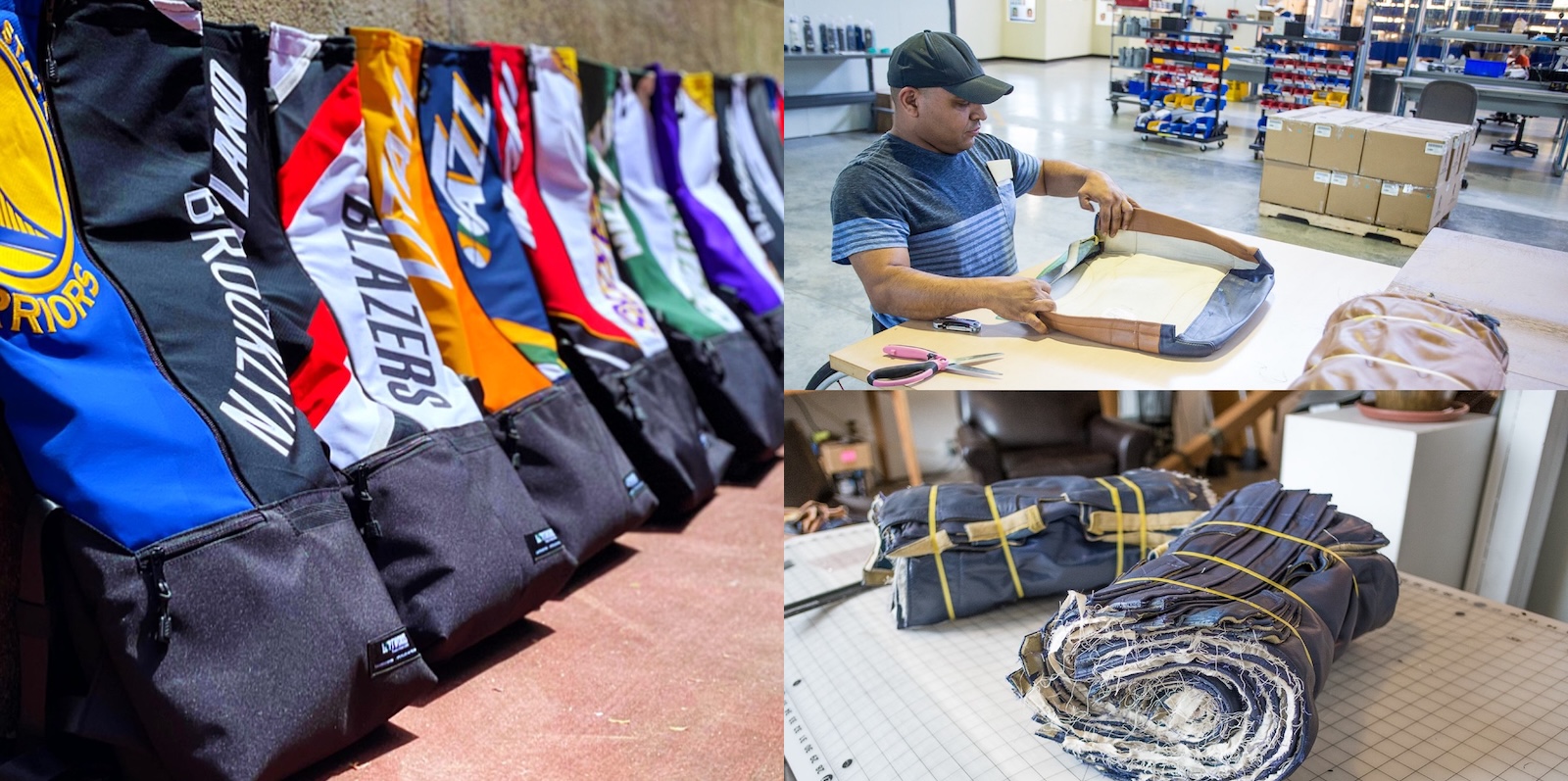
Looptworks very quickly became “as profitable as any other regular footwear, apparel, and accessories brand” in the sector, Hamlin said.
Then Hamlin threw his company for a loop.
Looptworks stopped selling upcycled bags and other travel accessories in 2023, transitioning to a fully business-to-business (B2B) model that focuses on downcycling and recycling. The company, which recently opened a new 90,000-square-foot facility in Gresham, Oregon, now partners with businesses, brands and institutions to turn textile waste into fiber that can be used for new products.
Revenue comes from fiber sales and “tipping fees,” a charge Looptworks places on its customers when they drop off textile waste. It’s a flexible rate that’s dependent on the volume and type of material. Think of it like a landfill fee charged to customers as they drop off waste.
The pivot has been years in the making, with Hamlin developing a system that could help other businesses become greener.
Hamlin recently sat down with The Tyee to discuss the switch, the challenges of running a circular company, and what it takes to persist in business until the pieces all come together. This interview has been edited for clarity and brevity.
The Tyee: You founded Looptworks in 2009. What was your vision for the company at the time?
Scott Hamlin: It took shape as I was working for [the outdoor apparel maker] Royal Robbins. Most people don’t know that Royal is a real person and that he was a forefather of the environmental movement. He started something called “clean climbing.” We were trying to anchor the brand in what he believed in.
[As far back as the early 1970s] he really started to push an agenda of protecting the environment that you play in. And it wasn’t popular at the time. When I came to work at Royal Robbins, I pulled Royal back into the brand. I said we need to start incorporating some of Royal’s beliefs into this brand and what it means to the supply chain.
But as I took a close look at the supply chain for the big outdoor apparel makers, I started to see too much. There was a moment of existential crisis where I said, “We’re making all these products to encourage people to go outdoors, but the making of these products actually ruins the environment.”
I was thinking, I like the industry but it needs to be fixed.
I left Royal and founded Looptworks with a really simple vision that we were going to use excess fabrics and turn them into new products.
So that’s a form of what people call upcycling. How were you confident there would be a market for products upcycled from old textiles?
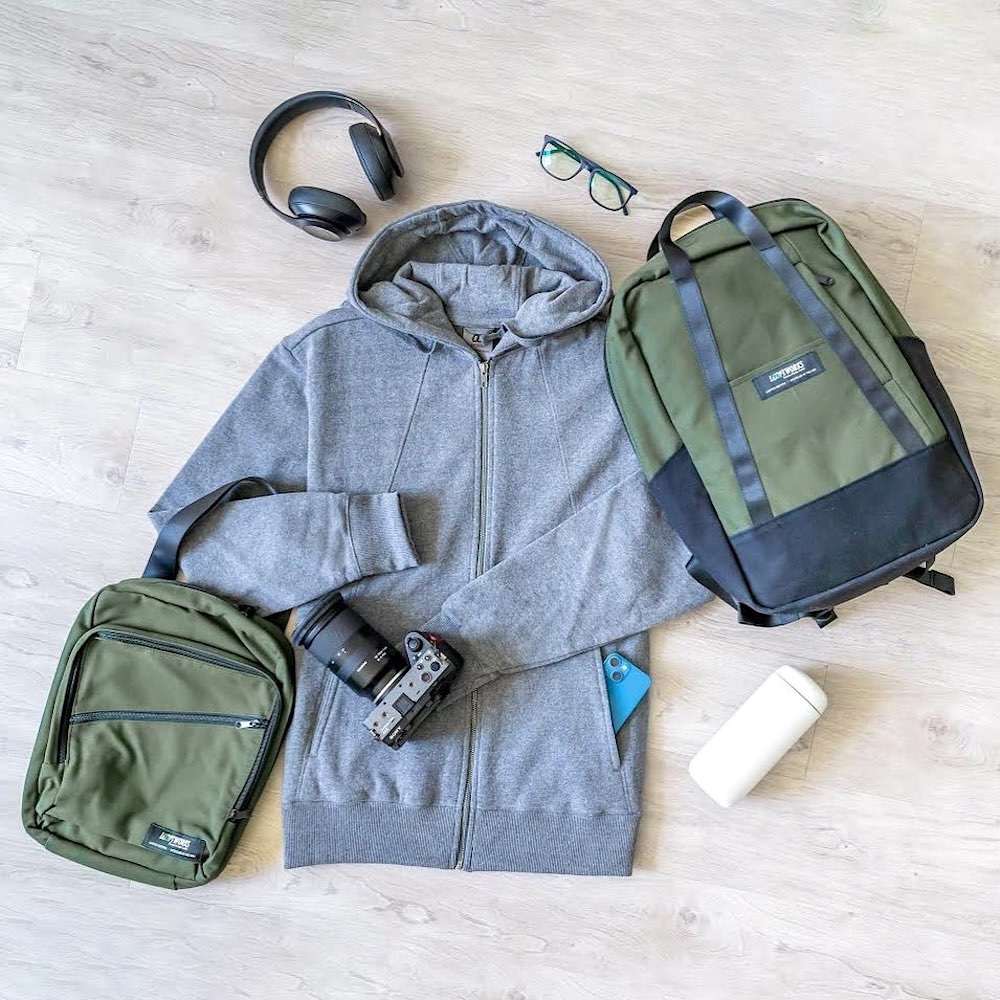
I mean, we used design and creativity to create products we thought people would like. It started slow initially. First we started reusing pre-consumer waste — all the stuff left over at the factory. And then we had companies come to us about post-consumer. They’re like, “We’re trying to get rid of this textile, do you have anything you could do with it?” We started doing post-consumer and did some storytelling around it. It’s not just “This is a nice-looking product” but it’s “Did you know this product was made from this material?”
[For example, as part of its partnership with Southwest Airlines, Looptworks turned airplane seats into handbags, which are now reselling on eBay for hundreds of dollars.]
I see some parallels to the time when you redesigned track shoes almost from scratch.
I had never thought of it that way but I think that’s right. I also look at things and go, “I’m curious about the why of things and the how of things.” When I see something that doesn’t work, I’m like, “Why doesn’t it work and how could it work?”
In 2023, you shifted to a B2B model. And instead of upcycling you moved into downcycling — converting finished products back into basic materials. Why make the shift?
Growing up in Oregon, you know Oregon was the creator of the Bottle Bill, a bottle return program where you pay the deposit on the bottle and then you put it in a bin and it gets picked up, turned back into a bottle and reused again. So, I grew up with that model and was asking the question: “Why can’t we have a T-shirt bill that allows for clothing at the end of life to be turned back into a T-shirt?”
That would be a true circular economy model. Take a finished product and towards the end of its life convert it into another finished product. Instead of, say, turning scraps and waste into products that don’t get reused.
Yes. The company’s name is Looptworks, not Upcycleworks. That was the long-term goal with the company.
But when we founded the company, I knew that was about 10 years away. There was no way we were going to be able to do that [at the time].
But as technology started to evolve, we had brand partners that started coming to us and saying, “Hey, I like upcycling with you but we have this massive amount of materials. What do we do with the rest of it?”
I look at things and go, “I’m curious about the why of things and the how of things.” When I see something that doesn’t work, I’m like, “Why doesn’t it work and how could it work?”
I said I need to do some research into this, but we’re working on this circularity thing that would allow us to take those materials that are coming in and not just upcycle them, but turn them back into raw material — the base of making product — which is fiber. And create a fiber that was long enough, strong enough and quality enough that it could be spun back into the next generation of product.
It took us about 14 years to get there. To do all our research, design a system where we modified the way things were being done, make it unique and put a patent on a system called the Loop System.
What were the keys to staying in business long enough to establish a truly circular company?
I mean, you stay consistent with something long enough and eventually you start to get known for it. We had the same people returning to our website over and over and over again. We had a consistent direct-to-consumer business, but we also had B2B partners.
It was a combination of those two things. Being consistent, getting the product out there, making good product and standing behind it — all those things helped us scale the business. And the business was pretty profitable the moment in time which we wanted to make the shift.
When you made that move to B2B, how hard was it to make that switch? After all, you went from designing cool clothes and selling them to becoming mainly a textile factory — making the material that others would use to make cool clothes and gear.
On Earth Day 2023, we shut down our website, the direct-to-consumer part of it. And we were really conscious of trying to communicate that to all of our customers, all the people we’d work with and say, “There’s something more important that needs to be done now.”
Upcycling has become more of a mainstream thing now, with a lot of our brand partners doing their own upcycling. It felt like that had the traction it needs and we didn’t need to be the ones to push that agenda anymore.
I think there was disappointment on all sides with having to lose some of our team members, or some of our team members choosing not to go along because they were really into product creation versus some of the things we do [at our fiber-to-fiber making facility]. Transition is tough. I’m super proud of the team here that’s done that and there aren’t many companies that change their entire operating process to evolve into the next most impactful thing.
What advice you would give to a circular startup?
I would say don’t jump into it with two feet. What we see is a bunch of people that approach the circular economy with one part of the solution, then they develop that solution and it ends up being a siloed piece of the overall ecosystem.
You have to really, really understand that market you’re going into and make sure what you’re offering, creating, doing is something that other people want.
This article runs in a section of The Tyee called ‘What Works: The Business of a Healthy Bioregion,’ where you’ll find profiles of people creating the low-carbon, regenerative economy we need from Alaska to central California. Find out more about this project and its funders, Magic Canoe and the Salmon Nation Trust.