
This feature is part of a six-month series from Magic Canoe’s Contributing Writers. Four writers were selected to each cover Salmon, New Economies, Environment, or Indigenous Leadership. This is the second story for the Environment Desk. Major support for the Contributing Writers Series is made possible by a gift from Priscilla Bernard Wieden, in loving memory of Dan Wieden.
“Undoubtably a grizzly.”
That’s how Alfred Hengst, a cattleman from Three Rivers, California, described the bear he spotted in Sequoia National Park’s Mineral King Valley on October 13, 1924.
“It was the biggest bear I ever saw,” Hengst told park rangers. “Bigger than any cow, and [it] looked as though sprinkled over with snow.”
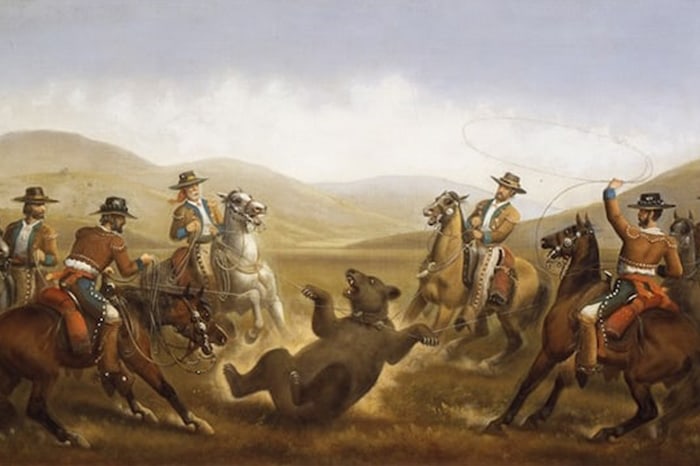
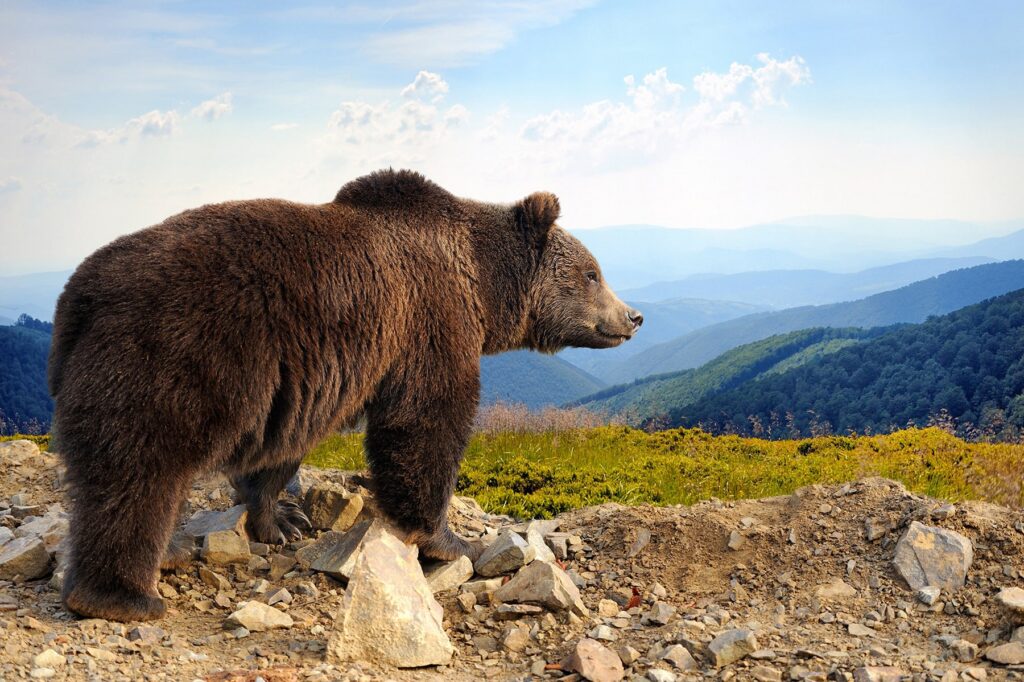
Scientists estimate that 10,000 grizzlies used to live in California, but due to the gold rush and settling of the state in 1850, most disappeared before the end of the century. Hengst’s sighting was one of only two that year, the first grizzly seen in the High Sierra in decades.
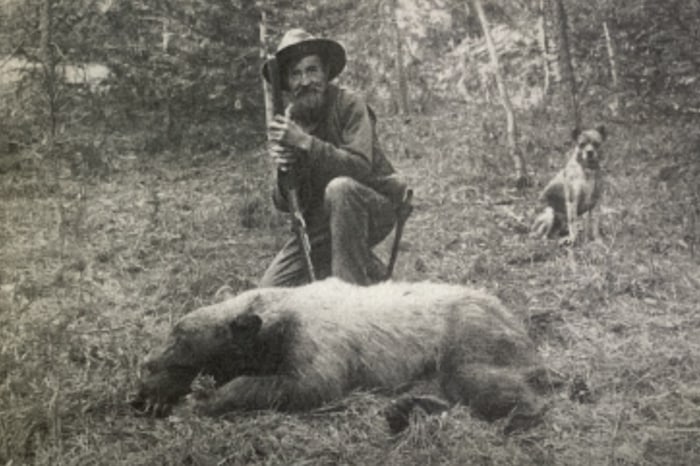
It was remarkable enough that Walter Fry, head of the Sequoia’s now defunct Nature Guide Service, published a four-page bulletin about it. Fry hoped that Hengst’s bear “may be permitted to live and find for itself a mate somewhere in the vastness of the Sierras, and that the progeny they bring forth will again restore the species to grace the face of our California soil.”
Hengst’s sighting is remembered as the last one in Golden State history, but thanks to a California Senate bill, that could be changing.
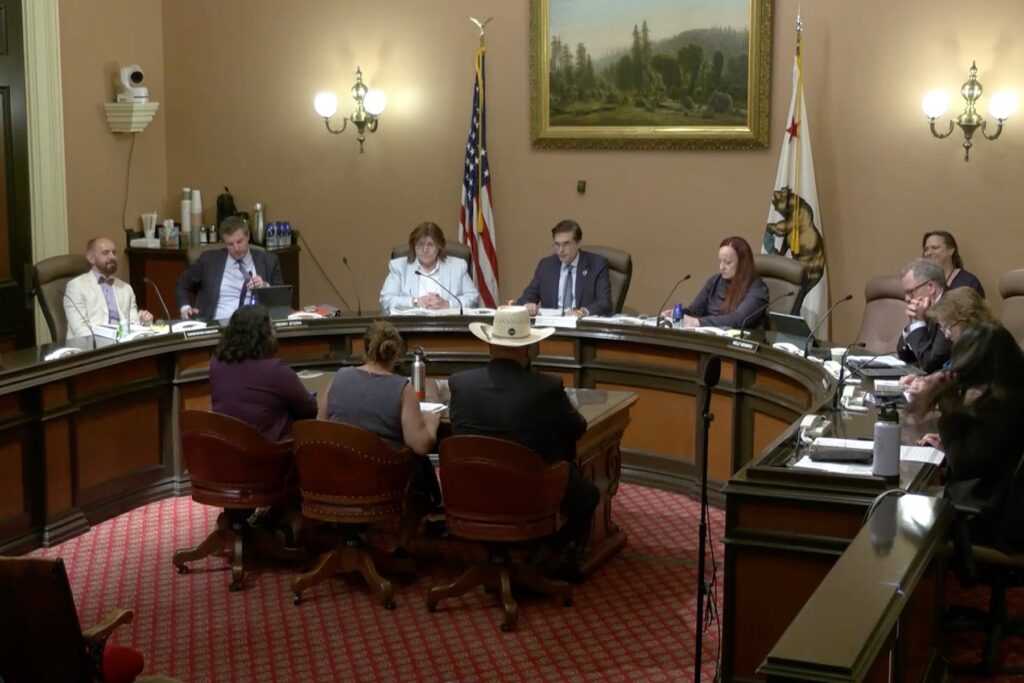
On May 27, 2026, the state passed Senate Bill 1305, which directs the California Department of Fish and Wildlife to “develop and make publicly available a roadmap that evaluates whether, and under what conditions, reintroduction of the grizzly bear is feasible and advisable.”
For Brendan Cummings, conservation director at the Center for Biological Diversity, it was the culmination of more than a decade of work. He described it as a step toward the state saying, “This species is incredibly important. . . . If we can bring it back, we probably should.”
But while Cummings is excited, he also explained that grizzly bear recovery is complicated. It’s politically fraught, particularly in California, where grizzlies haven’t been seen in more than a century.
Three Proposed Reintroduction Areas
Many cities and regions of California sustain place-names given to them by the Spanish, including Los Osos, a valley that was once so thick with grizzlies, they named it for them (oso is Spanish for “bear”). It’s three hours northwest of Los Angeles, beyond the western edge of the Transverse Ranges, a chain of mountains that separate the region’s coastlines from the desert.
These mountains are one of three potential grizzly bear recovery zones in the state. The other two are the High Sierra, near Sequoia and Kings Canyon National Parks, and the Klamath Mountains in Humboldt County.
According to Recovering Grizzly Bears in California, a 200-plus-page feasibility study published by the California Grizzly Alliance last year, all three areas have adequate habitat and food to support grizzly bear populations. The Transverse Ranges might be riskiest because they’re the closest to people, but each area comes with its own set of questions.
“It really depends on policy, on choices, on the participation, and engagement of the local communities, and so all of that goes into it,” explained Peter Alagona, a professor at the University of California, Santa Barbara, and founder of the California Grizzly Research Network.
But California has an added challenge. It’s not part of the federal government’s Grizzly Bear Recovery Program. Launched after grizzly bears were listed as threatened under the Endangered Species Act in 1975, the program became official U.S. Fish and Wildlife policy in 1982. It guides where the United States government funds grizzly bear protection and recovery. California isn’t on the list.
“Recovery planning has largely focused on where there were bears at the time of listing,” Cummings said.
California, with its last sighting in 1924, and Colorado, where the state declared grizzlies officially extirpated in the 1950s, were left out. That means no federal focus and no funding. And though several campaigns attempted to change that over the years, folks like Cummings realized they would need to convince the state to take the lead.
It makes recovery harder. Even in some federal grizzly bear recovery zones, like the North Cascades, bringing bears back onto the landscape has been a challenge.
North Cascades: A Testing Ground
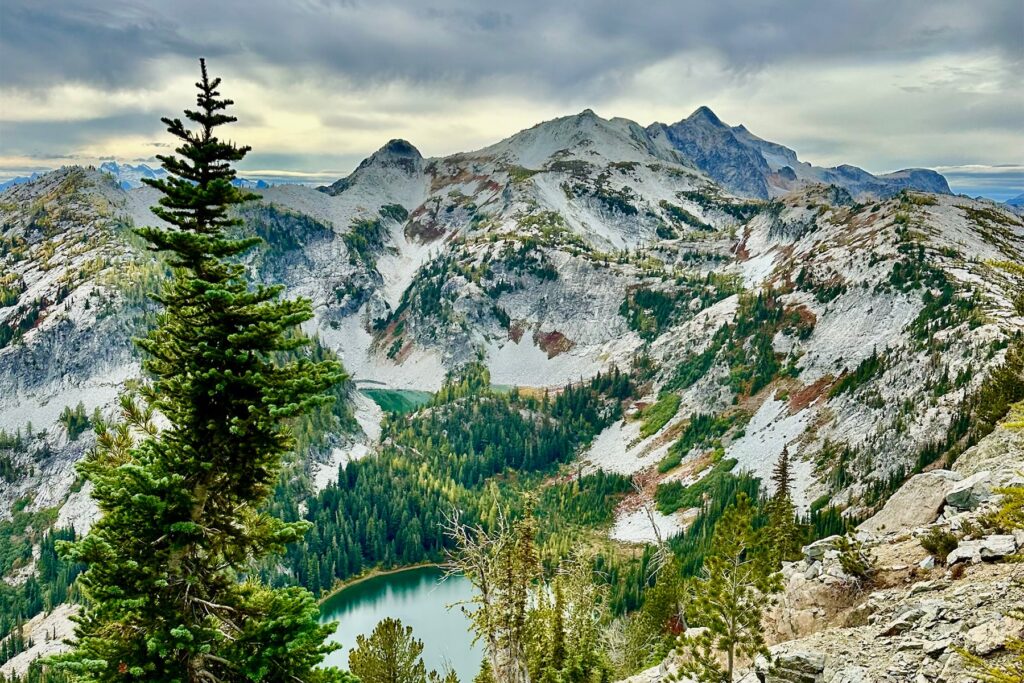
The North Cascades is a mountainous spine of Salmon Nation that runs through the heart of the formally designated U.S. Grizzly Bear Recovery Zone that shares its name. The transboundary ecosystem (British Columbia has also established a recovery zone in the North Cascades) is one of the wildest places in the lower 48.
The best data for historic North Cascade grizzly bear numbers are from a ledger in Fort Colville, a Hudson’s Bay Company fur trading post located near the modern town of Colville, Washington. According to the ledger, some 3,788 grizzly bear pelts were shipped from Colville and nearby forts between 1827 and 1859. Not all of those bears were from the North Cascades, but many were.
There are also stories from Indigenous Nations. Like the Stó:lō, who, in 1951, told the anthropologist Wilson Duff tales of grizzlies at fishing sites on the Chilliwack River. Stó:lō knowledge keepers spoke of bears being “particular frequenters of the high country” and plentiful on the eastern side of the North Cascades.
Sauk-Suiattle elders and storytellers Jean Bedal Fish and her sister, Edith Bedal, also wrote about grizzlies in their book, Two Voices: A History of the Sauk and Suiattle People and Sauk Country Experiences. They recounted stories of “numerous” grizzlies inhabiting the ridges and highlands around what we now call the Glacier Peak Wilderness. The Chelan Nation also spoke of grizzlies, telling anthropologists about bears being “fairly common” in the Upper Stehekin Valley and along Lake Chelan’s southern shores.
Today, scientists estimate there are, at most, six grizzly bears left in the entire North Cascade ecosystem. Six.
The International Union for the Conservation of Nature calls them “critically endangered,” while the National Park Service considers grizzlies in California to be “extirpated.” Like in California, North Cascade grizzly bear recovery requires bringing new bears into the landscape, something officials in the U.S. and Canada have tried and failed to do since the 1990s.
Joe Scott, a Bellingham, Washington–based conservationist who has worked on North Cascade grizzly bear recovery since 1997, describes the recovery effort as having a “lurching fits and starts” history, with the most recent lurch in 2024.
That April, the United States Fish and Wildlife Service, working with the National Park Service, signed off on plans to move grizzlies into North Cascades National Park. Grizzly bear advocates celebrated, but Scott was wary—he’d been through enough to know that recovery isn’t done until bears are on the ground. And with a presidential election that fall, anything could happen.
“We were sitting there on pins and needles with full awareness that the election is going to make all the difference in whether this gets done,” he said.
Trump won his second term later that year and, by the following spring, the North Cascades recovery plan was falling apart.
“Park Service lost staff, U.S. Fish and Wildlife lost staff, [and] they’re already behind the eight ball with lack of capacity. . . . They just said, we don’t have the people to do this,” Scott said. “So it just died.”
At the same time, an Indigenous-led program called the Joint Nations Grizzly Bear Initiative was picking up steam. Led by the Okanagan Nation Alliance and supported by bands and nations from the Stó:lō, Nlaka’pamux, St’at’imc, Secwépemc, and the Syilx Nations, it could be both the best hope for grizzlies coming back to the North Cascades and a model for how grizzly recovery could happen in California.
When Jordan Coble heard that the U.S. government planned to move grizzlies back into North Cascades National Park, he was elated. A councilor with the Westbank First Nation and the chair of the Okanagan Nation Alliance’s natural resources committee, he called the announcement “a clear example of naqsmiʔst xə̌l tmixʷ,” a Sylix Okanagan word that translates as “coming together for all living things.”
Coble described the plan in a press release as “an important moment in history for recovery efforts on both sides of the border.” But it represented something more.
For years, the Okanagan Nation Alliance, which brings together Sylix communities from throughout the region, had been working to unite Indigenous communities across the North Cascades to support grizzly bear recovery. For Coble, bringing back the bears—or ki?lawna to the Sylix—was “collectively righting a wrong.” When the U.S. plan began to fall apart, First Nations stepped up.
Under the banner of the Joint Nations Grizzly Bear Initiative, they began to develop an Indigenous-led plan to recover grizzly bears.
“Colonization was quite effective in separating our communities from one another, separating our communities from the land itself,” Coble said. “But now we’re turning back to those practices, reminding ourselves that we have interconnections beyond our communities, beyond our Nations, that we always had these relationships.”
That work has pulled in both Indigenous communities and non-Indigenous scientists and supporters. In 2025, they started moving toward active grizzly bear recovery, performing on-the-ground habitat analyses, working with land managers, and educating communities in preparation for bringing grizzlies back to the North Cascades.
According to Coble, it’s about “building that awareness, building the understanding that, more than anything, it’s important that the grizzly bears are here.”
They’re still working out logistics, but when you ask people like Joe Scott, who’s been working in the North Cascades for decades, Indigenous-led reintroduction seems like the best bet for recovery. And if you look back at the history of wildlife recovery—particularly carnivore recovery in the West—several examples of Indigenous communities lead the way.
Walking Parallel Paths
In early 1995, the federal government released four wolves into the Frank Church-River of No Return Wilderness, but the state opposed the program. Without state biologists, there was no one to steward the wolves. Until the Nez Perce Tribe stepped in and took over. By 2005, the state wolf population had reached 512 wolves living in fifty-nine distinct packs. When the state took the program back over in 2006, they didn’t once mention the Nez Perce.
Fortunately, the value of Indigenous-led recovery efforts like this isn’t lost on California grizzly bear advocates.
“There was an effort from the very beginning to work with tribes,” Brendan Cummings said. They reached out to the Yurok Nation, whose traditional territory covers a large swath of the northwestern part of California, and the Tejon Indian Tribe, whose homelands include portions of the San Joaquin Valley, Transverse Ranges, Sierra Nevada, Tehachapi Mountains, and the Mojave Desert.
“More than anything, it’s important that the grizzly bears are here.”
Jordan Coble
“Our ancestors understood the grizzly, possessing deep knowledge passed down since time immemorial, of how to coexist with the bear,” wrote Octavio Escobedo III, chairman of the Tejon Indian Tribe, in the foreword to Recovering Grizzly Bears in California. He went on to explain his own work researching those connections, eventually coming to the conclusion that “Native people and grizzlies had been forced to walk parallel paths.”
Escobedo’s comments echoed something Jordan Coble said, describing grizzly bear recovery as “rebuilding from 150 years of colonization, of separation, of forced removal, and of isolation from our land itself.”
For Cummings, all of this means that grizzly bear reintroduction in California needs to be one part “state-led effort” and one part “tribally led effort.”
This sentiment is echoed in the feasibility study: “Tribes will likely play a significant role in any effort to reintroduce grizzly bears to California,” the study explained. Part of the reason is the history and relationship between tribes and grizzlies in the state, but it’s also that the Yurok are already doing similar work.
“Right before COVID hit, a group of folks got together to form this informal California rewilding group to share stories and examples,” Cummings said. “Among them was the Yurok Tribe, who brought back condors up in northwestern California.”
Launched in 2008, the program started releasing California condors, called prey-go-neesh in Yurok, in 2022. Since then, they’ve released 23 birds. In February, the first reports of a nesting pair laying an egg came through. (Unfortunately, the egg failed to hatch.) In May, one of the birds was spotted in southern Oregon, the first time a condor had been sighted in that state in 120 years.
But grizzlies are more controversial than condors. Though a 2019 poll showed that around two-thirds of Californians supported bringing grizzlies back, there is still strong local opposition.
Megan Dahle, for example, is the Republican representative for California’s Senate District 1, which borders the Humboldt County recovery zone, and she abstained from the S.B. 1305 vote. According to data released by Dahle in April, more than three-quarters of the 2,000-plus constituents she surveyed opposed grizzly bear reintroduction.
“Reintroducing these bears would be a dangerous proposal at best,” she said in a statement posted to social media, citing concerns about safety, cost, and livestock predation.
But grizzly bear supporters argue these concerns are overblown. They point out that grizzly bear attacks are exceptionally rare. Statistically speaking, you’re more likely to be crushed by a vending machine than killed by a grizzly. And when it comes to livestock predation, they argue that people are confusing bears with wolves.
“Grizzly bears move a lot less than wolves,” Peter Alagona said. “Wolves can travel for hundreds of miles in some cases; grizzly bears rarely do that.”
Bear supporters also point out that California is home to between 49,000 and 71,000 black bears. And while there are differences between black and grizzly bear management, many aspects of reducing human-bear conflict—securing food, garbage, and other bear attractants—are the same.
“Our ancestors understood the grizzly, possessing deep knowledge passed down since time immemorial, of how to coexist with the bear.”
Octavio Escobedo III
Still, grizzly bear supporters continue to grapple with the complexities of reintroduction: The Yurok Nation, who supported S.B. 1305, stopped short of endorsing grizzly bear reintroduction. “California grizzlies were an incredibly important part of our cultures and our ecosystem,” Tiana Williams-Claussen, the Yurok Nation wildlife director, told California Public Radio. “But in this day and age, they are also something that’s incredibly complicated.”
After the bill was tabled, Williams-Claussen helped organize community meetings, where she encountered interest but trepidation. The mix of curiosity and concern highlighted the challenges with reintroducing bears.
“[Grizzlies] were part of a way of life,” Williams-Claussen said. “We expected them to be there. We knew how to live with them. We knew how to talk to them. There are certain ways you can communicate with a bear, whether it’s a black or a grizzly. Those are all things that, if they should ever return, we’re going to have to relearn and reapply.”
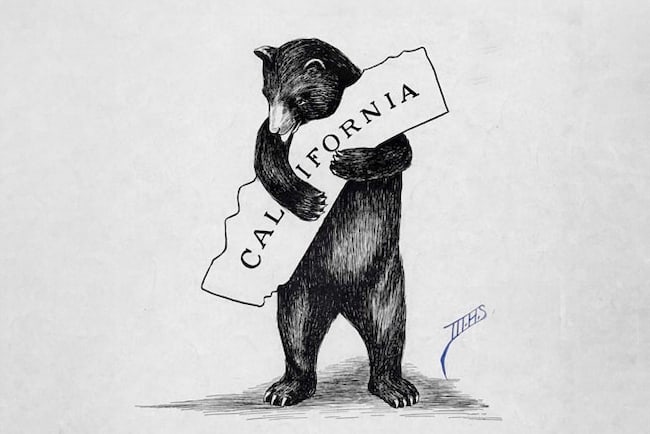
Cummings agrees, saying that a step-by-step approach to reintroduction will help management by “front-loading all the research and planning, so that when we put them on the landscape, we’re already prepared.” He’s hopeful that the presence of grizzlies in California’s culture and imagination will help that process along. “The grizzly bear is on our flag, it’s on our seal, it’s everywhere in California as a symbol of the state, but there are no grizzlies in the state.”
The Senate bill is the first step to changing that and, if everything goes to plan, Cummings thinks that work could be finished sometime after 2030. “First bears on the ground, maybe 2032.”