
This article was originally published by the Underscore Native News.
A warm summer breeze carries the scent of wild flowers and fresh foliage from the surrounding forest through the clearing of Heron’s Nest (spaʔqʷaʔ č̓aʔac). This is the site of a successful community-led land effort returning 3.56 acres to the Duwamish Tribe, which lacks federal recognition.
“To me, it seems like a huge piece of property because we are not federally recognized and do not have a reservation,” said Nancy Sackman, vice chair of the Duwamish Tribal Council and Duwamish tribal member. “So any land that we do get is a huge event.”
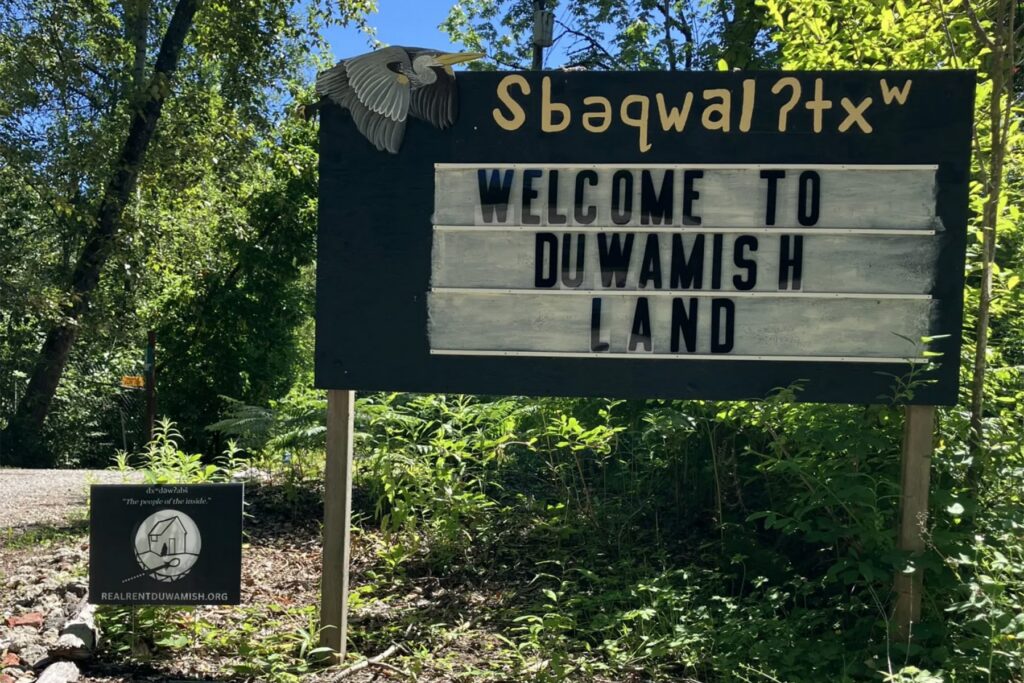
Through six years of building trusting relationships between the city of Seattle, the Duwamish Tribe, and Shared Spaces Foundation, the land is now rematriated – a term that describes the process of “returning to the sacred mother” and the honoring of Indigenous matrilineal systems – and under the complete management of the Duwamish Tribe as of June 13, according to Shared Spaces and a press release from the Duwamish Tribe.
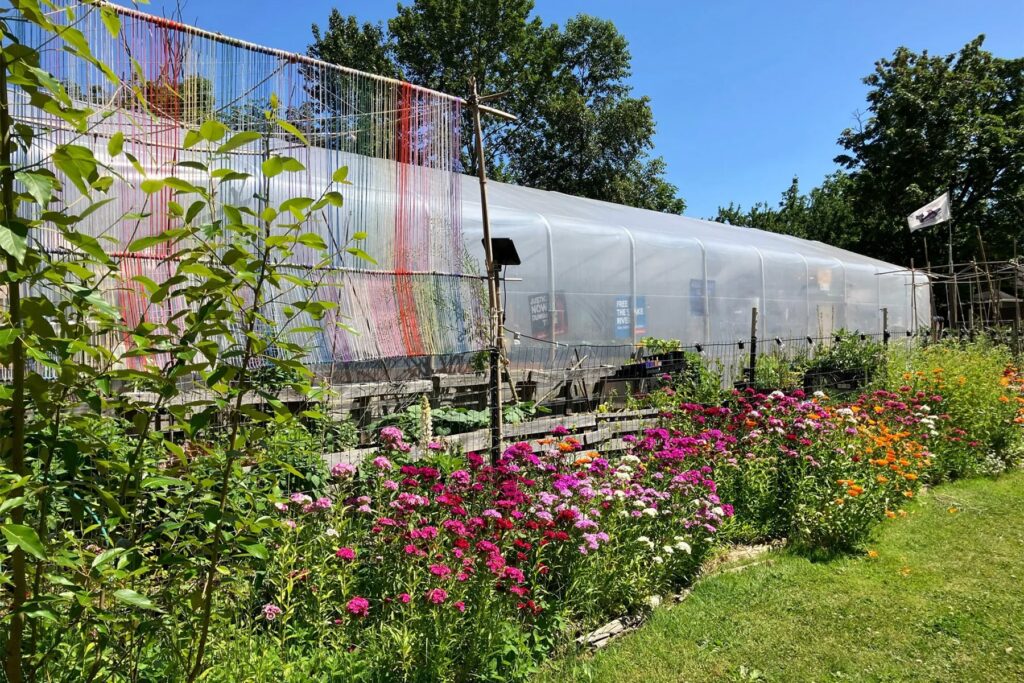
The 3.56-acre parcel on a mountain ridge less than a mile west of Seattle’s industrial district has been transformed from a hazardous waste zone to a greenhouse garden and community gathering space through copious hours of tenacious volunteer work.
“I’m just so grateful to know that Land Back can work, that it can happen,” said Heron’s Nest manager Joselynn Tokashiki Engstrom, who is of the Ryukyuan Peoples of Okinawa. “It’s so necessary for the people that have not been allowed to be on the land that was their ancestors to have access to it.”
Though the Duwamish are not federally recognized, they have created the Duwamish Tribal Services — a non-profit arm of the tribe — that permits partnerships with other organizations for development.
“This is more than land preservation — it’s about creating sustainable community resources and supporting Indigenous land sovereignty,” said Lee (who uses only one name), Shared Spaces Foundation co-founder and board president.
Rematriation and Land Ownership
In 2020, Lee, Kānaka Maoli, with foundation co-founder and treasurer Waiman Lee, was shown the land now known as Heron’s Nest, only a five-minute walk away from the Duwamish longhouse and the Duwamish River.
For a year when they did not yet have their non-profit designation, they paid $1,000 a month out of pocket, to cover the property tax, as they removed stripped vehicles and litter from the area, according to Shared Spaces.
“We’re not rich people. We don’t have a lot of resources,” Waiman Lee said. “But by doing it, we think we can influence other people to collaborate and to add more teams to do the same thing in the future.”
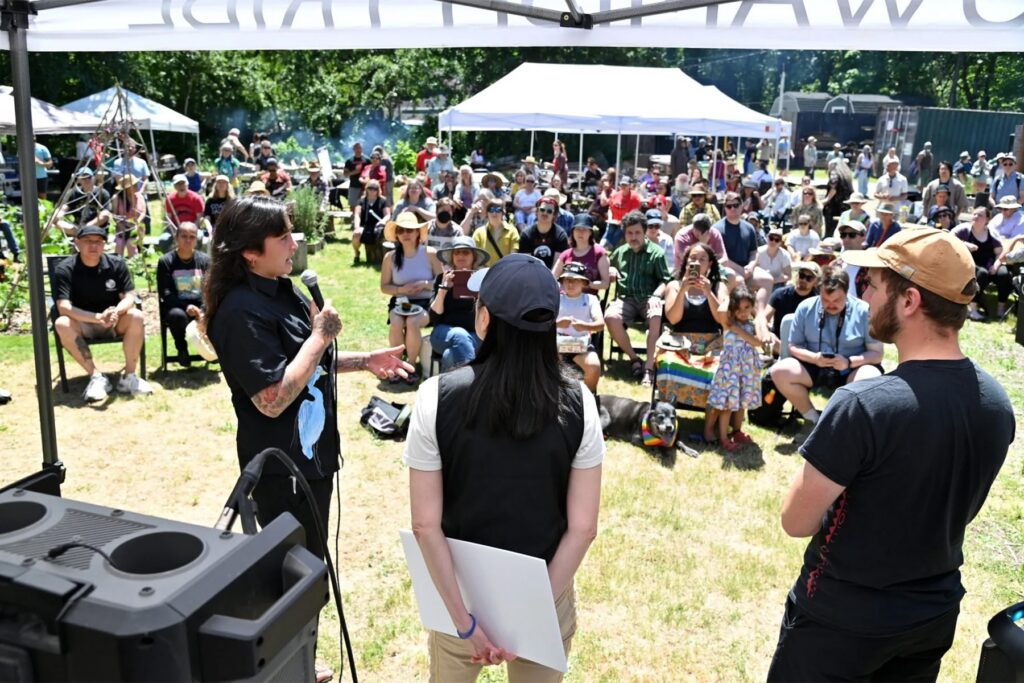
According to Lee (SSF board president), the previous owners stored machinery on the site and dumped lead, arsenic, and other materials into a pit on the hillsides, into the forest and along the river. Now the Heron’s Nest is no longer on the Washington State Department of Ecology’s list of contaminated sites.
In 2021, a year after initiating the land lease and cleaning up the site by hand, Seattle awarded Shared Spaces with a $900,000 grant from its Strategic Investment Fund to purchase the land from an associate of Waiman Lee’s, with the promise that land would be given to the Duwamish Tribe, according to the Seattle Office of Planning and Community Development (OPCD).
“The reason we exist as an initiative is to address the issues of what it’s like to have community ownership of land, to develop land, to develop a project without having access to those kind of traditional pathways of like funding,” said Dakota Murray, who manages OPCD’s Equitable Development Initiative and is an enrolled member of the Bad River Band of Lake Superior Chippewa Tribe of Indians.
“I’m just so grateful to know that Land Back can work, that it can happen. It’s so necessary for the people that have not been allowed to be on the land that was their ancestors to have access to it.”
Joselynn Tokashiki Engstrom
The arrangement gave the Duwamish Tribe time to raise funds and build the capacity to manage the land long-term. At the time the deal was made, Duwamish Tribal Services had only two full-time employees.
Not only does the Duwamish Tribe have full ownership over these ancestral lands, they also now have ten employees, including Tokashiki Engstrom managing Heron’s Nest full time, according to Sackman.
“It says that we are succeeding in reclaiming our land and showing the community, and being a leader in the community, to restore our Native land,” said Sackman.
Community and Environmental Protection
Each Spring, the Duwamish Tribe and the Seattle Giving Garden Network collectively produce 5,000 vegetable starts in the Heron’s Nest’s sixty-five-foot greenhouse. The plants are provided to schools, foodbanks, tribal members, and volunteers, according to Tokashiki Engstrom.
Duwamish Tribal Services also established a partnership with the city to manage over fifty acres of the West Duwamish Greenbelt, Seattle’s largest forest.

“I think it’s in our blood, in our history that we get that back and we take care of it, because who is going to take care of it? Nobody has,” Sackman said. “Nobody’s coming to the rescue, so we have.”
The Heron’s Nest hosts volunteer Mondays where anyone can come learn about rematriation, help remove invasive species and practice stewardship. Their “living classroom,” also hosts classes on carpentry and soil testing, and is occasionally used as a space for sign making and healing circles.
Federal Recognition, or Lack Thereof
“Even though we aren’t a federally recognized tribe,” Sackman said, “We have been, and will be a tribe. We have always acted that way.”
Historically, government-to-government relationships between tribes and the federal government have been uncertain. Treaties are broken and promises are unkept.
Even the source of funding was a concern for Sackman who said the Duwamish and the City of Seattle have a murky relationship due to the politics of federal recognition.
“I think this is a good win for us, in the respect that the City of Seattle is able to come through with their part of the contract for us to be able to have that land back to us,” Sackman said.
Tokashiki Engstrom told Underscore News the lack of federal recognition continues to be an obstacle for accessing federal funding.
“The Duwamish Tribe not being federally recognized is always behind us. It’s always present. As far as even on a local level, and that is definitely a challenge,” Tokashiki Enstrom said.
“It’s a political nightmare to recognize us when there are other federally recognized tribes that they work with, and they work with federally recognized tribes, more than likely, because they’re federally recognized and can get federal grants to help them,” Sackman said.
But, the lack of federal recognition does not stop the Duwamish from identifying and functioning as a tribe, Sackman said. “We didn’t go anywhere. You just think you don’t see us.”
While sourcing funds and federal recognition status are obstacles, Tokashiki Engstrom said, “I feel so lucky that we’re in a moment in a time where people really see the vision of this project and have been really generous.”
Raising funds is ongoing at the Heron’s Nest, but Tokashiki Engstrom said it’s easy to write grants for a project many people believe in. Sometimes, she said, “It almost writes itself.”
What’s Next?
Heron’s Nest aims to continue to cultivate the space as one for community and land stewardship.
“The future is continuing to utilize it for community and deepen the connection, both for the urban Native community, the community, and the broader non-Indigenous community that’s here,” Tokashiki Engstrom said.

The Shared Spaces Foundation has begun a new land rematriation project on the Big Island of Hawai’i. That parcel was also a waste site for generations, the foundation told Underscore.
“It is possible to make a change and make a difference and build the world that we collectively want to see, and I do believe that we’re moving in that direction,” SSF board president, Lee said.
The Duwamish now have full ownership of 3.56 acres of their ancestral homelands, and continue to practice sovereignty through food production, stewardship, and generational knowledge.
“We raise our hands to everyone who envisioned and followed through with this historic and generous Heron’s Nest project, a truly generous gift of land that our tribal ancestors and members, plus our welcome guests, have and will enjoy,” said Duwamish Tribal Council Chairwoman Cecile Hansen. “We will continue to heal and nourish this land using our traditional cultural practices to benefit our members, the larger community, and future generations.”