This article was originally published in the Confederated Umatilla Journal.
In a landmark acquisition, the Confederated Tribes of the Umatilla Indian Reservation (CTUIR) secured thousands of historical artifacts, marking a significant moment in preserving the Columbia River Plateau culture.
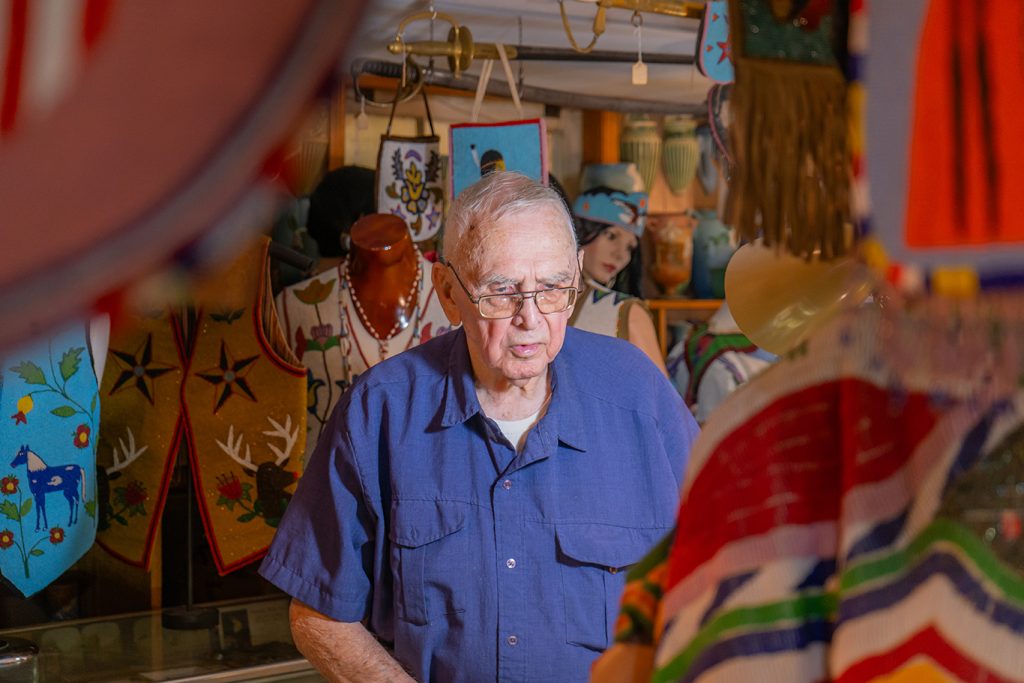
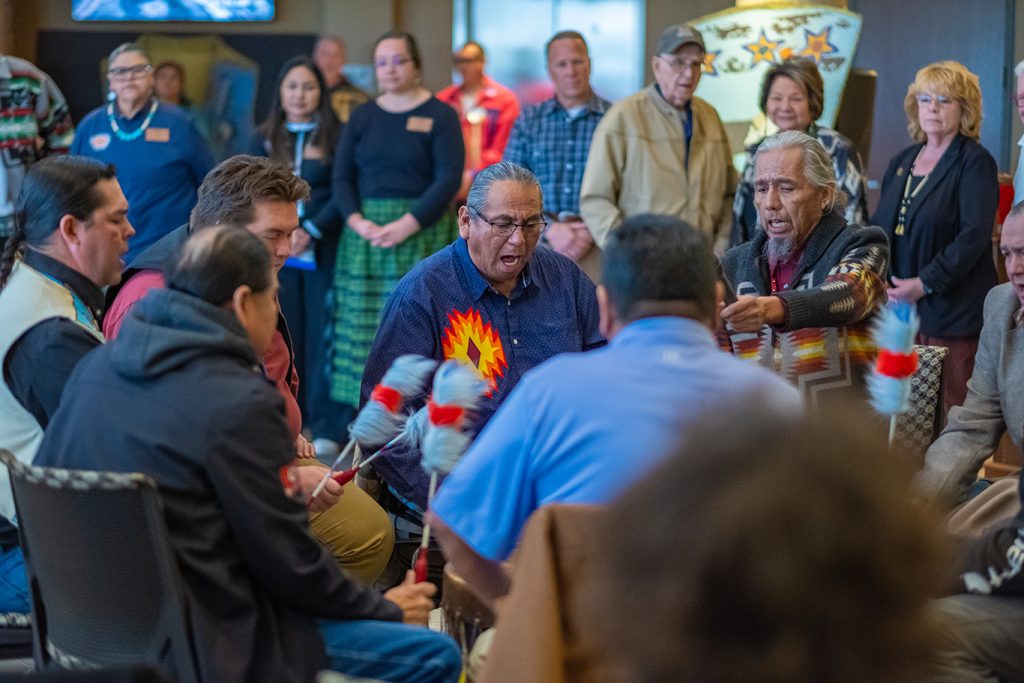
Collector Fred L. Mitchell, 91, signed the formal agreement on March 31, at a public ceremony at the Nixyàawii Governance Center, transferring the entire collection, known as the Fred L. Mitchell & Family Collection, to the CTUIR and Tamástslikt Cultural Institute (Tamástslikt).
The collection will be preserved and displayed at Tamástslikt as artifacts representing the Columbia River Plateau.
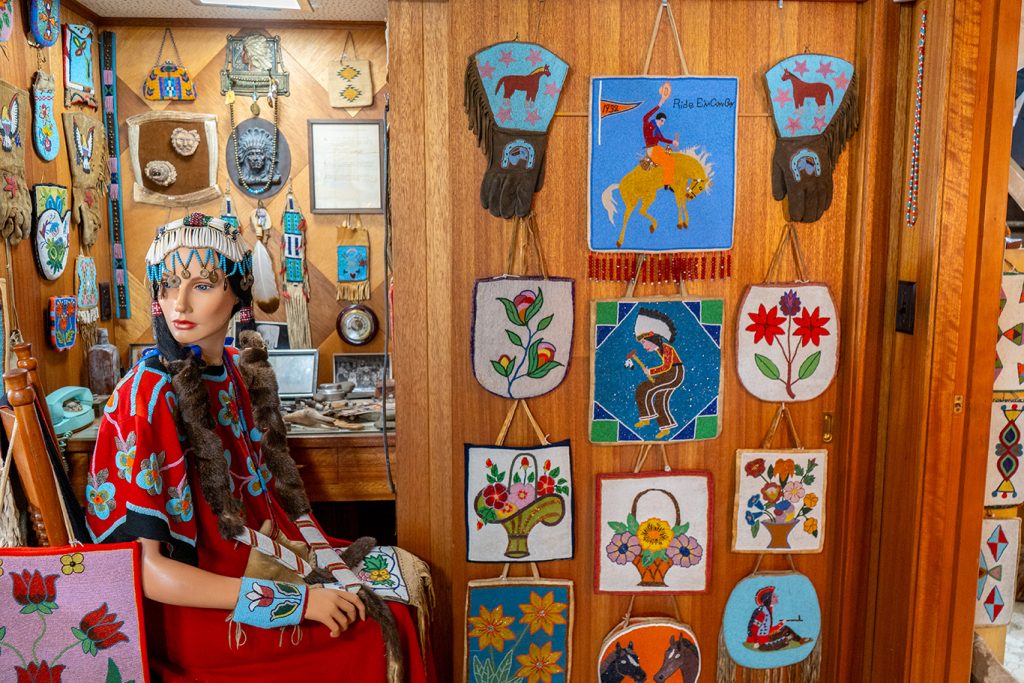
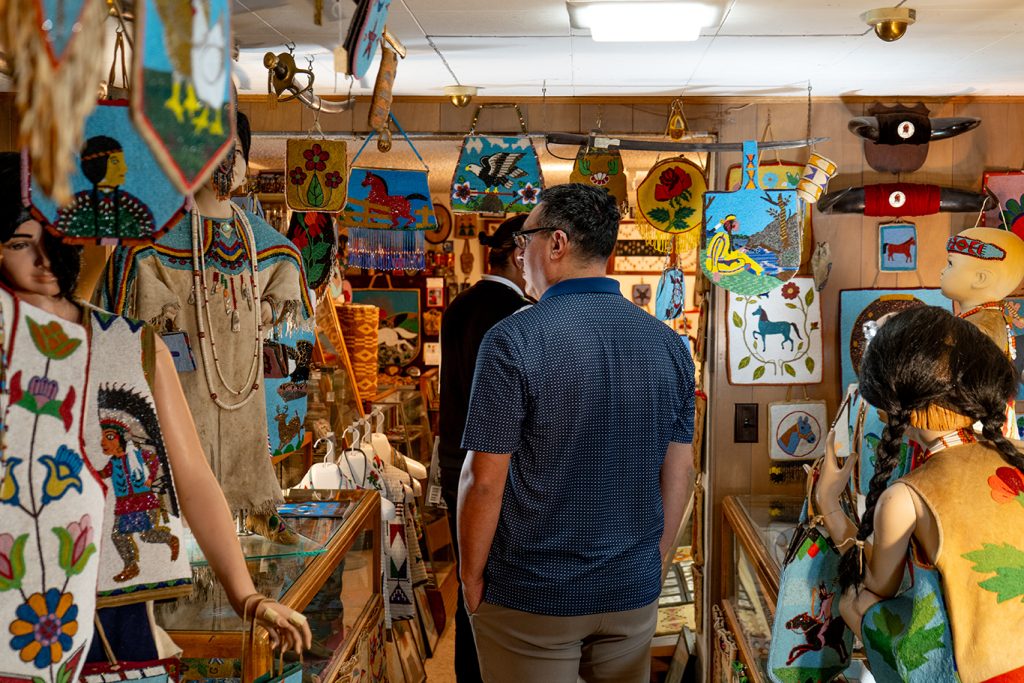
The Fred L. Mitchell & Family Collection includes hundreds of beaded bags and pouches, cradleboards, dresses, vests, gauntlets, horse-trappings, cornhusk bags, and huckleberry baskets. It also features more than 1,250 photographs from the late 19th and early 20th centuries, and roughly 15,000 lithic points and tools.
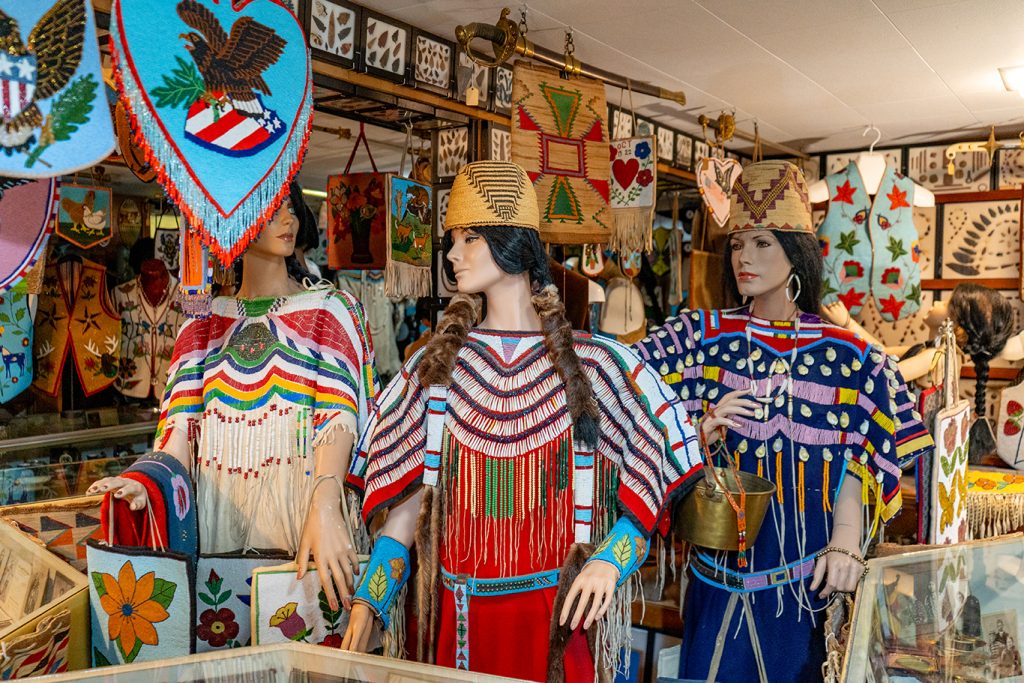
The assemblage began when Mitchell was just five years old. What started with a single arrowhead has become a vast expansion of artifacts preserving the art, history, and culture of the Columbia River Plateau.
It represents 75 years of gathering along the Columbia River mainstem, as well as the Snake and Clearwater rivers and other tributaries.
“Today was very exciting in that we worked on this a long time, and it was finally good to see these items come home,” Board of Trustees Chair N. Kathryn Brigham said. “In talking to Fred, he is so honored and pleased to be giving his collection to Tamástslikt because we will take care of it, we understand it, and we’re honored to get it.”
In a press release from Tamástslikt, Mitchell’s collection is referred to as the “finest collection of twentieth-century Columbia River Plateau beadwork in existence,” according to author Steve Grafe, who wrote a book focused on the collection being acquired called “Plateau Pictorial Beadwork: The Fred L. Mitchell Collection.”
With the inclusion of Mitchell’s collection, the Tamástslikt’s capacity to represent the Columbia River Plateau’s tribal narratives changed dramatically. While speaking prior to the signing ceremony, Tamástslikt Director Bobbie Conner recalled a time when the museum struggled to fill exhibits, often renting out displays from other institutions.
“Now we may be out of space for storage in the vault,” Conner said.
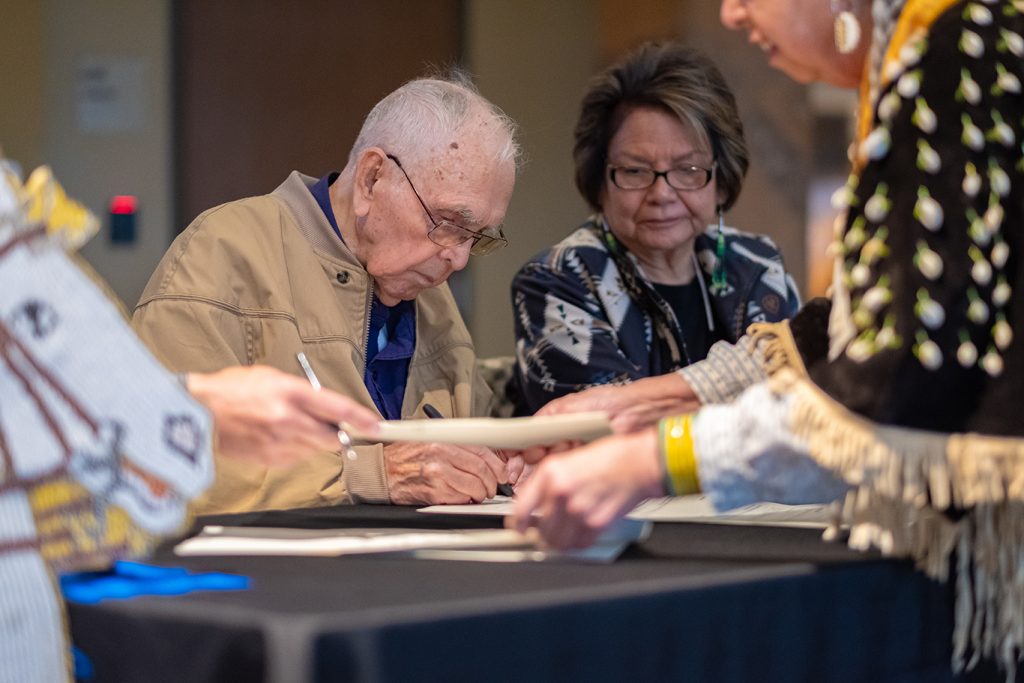
Conner spoke highly of Mitchell’s dedication as a collector, noting how carefully he preserved the artifacts for seven decades before formally transferring them through the acquisition.
“We all know that we have had things leave our families in very unceremonial, possibly illegal, and unapproved ways,” Conners said to the crowd. “Whether it’s members of our family who are suffering from addiction who hocked items or sold items, or whether it was to an unsavory collector who preys on poor people on our reservation — we are acquiring this collection from a man of integrity and dignity, and we have complete faith in our relationship with him and his relationship with the collection.”
Mitchell’s collection is referred to as the “finest collection of twentieth-century Columbia River Plateau beadwork in existence.”
In the signing ceremony, in conjunction with transferring the collection to the CTUIR, Mitchell also signed over the copyright of the book written by Grafe regarding his collection, so that CTUIR and Tamástslikt can continue to publish copies.
While speaking prior to the signing ceremony, Conner quoted a portion of the agreement Mitchell signed.
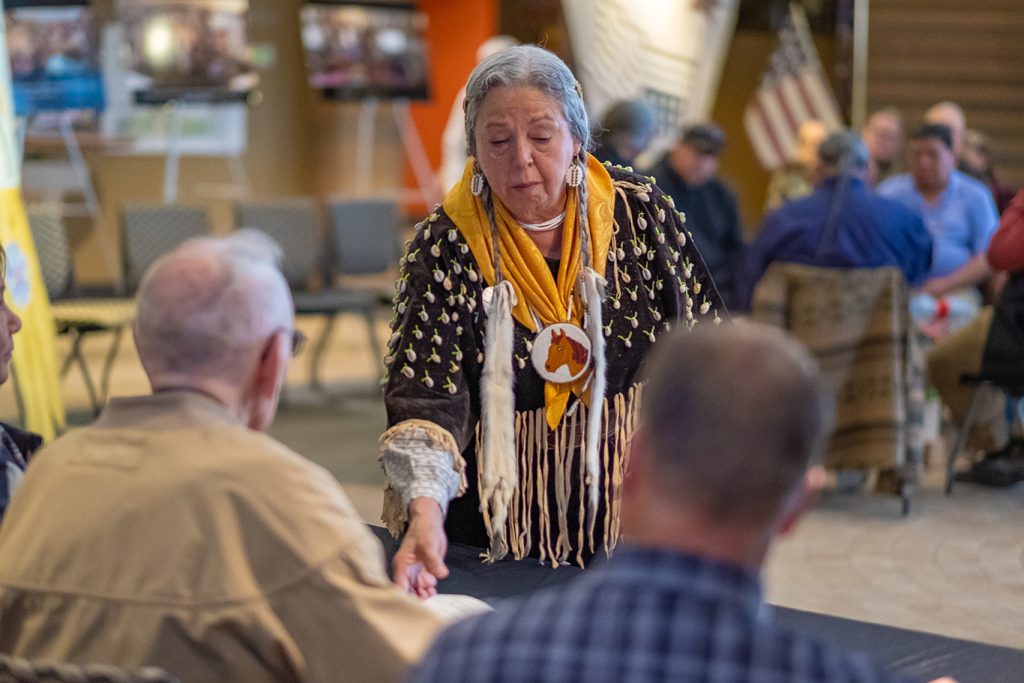
“The transfer of ownership by Fred represents his faith in us to care for, house, display, and share for display the items he has devotedly collected for more than 70 years,” Conner said.
Mitchell noted how his collection was revered in the same way he revered it, and this reverence was a catalyst to the relationship between himself and the CTUIR.
“The artifacts represent the ancient connection to this place,” Conner said, speaking of their connection to the Columbia River Plateau. “The artifacts, the stories they represent, the ancient connection our ancestors have to a contemporary generation.”
As a collection of art and artifacts originating from the Columbia River Plateau, CTUIR felt it imperative for them to remain there, as did the Roundhouse Foundation, an Oregon-based organization that supports rural cultures and landscapes of the Pacific Northwest and their associated challenges.
To support the collection’s acquisition by the CTUIR, the Roundhouse Foundation pledged $500,000.
“The artifacts represent the ancient connection to this place. The artifacts, the stories they represent, the ancient connection our ancestors have to a contemporary generation.”
Bobbie Conner, Tamástslikt Cultural Institute Director
“We talked about it at a foundational level, at our board level, and said, ‘how can we put in some support to say this is something we believe in and that we believe the tribe is the right place for this collection?’” Roundhouse Foundation Executive Director Erin Borla said.
Before CTUIR had even made the decision to move forward with the acquisition, the Roundhouse had made the pledge to move forward in conjunction.
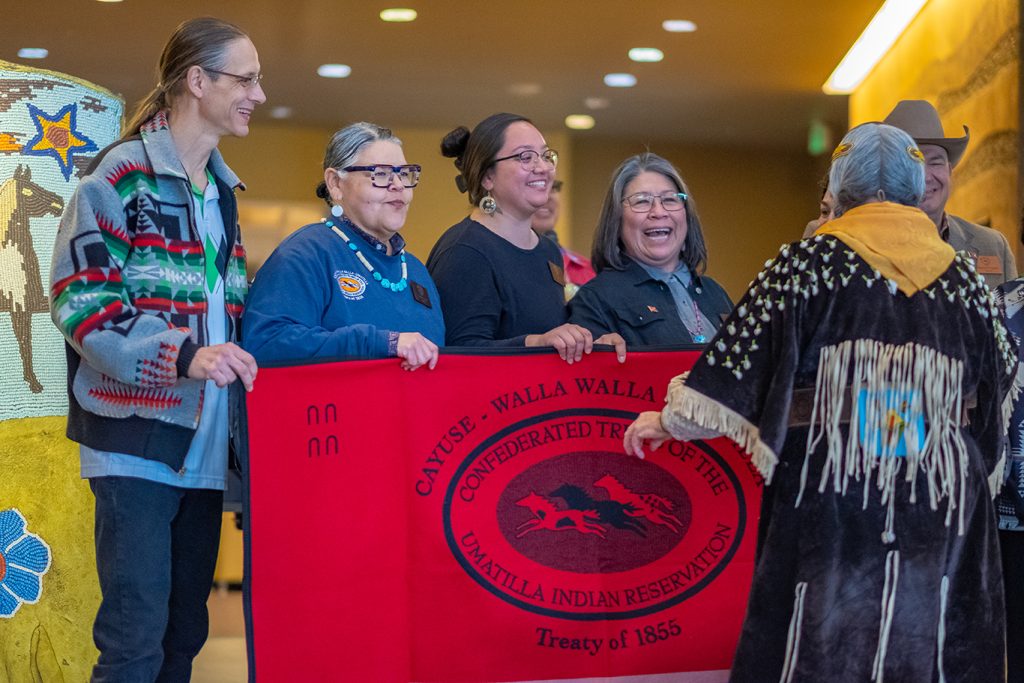
“We are so grateful that the Roundhouse Foundation learned that the Tamástslikt plans to loan Mitchell Collection objects to museums in the Columbia River Plateau region and was the first donor to contribute to the acquisition fund,” said Conner in a Tamástslikt press release. “Specifically, Roundhouse wanted to ensure that many locals and public audiences will benefit from the decades of Mr. Mitchell’s collecting.”
While the Roundhouse Foundation was the first private party to pledge funds for the acquisition, it was also joined by other organizations and private citizens.
The acquisition project, which took root nearly 10 years ago, results in the transference of cultural history in the form of a multitude of pieces of art and artifacts rooted in the history of the ancestors who crafted them.
“We’re also delighted to know Fred,” Conner said, “Fred Mitchell is our friend.”