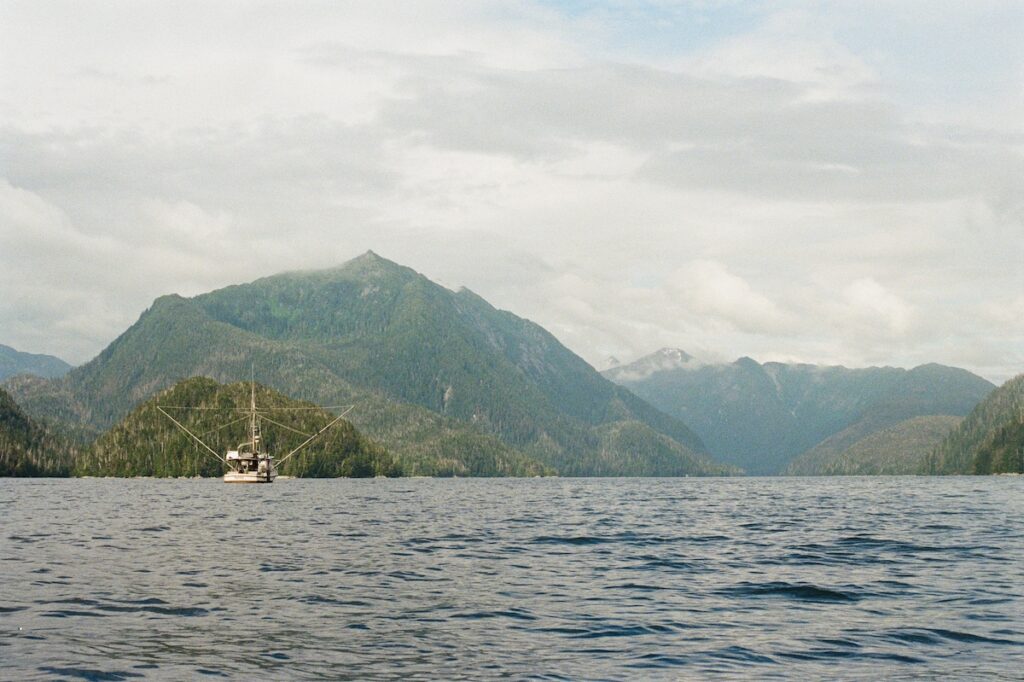
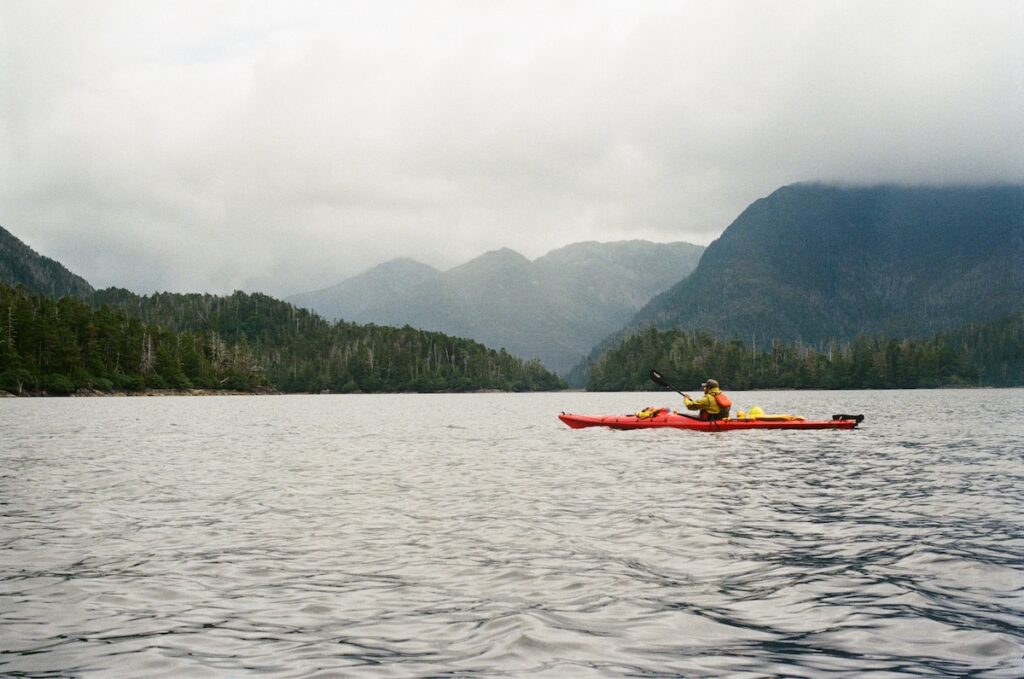
A “tombolo” is a deposition landform of shell and rock that connects an island to a mainland. I learned this new-to-me term after beaching a kayak on one, exposed at low tide in the South Baranof Wilderness, a swath of protected coastal mountains and islands in the Tongass National Forest of Alaska.
Lucky enough to join the Sitka Ranger District as a resident poet on their summer monitoring expedition — this trip via sea kayak — I was immediately struck to see the long, glacially-carved inlets mediating the seemingly opposing forms of water and rock. So much pure kinetic energy in the in-and-exhale of tide: twice a day, at least in my imagination, a tombolo of shells, rocks, driftwood, and flotsam gets dismantled, scattered, and rebuilt. A handshake, of sorts. A truce spoken by water’s retreat and advance.
After the trip, I gave myself the assignment of drafting poems that mirrored tidal echoing via subtle rhymes. The five “tombolo” poems that emerged remain a work in progress, as any chain of islands is. I’ve made and remade them, rearranging verbs and vowels, trying to get to a stable story, or assemblage of microstories, daily moments of camping, sleeping, and waking in a landscape defined by flux.
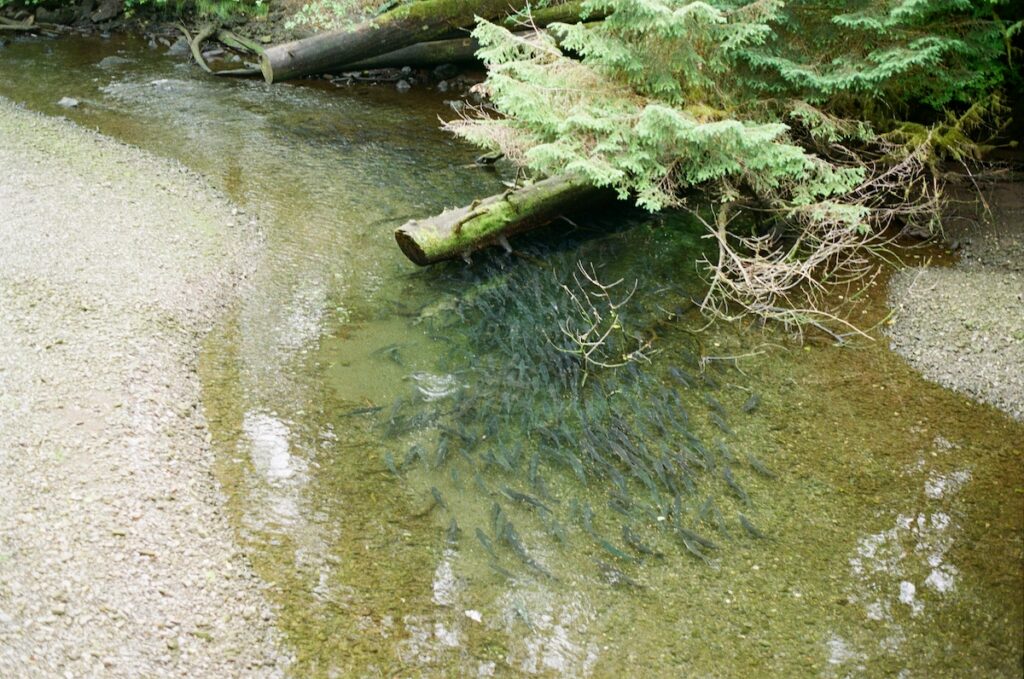
Maybe these poems are more “about” the words themselves and how they ring together or not, rather than a definable narrative. I spent much of the expedition staring over the hull of a kayak, watching the bull kelp sigh, listening to pink salmon leap.
These poems are what comes from living, at least for a blink, in the breath between islands.
I
When we’re finally silent, the uncorked gulls
filter back
down like specks
of mica to a bottle’s floor– minerals
lulled, with us, by the tide’s long inhale.
Hemmed and hawed
like a drawstring,
I could stare all dusk over this thin hull,
waiting for a name, some drunken word,
to resurface.
Yellow curtains
fin around the dark, almost speak, but blur.
We paddled here to camp,
five odd burrs sowed under
a hemlock’s ear.
But how far is home? I ask, nosing up to shore.
II
Later, I dream of urchin-divers.
Seal-ish, they whisk
up the kelp, masked
black as a canopy, spooling and fibering
the inlet’s light-woven roof where they dove.
Down in the other
half, strung to air
by noded ladders, open bellows
of kelp-leaves heaved out, sighed. Where am I
kept lapping up
to swish and gulp.
At its highest mark, the tide belied
that dormer where old photos gather dust,
and reed blankets,
bed-coils. I glanced
after those fluent divers, and hushed.
III
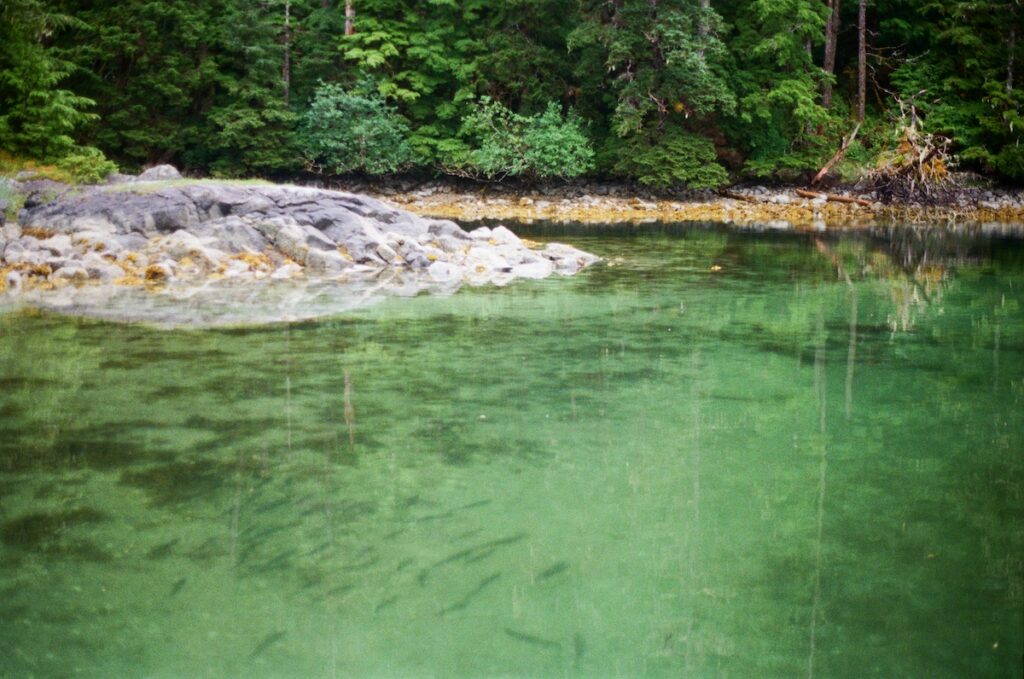
Dervish salmon– reverent stitchers–
leap in darkness, splice
water to moonlight.
I trace tent shadows through the witching
hours, holding my breath, to keep the home halo hovered
close, to smother
out the otherness, that bear-drone
sinister as cedar rot. Now where we are
nudges its way
into me like day
break through hemlock, club moss, and the harbor
of these songs, rooting inward. The salmon
keep stirring still,
cracking the fragile
branch of inlet. They splash the light back on.
IV
Bottled up the gully, incessant
as revelers,
fringe-beveled
shield ferns bow in drafts, as if knee-bent.
And the yellow cedars huff like a raft
of sea-otters.
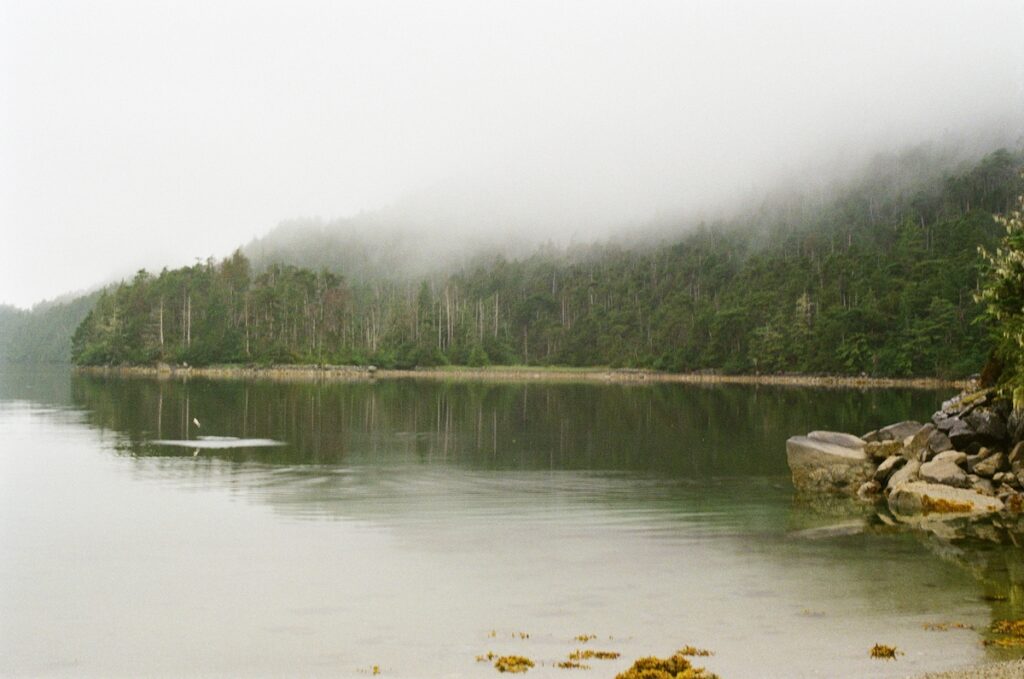
The mediator
must be water, those lung-gray laughs
of rain that flicker over each sundown.
And morning clouds
they wake to, crowded
heavy with speech, tendriled to the ground.
What am I saying? These words are flotsam,
tacking up
like kelp bulbs
on the fringe. This interior is mum.
V
Under nettled gables, a humble leap
of light off
a wave, a soft
curl and quiet, gravel-sent greeting.
Call it a handshake, little island
made new again–
Each day, terrain
to hitch a boat, plant a foot, to stand.
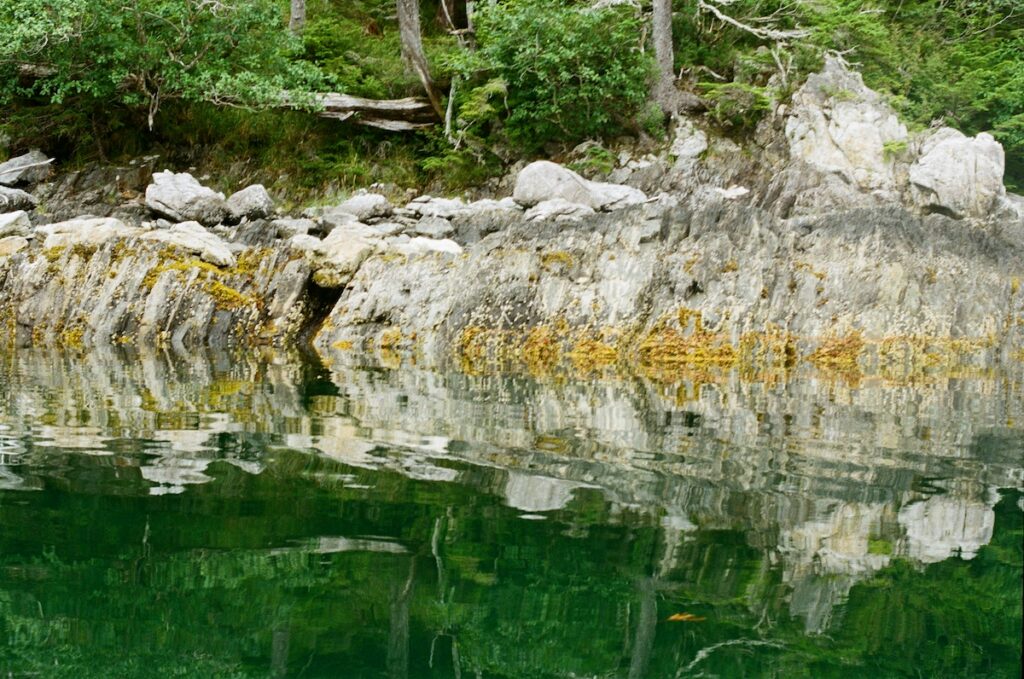
Where Welcome gets spelled in wet crevices
of beach granite,
the old bed split
in two– I need to know this refuge is,
half pearlskin and shell-glisten, half root-red,
soil-black. Need
to know the tide
leaves before breathing back. Flees us, wedded.