
In November 2011, the Canadian corporation Teck Resources applied for an environmental impact assessment (EA) for its northern Alberta-based Frontier mine project. It was set to be the single largest oil sand pit mine in Canada: three mine pits, five external tailings areas, and 71,000 acres (28,700 hectares) of ecological disturbances.
The mine was predicted to produce 260,000 barrels of oil a day, and, in the process, emit about four million tons of greenhouse gases annually for more than forty years. And it would leave a permanent scar on the landscape—much of which fell under the legally recognized traditional territory of the Mikisew Cree First Nation (MCFN).
At the time, it was common practice to allow companies to conduct such assessments, giving them the power to determine which data were relevant and how to interpret the findings. Whether or not communities were involved—including neighboring First Nations—was largely up to the company.
Melody Lepine, a Mikisew Cree and director of the MCFN Government and Industry Relations department at the time, says Teck’s initial impact assessment completely missed the mark. “It didn’t take into consideration things like spiritual sites, Indigenous knowledge, or keystone species,” she says. “We identified so many gaps.”
MCFN brought these gaps to Teck. Their response? Unprecedented. Instead of acting as sole authors on the EA, they decided to financially and logistically support the Mikisew Cree as they conducted their own Culture and Rights Assessment.
The result, one of the first assessments to be entirely Indigenous-led in North America, created a rigorous framework for the affected Nations to negotiate for impact mitigation, culturally significant site protection, and community benefits like employment pathways or monetary benefit agreements.
Its findings were profound. For one thing, MCFN’s review took preexisting environmental impacts into account, alongside proposed future impacts. And rather than judging the project’s impact against the baseline of the present day, they assessed the project against a pre-1965 baseline—the last time Mikisew peoples could sustain their treaty-protected harvesting practices. As written, the Frontier project would have prevented future generations from being able to recover these rights.

Prompted by these findings, the Alberta government established a Biodiversity Stewardship Area, and, in 2020, after nearly a decade of Indigenous-led resistance, the Frontier mine project was finally dropped.
The MCFN-led assessment set the stage for a new era of Indigenous involvement in Canadian permitting. “The methodology showed the government that this is not that scary, [that] we don’t have to be afraid of assessing these things,” Lepine says.
Since then, Indigenous-led assessments (ILAs) have, at least in some Canadian jurisdictions, become commonplace. Sometimes, Nations’ assessments encourage a project’s approval in exchange for economic benefits or other incentives, like new impact mitigations or expanded habitat enhancements.
In 2015, for example, the Squamish Nation in British Columbia assessed—and ultimately approved—a liquefied natural gas (LNG) facility to produce and export 2.1 million tons of LNG overseas per year. In return, the Nation received $1.1 billion in benefits, including construction contract opportunities, land transfers, and cash payments. (Construction on the project is slated to begin in 2027.)
In other cases, ILAs have been ignored, as happened with the Tsleil-Waututh Nation’s assessment of the Trans Mountain Expansion pipeline project (TMX). Their ILA found that the TMX posed devastating and irreversible damages to Indigenous peoples and cultures within their legally binding Consultation Area; the project went forward anyway.
The Tsleil-Waututh has continued to celebrate their ILA as an achievement, for it was a groundbreaking “expression of the Nation’s inherent jurisdiction,” that relied upon laws that “exist independently of, and predate the assertion of sovereignty by Canada.” While the project moved forward without their consent, the Nation became a pioneer in what has become a groundswell of support for, and recognition of, Indigenous rights that precede Canadian constitutional law—a legal theory now backed by several Supreme Court decisions.
Trial and Error
Today’s regulatory assessment landscape—both in Canada and the United States —is the product of fifty years of trial and error, implementing policy frameworks that emerged in a short time frame.
In less than a decade, between 1964 and 1973, U.S. Congress passed the Wilderness Act (1964), the National Environmental Policy Act (or NEPA, 1970), the Clean Air Act (1970), the Clean Water Act (1972), and the Endangered Species Act (1973). President Lyndon B. Johnson alone signed more than three hundred environmental measures into law; then his successor, President Richard Nixon, formed the Environmental Protection Agency (EPA) in 1970. Together, these policies created a new form of governance: now countries could be held accountable for caring for the lands they occupied.
In that way, the United States became a world leader in legal environmental progress, while NEPA, in particular, had outsize global impact. Called the Magna Carta of environmental policy, more than 100 countries have since passed their own versions of the law. NEPA established formal environmental assessment protocols through which new industrial projects are required to identify and reduce their impacts as part of a preapproval permitting process.
This Indigenous-first approach enabled concrete expressions of sovereignty, rather than pushing another effort to assimilate Indigenous peoples into extractive economies and calling it reconciliation.
Canada was quick to follow the U.S.’s lead, passing its own environmental assessment policy months after NEPA was signed into law. But unlike the U.S., where now the entire legal architecture for governing environmental compliance has been defanged, Canada has updated its assessment practices to better capture the interconnected impacts of climate change, socioeconomics, and public health.
Despite these rigorous and repeated adjustments, a glaring oversight remained: neither the U.S. nor Canada’s burgeoning environmental regulations had a mandatory Indigenous consultation process.
Statutory processes in Canada (and in the U.S.) are what’s called “proponent-led.” This means that if a corporation wants to develop a mine, they’re in charge of organizing the impact assessment process—designing assessment methodology, deciding which local communities could be credibly impacted, and therefore deserving of a say. Whether or not Indigenous insights matter has been mainly up to who’s paying the project’s costs.

Co-management of EAs became popular in Canada’s far north earlier than elsewhere in the country, in large part due to significant activism in the 1970s to resist forced assimilation of the Innu. In response, there were attempts at Indigenous co-management in some EA processes.
A 1970s oil exploration project in Qikiqtani, Nunavut (or Baffin Island)—one of the earliest examples of Indigenous knowledge-based assessments in North America—responded to international environmental concerns by suggesting preferential hiring of Inuit. This offer came after years of boycotts to the sealskin market, which had previously been a primary economic resource for Qikiqtani communities. Once it became clear the proposed oil jobs would be the only jobs available, local Innu leaders agreed to the hydrocarbon project.
Some have argued these early co-management efforts were less consensual than they were coerced—but the surrounding advocacy led to gains elsewhere. In 1993, after twenty-three years of concerted mobilization, Nunavut was separated from the Northwest Territories, establishing Inuit self-governance. With this precedent in place, the stage was set for increased Indigenous determination in governance elsewhere in Canada.
In the 2010s, when the Mikisew Cree, Squamish, and Tsleil-Waututh Nations lobbied for the inclusion of their ILAs, they were breaking from decades of federal EA tradition. They also had the Nunavummiut example of a sovereignty-first EA approach to guide them.
In all three cases, each Nation fought for Indigenous-led assessments, rather than federal policy reform that mandated industries engage First Nations.
This Indigenous-first approach enabled concrete expressions of sovereignty, rather than pushing another effort to assimilate Indigenous peoples into extractive economies and calling it reconciliation. Anything less than an Indigenous-led process would have relied on industrial proponents’ ability to establish informed consent with First Nations—a hard bargain for a country whose founding has relied on Indigenous subjugation.
Notable Differences Between Canada and the U.S. Assessments
While Canada’s First Nations have made significant progress toward establishing ILAs as a significant force in environmental regulatory contexts, the U.S. has done more or less the opposite.
In the States, environmental assessments are “very cursory at best, and overly slanted towards corporate interests,” says Quanah Spencer, an enrolled member of the Yakama Nation. Spencer has spent decades working on Indigenous consultation processes for tribes, corporations, and governments (though he spoke to me only as a representative of his personal views, and not as a representative of his tribe or any past employers).
Indigenous consultation is rarely legally mandated, so it rarely happens. By the time a project in the U.S. reaches the assessment stage, Spencer says government officials usually have “a decision that’s already been made. It leads to bad decision making. It leads to impacts never being assessed that should have been.” Business-as-usual methods fail to “consider alternatives, mitigate impacts based upon tribal priorities, and leave many tribal and local residents unsatisfied with outcomes.
ILAs—discrete regulatory processes such as they exist in Canada—have yet to gain legitimacy in the eyes of U.S. industries or non-tribal governments. Part of the reason for this discrepancy in relevance between the U.S. and Canada, Spencer thinks, is because of how different treaty rights are interpreted in each country. In Canada, treaty rights have precedence over the Constitution, while in the U.S., they’re subjected to federal and state law—although Spencer is quick to point out that “Tribes have preexisting legal rights which predate the formation of the United States.”
Regardless, Indigenous-led environmental assessments still happen in the U.S. They occur any time a tribe makes a decision about how to steward their territory, conducting rigorous analyses informed both by ancestral knowledge and Western science.
From the lands of the Mescalero Apache to Yakama to Colville to Warm Springs, tribes use processes similar to EAs to control floods, restore salmon habitat, conduct controlled burns, and cultivate huckleberries. Scientific methodologies—developing an observation-based hypothesis, running tests, and acting reflexively in response to results—are operational in every traditional land-stewardship practice.
“[ILAs] happen all the time; it’s just natural. It’s part of what [Indigenous peoples] did before the Europeans and after. They’re just doing what they’ve always done,” Spencer said.
Indigenous environmental decisions are, Spencer thinks, based on rigorous practices that deserve to be respected. For now, the sophistication of their decision-making powers only has a meaningful impact on tribal management projects. The U.S. currently has no existing legal framework for independent Indigenous-led EAs to act as a check on corporate or state-led developments.
In fact, the U.S. Supreme Court has historically limited tribal sovereignty, as in the 1981 “Montana Rule” case that established that tribes can’t regulate non-member conduct on non-tribal land—a ruling that neutered any attempts to mainstream Indigenous assessments outside of reservations.
Whether a Clear Path Exists
Indigenous peoples in the U.S. continue to face disproportionate impact from development projects on which they never had the chance to review. Despite abundant geographic, historical, and political similarities between the U.S. and Canada—which once had almost identical environmental policy—the U.S. has now become an exception on this front. Here, the decision-making power vested in tribes is inversely proportional to the burden they are expected to bear.
Based on his decades of career experience, Spencer remains cynical about whether a clear path exists in the U.S. for tribes to catch up to Canada’s First Nations when it comes to ILAs. He laughed, then sighed. “The judiciary in this country is not ready for that. They never have been.”
“[ILAs] happen all the time; it’s just natural. It’s part of what [Indigenous peoples] did before the Europeans and after. They’re just doing what they’ve always done.”
Even in Canada, progress may now be reversing. In 2025, British Columbia, historically a progressive and pro-Indigenous stronghold, introduced several bills that mandated the fast-tracking of “industrial and extractive projects, deprioritizing the climate crisis and the health of the environment, and simultaneously violating Indigenous rights and title,” the Yellowhead Institute reports.
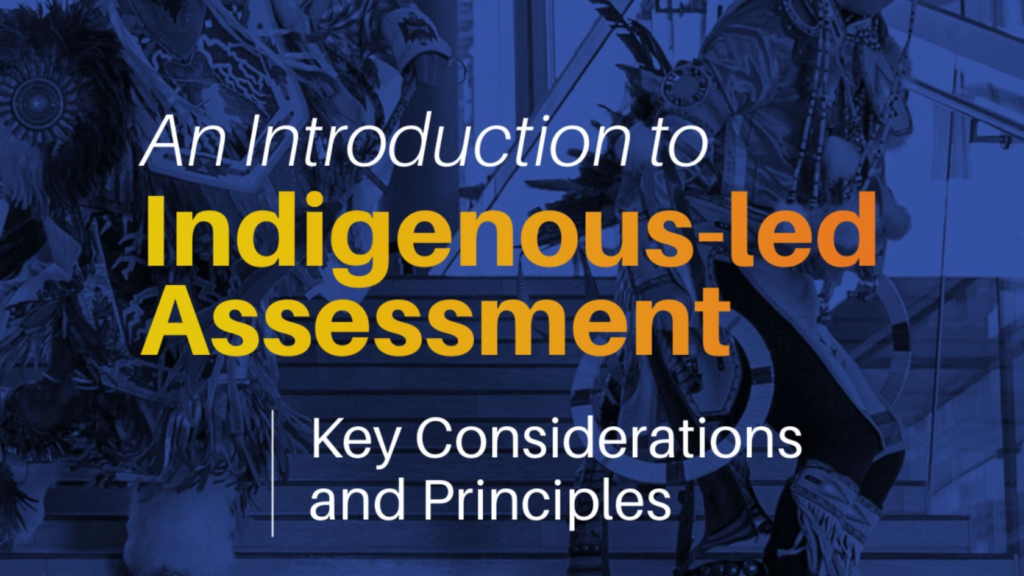
Nevertheless, ILAs are popular enough that, last September, the First Nations Major Projects Coalition (FNMPC) and Firelight, an Indigenous-owned consulting firm in Canada, co-published an ILA tool kit to guide nations through the ILA process. (Lepine now works at Firelight and was closely involved in the project.) The tool kit’s authors write that ILAs have the potential to enable “Indigenous groups to assert their sovereignty, protect their territories, and shape a future that upholds their rights, cultures, and aspirations.”
Although ILAs are not legally binding, emerging case precedent has begun to shift the status quo in favor of respecting Indigenous sovereignty, and many are pushing for a regulatory context that privileges ILAs over any other EA frameworks.
Until then, ILAs will continue to function as a kind of bargaining chip. Once a Nation is armed with the findings of an ILA, Lepine says, tribal members can challenge the federal or provincial permitting agency with more perceived legitimacy. “Does reconciliation actually matter? Are you ready to put an action behind that statement to make it a real commitment?”